Search

Gibco™
病毒生产细胞 2.0
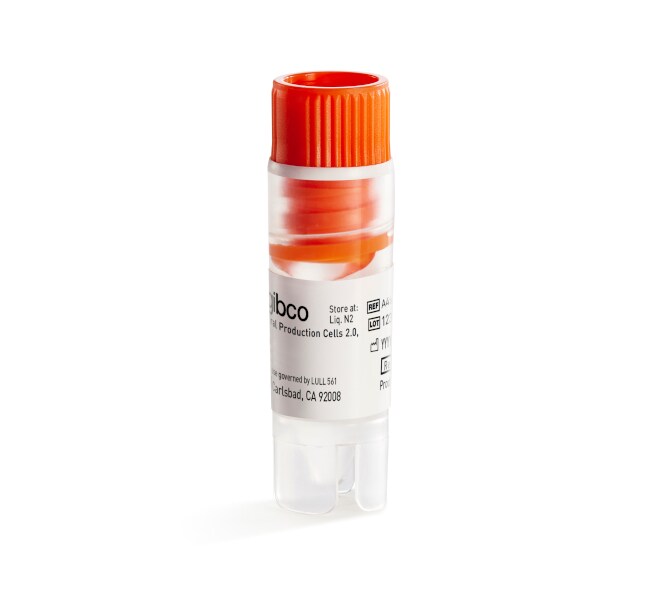
Gibco 病毒生产细胞 2.0 是从 HEK293F 亲代细胞系获得的克隆细胞系,是 AAV-MAX Helper-Free AAV 生产系统的核心组成部分了解更多信息
Have Questions?
更改视图

| 货号 | 数量 |
|---|---|
| A49784 | 1 mL |
| A51218 | 1 mL |
货号 A49784
价格(CNY)
-
数量:
1 mL
Gibco 病毒生产细胞 2.0 是从 HEK293F 亲代细胞系获得的克隆细胞系,是 AAV-MAX Helper-Free AAV 生产系统的核心组成部分。细胞已适应化学成分明确的病毒生产培养基,并在该培养基中保持悬浮培养。使用用于腺相关病毒 (AAV) 生产的 AAV-MAX 转染试剂盒,病毒生产细胞 2.0 具有高转染性。
病毒生产细胞 2.0 的特征包括:
•293F 来源的高产得率克隆细胞系
• 不含 SV40 大 T 抗原
• 经过优化,可在化学成分确定的培养基中进行高密度悬浮培养(>1200 万个细胞/mL)
• 实现高 AAV 滴度,大于 5 x 10¹⁰ vg/mL(未纯化)
• 强大的可扩展性和传代稳定性
冷冻细胞装在样品瓶中提供,其包含 1 mL 浓度为 1 x 10⁷ 个活细胞/mL 的细胞,放在病毒生产培养基以及 10% DMSO 中。细胞应直接解冻至病毒生产培养基中,其中添加了 4 mM GlutaMAX 添加物(货号 35050038),以便获得极佳性能。
病毒生产细胞 2.0 的特征包括:
•293F 来源的高产得率克隆细胞系
• 不含 SV40 大 T 抗原
• 经过优化,可在化学成分确定的培养基中进行高密度悬浮培养(>1200 万个细胞/mL)
• 实现高 AAV 滴度,大于 5 x 10¹⁰ vg/mL(未纯化)
• 强大的可扩展性和传代稳定性
冷冻细胞装在样品瓶中提供,其包含 1 mL 浓度为 1 x 10⁷ 个活细胞/mL 的细胞,放在病毒生产培养基以及 10% DMSO 中。细胞应直接解冻至病毒生产培养基中,其中添加了 4 mM GlutaMAX 添加物(货号 35050038),以便获得极佳性能。
仅供科研使用。不可用于诊断程序。
规格
细胞状态冰冻
最大浓度1 x 10⁷ 个细胞/mL
适用于(应用)AAV 生产
产品规格1 瓶
推荐培养基Gibco 病毒生产培养基
池数量1 x 10⁷ 个细胞
产品线AAV-MAX
产品类型病毒生产细胞
数量1 mL
运输条件国内运输使用干冰;国际运输使用液氮
来源人
细胞系病毒生产细胞2.0
细胞类型肾脏(胚胎)
培养类型悬浮液细胞培养
形式冰冻
种属人
Unit SizeEach
内容与储存
1 个冻存管,储存于气相液氮中