Search


引用和文献 (7)
Thermo Scientific™
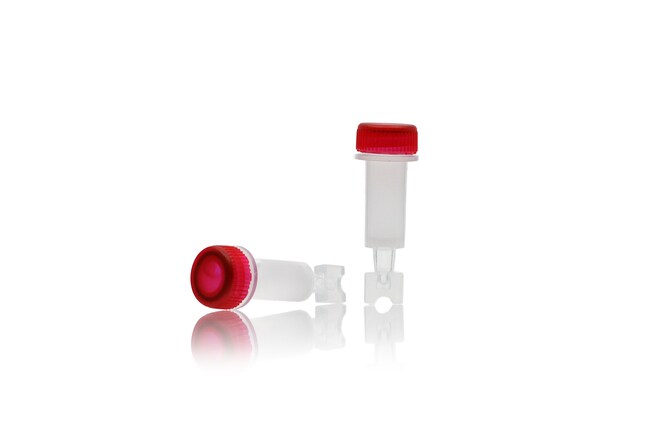
Zeba™ Spin Desalting Columns and Plates, 40K MWCO, 75 μL–10 mL
The new and enhanced Zeba Spin and Micro Spin Desalting columns and plates are designed for efficient desalting and buffer exchanging proteins with a molecular weight >40 kDa and removing small molecules less than 2 kDa. They provide exceptional desalting and protein recovery performance.
Have Questions?
更改视图

| 货号 | 数量 | 样品体积(公制) |
|---|---|---|
| A57760 | 50 columns | 50 to 150 μL |
| A40002471 | 5 Columns | 4 to 10 mL |
| A40002476 | 10 Columns | 4 to 10 mL |
| A57756 | 25 columns | 5–14 μL |
| A57758 | 50 columns | 5–14 μL |
| A57759 | 25 columns | 50 to 150 μL |
| A57761 | 5 columns | 300 to 800 μL |
| A57762 | 25 columns | 300 to 800 μL |
| A57763 | 5 columns | 500–2000 μL |
| A57764 | 25 columns | 500–2000 μL |
| A57765 | 5 columns | 1000–4000 μL |
| A57766 | 25 columns | 1000–4000 μL |
| A57767 | 2 plates | 20–100 μL |
| A57768 | 4 plates | 20–100 μL |
货号 A57760
价格(CNY)
6,798.00
Each
数量:
50 columns
样品体积(公制):
50 to 150 μL
价格(CNY)
6,798.00
Each
Thermo Scientific Zeba spin and micro spin desalting columns and plates are designed for efficient desalting and buffer exchange of protein samples. They contain a proprietary size-exclusion chromatography resin with a robust bead structure that withstands centrifugal force and helps produce better flow characteristics and increased efficiency in removing low molecular weight protein contaminants from samples. The Zeba resin performs well even with significantly diluted protein samples and eliminates over 95% of contaminants without causing protein loss.
These Zeba spin and micro spin desalting columns and plates are designed for desalting and buffer exchange of proteins with a molecular weight >40 kDa and removal of small molecules less than 2 kDa. They provide exceptional desalting and protein recovery performance, with expanded capacity to accommodate up to 10 mL of sample volume.
Features of Zeba spin and micro spin desalting columns include:
- High-performing resin—exceptional protein recovery at lower protein concentrations
- Fast and efficient—eliminate sample dilution, fraction collection, and the need for expensive chromatography systems that take time to set up and can only process one sample at a time
- Easy to use—no cumbersome column preparation or equilibration
- Flexible formats—available in spin columns and 96-well spin plates for a range of sample volumes (2 μL to 10 mL)
Zeba Desalting Columns
Convenient, ready-to-use polypropylene columns are the ideal solution for quick and straightforward desalting and buffer exchange of protein samples in a centrifuge format. The pre-dispensed spin columns are offered in various resin fills (75 μL, 0.5 mL, 2 mL, 5 mL, 10 mL, 20mL). These options make it simple to handle sample volumes between 2 μL and 10 mL.
Zeba Spin Desalting Plates
These plates provide trouble-free high-throughput desalting and buffer exchange for sample volumes ranging from 20 to 100 μL. They require no resin dispensing or hydration and provide the same high protein recovery as spin columns with at least 95% removal of salts and other small molecules. One plate can process 96 small sample volumes (20 to 100 μL) in five minutes. Separating macromolecules, such as proteins, from small contaminants is often done through routine methods, including gel filtration chromatography and buffer exchange. These methods are commonly used during protein purification workflows to remove small contaminants like salts, excess labels, and cross-linking reagents from samples before analysis.
仅供科研使用。不可用于诊断程序。
规格
一次性是
产品类型脱盐离心柱
纯化目标Buffer Exchange, Protein
数量50 columns
容积(公制)0.5 mL
色谱柱类型Size-exclusion, Proprietary Resin
产品规格15 mL 锥形离心柱
截留分子量 (MWCO)40 kDa
产品线Zeba
样品体积(公制)50 to 150 μL
Unit SizeEach
常见问题解答 (FAQ)
Can Zeba Desalting columns, plates, and cartridges be autoclaved?
What reagents and conditions are Zeba Desalting columns, plates, and cartridges compatible with?
引用和文献 (7)
引用和文献
Abstract
A novel anti-HER2/EGFR bispecific antibody-drug conjugate demonstrates promising antitumor efficacy and overcomes resistance to HER2- or EGFR-targeted ADCs.
Journal:Investigational new drugs
PubMed ID:39982632
HER2 and EGFR are frequently co-expressed in various tumors. While antibody-drug conjugates (ADCs) targeting HER2, such as T-DM1 and T-Dxd, have shown remarkable antitumor effects in clinical responses, their effectiveness is constrained by drug resistance. EGFR amplification or high expression is one of the factors that lead to resistance against
Simultaneous analysis of antigen-specific B and T cells after SARS-CoV-2 infection and vaccination.
Journal:Cytometry. Part A : the journal of the International Society for Analytical Cytology
PubMed ID:35468250
Conventional methods for quantifying and phenotyping antigen-specific lymphocytes can rapidly deplete irreplaceable specimens. This is due to the fact that antigen-specific T and B cells have historically been analyzed in independent assays each requiring millions of cells. A technique that facilitates the simultaneous detection of antigen-specific T and B cells
Structural basis for potent neutralization of human respirovirus type 3 by protective single-domain camelid antibodies.
Journal:Nature communications
PubMed ID:38937429
Respirovirus 3 is a leading cause of severe acute respiratory infections in vulnerable human populations. Entry into host cells is facilitated by the attachment glycoprotein and the fusion glycoprotein (F). Because of its crucial role, F represents an attractive therapeutic target. Here, we identify 13 F-directed heavy-chain-only antibody fragments that
Purification and quantitation of bacteriophage M13 using desalting spin columns and digital PCR.
Journal:Journal of virological methods
PubMed ID:22766184
Separation of small molecules such as biotinylated baits from solutions of filamentous bacteriophage is achieved generally through polyethylene glycol precipitation of the phage and centrifugation prior to affinity selection or panning. This method is laborious and time-consuming and is accompanied frequently by significant loss of virions, especially when performed at
Efficient charge transport via limited π-π interactions between naphthyl carbon atoms in a metal-organic framework.
Journal:Chemical communications (Cambridge, England)
PubMed ID:39585731
A novel metal-organic framework based on naphthalenediimide derivatives was synthesized, featuring ONDI(2-) ligands arranged in a slipped stacking pattern that forms H-aggregates with limited π-π interactions between two pairs of adjacent naphthyl carbon atoms. The compound demonstrates typical semiconductive behavior, with a conductivity of 3.1 × 10(-7) S cm(-1) at