Search
Invitrogen
Texas Red Polyclonal Antibody
{{$productOrderCtrl.translations['antibody.pdp.commerceCard.promotion.promotions']}}
{{$productOrderCtrl.translations['antibody.pdp.commerceCard.promotion.promocode']}}: {{promo.promoCode}} {{promo.promoTitle}} {{promo.promoDescription}}. {{$productOrderCtrl.translations['antibody.pdp.commerceCard.promotion.learnmore']}}
{{$ctrl.translations['antibody.pdp.skuNotes.additionalInformation']}}:

图: 1 / 2
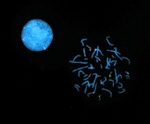
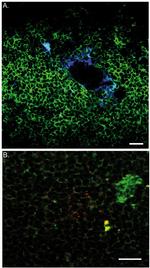
Texas Red Antibody (A-6399) in ICC/IF
In situ hybridization of a-satellite probes to human chromosomes 1, 15 and 17 detected by tyramide signal amplification. a-Satellite probes to chromosomes 1, 15 and 17 were labeled by nick translation with biotin-11-dUTP, ChromaTide® Texas Red®-12-dUTP (Product # C-7631) and ChromaTide® Oregon Green® 488-5-dUTP (Product # C7630), respectively. Following simultaneous hybridization of all three probes, the bi... View More
Please note: We are reviewing Western blot images included in the antibody testing data in our catalog, including those provided by third parties. Unless expressly labeled or annotated as “raw-unedited”, Western blot images included in the antibody testing data in our catalog may have been edited, optimized or otherwise adjusted for presentation.


产品信息
A-6399
应用
建议稀释比
已发表文章
产品规格
种属反应
Chemical
已发表种属
Chemical,
Mouse
宿主/亚型
Rabbit
/ IgG
分类
Polyclonal
类型
Antibody
抗原
Texas Red
偶联物
Unconjugated
Unconjugated
Unconjugated
形式
Liquid
浓度
1 mg/mL
规格
500 µg
纯化类型
purified
保存液
PBS, pH 7.2
内含物
5mM sodium azide
保存条件
4°C
运输条件
Ambient (domestic); Wet ice (international)
RRID
产品详细信息
We offer a variety of anti-fluorescent dye antibodies that recognize specific fluorophores and, in most cases, quench their fluorescence. These anti-dye antibodies, including those that recognize the tetramethylrhodamine (TRITC) and Texas Red™ fluorophores, can also serve as cell-impermeant probes for determining whether fluorescent dye-conjugated ligands, proteins, bacteria, or other biomolecules have been internalized by endocytic or pinocytic processes. Our anti-tetramethylrhodamine (A6397) and anti-Texas Red (A6399) antibodies have been raised against the tetramethylrhodamine and Texas Red fluorophores, respectively. These antibodies quench much of the fluorescence of the complementary dyes. However, due to the related chemical structures, the anti-tetramethylrhodamine antibody crossreacts with the Texas Red fluorophore and the anti-Texas Red antibody cross-reacts with tetramethylrhodamine. Also, both antibodies tightly bind the Rhodamine Red™ fluorophore. Thus, either antibody can serve as an effective probe for tetramethylrhodamine, Texas Red, or Rhodamine Red dyes.
We use a sensitive quenching assay to ensure that this antibody is provided at a consistently high titer value. As supplied, 20 µL of the antibody solution is certified to produce ≥50% of the maximal fluorescence quenching of 1 mL of a 50 nM solution of Texas Red dye, assayed in 100 mM sodium phosphate, pH 8.0. Maximal quenching for Texas Red is ~60% of the fluorescence of the free dye. Due to steric hindrance, maximal fluorescence quenching of the Texas Red fluorophore covalently bound to protein may be significantly less.
靶标信息
Unlike biotin, which is an endogenous ligand in mitochondria, dye-based haptens permit background-free staining of cells and tissues and a sensitive alternative to biotin-streptavidin methods.
仅用于科研。不用于诊断过程。未经明确授权不得转售。
生物信息学
蛋白别名: C31H29ClN2O6S2; Sulforhodamine
Disclaimer

Clicking the images or links will redirect you to a website hosted by BenchSci that provides third-party scientific content. Neither the content nor the BenchSci technology and processes for selection have been evaluated by us; we are providing them as-is and without warranty of any kind, including for use or application of the Thermo Fisher Scientific products presented.

