Search

Thermo Scientific™
管和圆顶盖,8 联排
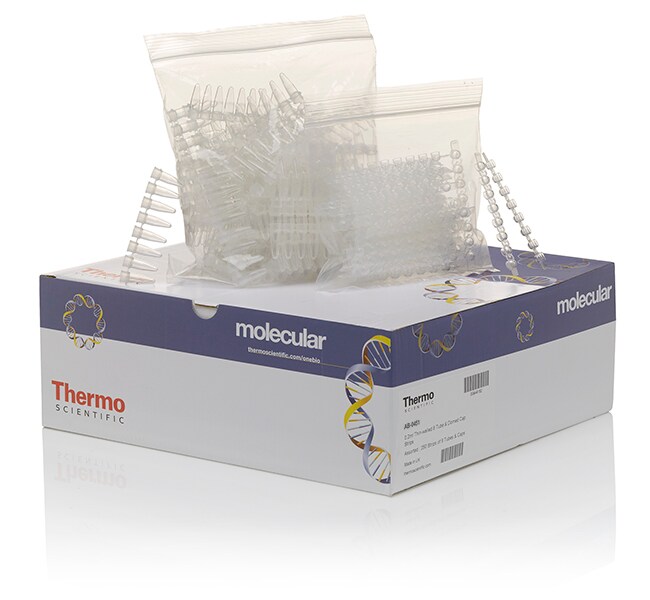
Thermo Scientific 8 联排管和圆顶盖专为 PCR 应用而设计,适用于 0.2 mL 热循环仪模块和 96了解更多信息
Have Questions?
更改视图

| 货号 | 颜色 | 产品类型 | 数量 |
|---|---|---|---|
| AB0266 | 自然色 | 8 联排管 | 250个条板 |
| AB0451 | 自然色 | 8 联排管 | 120条/盒(12条/袋,10袋) |
货号 AB0266
价格(CNY)
1,069.00
飞享价
Ends: 31-Dec-2026
2,126.00共减 1,057.00 (50%)
Each
颜色:
自然色
产品类型:
8 联排管
数量:
250个条板
价格(CNY)
1,069.00
飞享价
Ends: 31-Dec-2026
2,126.00共减 1,057.00 (50%)
Each
Thermo Scientific 8 联排管和圆顶盖专为 PCR 应用而设计,适用于 0.2 mL 热循环仪模块和 96 孔 V 型底热循环仪。8 联排管可分为单独的管。
Thermo Scientific 联排管和圆顶盖的特点:
• 适用于 0.2 mL 热循环仪模块
• 加盖时最大管容量为 0.25 mL
• 8 联排管可分为单独的管
• 适用于 96 孔 V 型底热循环仪
应用
• PCR
相关产品
管和圆顶盖,8 联排,蓝色
管和圆顶盖,8 联排,绿色
管和圆顶盖,8 联排,红色
管和圆顶盖,8 联排,黄色
管和圆顶盖,8 联排
管和平顶盖,8 联排
管和平顶盖,8 联排,多种颜色
管和超透明盖,8 联排
管(白色)和超透明盖,8 联排
管和圆顶盖,12 联排
Thermo Scientific 联排管和圆顶盖的特点:
• 适用于 0.2 mL 热循环仪模块
• 加盖时最大管容量为 0.25 mL
• 8 联排管可分为单独的管
• 适用于 96 孔 V 型底热循环仪
应用
• PCR
相关产品
管和圆顶盖,8 联排,蓝色
管和圆顶盖,8 联排,绿色
管和圆顶盖,8 联排,红色
管和圆顶盖,8 联排,黄色
管和圆顶盖,8 联排
管和平顶盖,8 联排
管和平顶盖,8 联排,多种颜色
管和超透明盖,8 联排
管(白色)和超透明盖,8 联排
管和圆顶盖,12 联排
规格
认证/合规经认证,不含 DNA/RNase
适用于(设备)热循环仪
产品规格250个联排管和盖
孔数量96
数量250个条板
反应速度标准
工作容积(公制)0.2 mL
机壳类型圆顶盖
颜色自然色
材质聚丙烯
产品类型8 联排管
无菌非无菌
容积(公制)0.25 mL
Unit SizeEach