Search

Thermo Scientific™
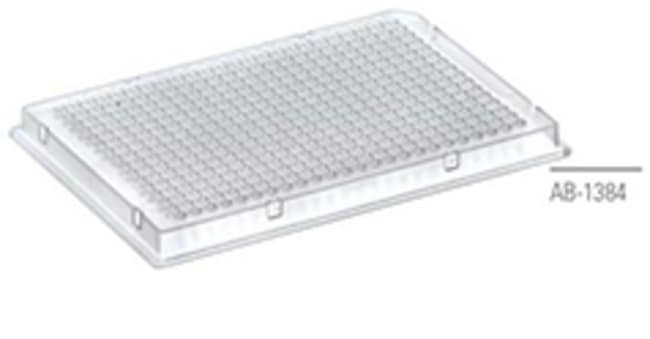
PCR 板,384 孔,标准
标准 Thermo Scientific 384 孔板与大多数 384 模块 PCR 和测序仪器兼容。其最大孔容量为了解更多信息
| 货号 | 数量 |
|---|---|
| AB1384 | 50 plates |
货号 AB1384
价格(CNY)
1,226.00
飞享价
Ends: 31-Dec-2026
2,354.00共减 1,128.00 (48%)
Each
数量:
50 plates
价格(CNY)
1,226.00
飞享价
Ends: 31-Dec-2026
2,354.00共减 1,128.00 (48%)
Each
标准 Thermo Scientific 384 孔板与大多数 384 模块 PCR 和测序仪器兼容。其最大孔容量为 40 μL,工作体积为 25 μL。该 384 孔板与所有主要 384 模块热循环仪兼容,且在 A24 位置处具有切角。
标准 Thermo Scientific 384 孔板的产品优势
• 适合与自动化系统配合使用的全裙边
• 与所有主要 384 模块热循环仪兼容
• 40 μL 最大孔容量,25 μL 工作容量
• 每个孔周围凸起的边缘设计可固定密封和防护装置以防止蒸发
• 均一的薄孔壁可实现较大且一致的热传递
• 通过提高荧光检测中的灵敏度并降低差异性,针对 qPCR 对白色板进行了优化
• 切角:A24
应用
• PCR
• qPCR/实时荧光定量 PCR
相关产品
PCR 板(384 孔,凸起烟囱式)
PCR 板(384 孔,凸起烟囱式,有条形码,白色)
PCR 板(384 孔,标准,绿色)
PCR 板(384 孔,标准,紫色)
PCR 板(384 孔,标准,白色)
PCR 板(384 孔,标准,黄色)
标准 Thermo Scientific 384 孔板的产品优势
• 适合与自动化系统配合使用的全裙边
• 与所有主要 384 模块热循环仪兼容
• 40 μL 最大孔容量,25 μL 工作容量
• 每个孔周围凸起的边缘设计可固定密封和防护装置以防止蒸发
• 均一的薄孔壁可实现较大且一致的热传递
• 通过提高荧光检测中的灵敏度并降低差异性,针对 qPCR 对白色板进行了优化
• 切角:A24
应用
• PCR
• qPCR/实时荧光定量 PCR
相关产品
PCR 板(384 孔,凸起烟囱式)
PCR 板(384 孔,凸起烟囱式,有条形码,白色)
PCR 板(384 孔,标准,绿色)
PCR 板(384 孔,标准,紫色)
PCR 板(384 孔,标准,白色)
PCR 板(384 孔,标准,黄色)
规格
认证/合规经过认证,无 RNA 酶/无 DNA 酶
适用于(设备)实时 PCR 系统或热循环仪
包装50 块板
产品类型PCR 微孔板
数量50 plates
反应速度标准
边缘样式带有护缘
工作容积(公制)25 μL
条形码无条形码
颜色透明
材质聚丙烯
孔数量384
Unit SizeEach