Search

Invitrogen™
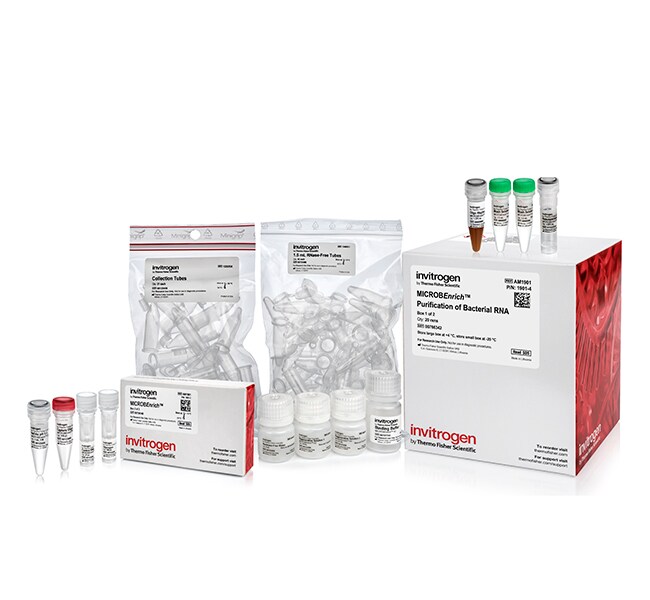
MICROBEnrich™ 试剂盒
适用于从混合样品中分离细菌 RNA。Ambion™ 试剂盒包括足够用于从复杂的宿主细菌 RNA 中去除 500 µg 宿主细胞 RNA了解更多信息
| 货号 | 数量 |
|---|---|
| AM1901 | 20 preps |
货号 AM1901
价格(CNY)
6,755.00
飞享价
Ends: 31-Dec-2026
8,118.00共减 1,363.00 (17%)
Each
数量:
20 preps
价格(CNY)
6,755.00
飞享价
Ends: 31-Dec-2026
8,118.00共减 1,363.00 (17%)
Each
适用于从混合样品中分离细菌 RNA。Ambion™ 试剂盒包括足够用于从复杂的宿主细菌 RNA 中去除 500 µg 宿主细胞 RNA(20 次反应 x 25 µg RNA)的试剂。宿主细菌相互作用后的基因表达分析正在改变我们对细菌感染宿主反应的了解。许多研究都利用微阵列分析来研究宿主细胞转录组在与细菌相互作用方面的改变。然而,由于没有方法可以将细菌 RNA 从宿主细胞 RNA 中分离出来,细菌转录组的相应分析是无法实现的。MICROBEnrich™ 试剂盒可在宿主细菌相互作用后对细菌 RNA 进行全基因组微阵列表达分析。
从任何总 RNA 样品开始
对于微阵列分析和其他敏感应用,在进行 MICROBEnrich™ 试剂盒程序之前,建议进行 DNase 处理,以从总 RNA 中去除污染基因组 DNA。
从复杂的总 RNA 混合物中去除 >90% 的哺乳动物 RNA
MICROBEnrich™试剂盒使用杂交捕获技术(正在申请专利)从复杂的宿主细菌 RNA 群中去除人、小鼠和大鼠 RNA(mRNA 和 rRNA),留下富集的微生物总 RNA。在该程序的第一步中,将宿主细菌总 RNA 与捕获寡核苷酸混合物一起孵育,该寡核苷酸可结合哺乳动物 18S 和 28S rRNA 以及多腺苷酸化 RNA。接下来,通过寡核苷酸衍生化的磁珠从混合物中去除 rRNA/寡核苷酸杂交以及所有多腺苷酸化 mRNA。在磁性分离后,上清液中剩余的细菌 RNA 会被乙醇沉淀。Agilent 2100 生物分析仪电泳图(如图所示)显示来自混合样品的宿主 18S 和 28S rRNA 几乎完全去除 (>95%)。使用 MICROBEnrich™ 试剂盒纯化的细菌 mRNA 在下游应用方面是比总 RNA 更好的模板,因此在用于阵列分析等应用中时,其灵敏度会显著提高(参见图)。
MICROBEnrich™ 试剂盒将适用于任何细菌种属
MICROBEnrich™ 试剂盒在人、小鼠和大鼠 RNA 的背景下使用大肠杆菌 RNA 进行了优化。然而,该试剂盒应能对任何细菌种属中的 RNA 实验效果良好。虽然许多哺乳动物宿主物种可与 MICROBEnrich™试剂盒兼容,但是只使用人、小鼠和大鼠 rRNA 序列进行捕获寡核苷酸的设计和优化。
辅助产品:
使用本试剂盒需要使用磁力架。它们有多种规格,包括单管磁力架 (SKU #AM10026)、6 管磁力架 (SKU #AM10055) 和 96 孔磁力架(SKU #AM10027 和 #AM10050)。RiboPure™ 细菌试剂盒 (SKU #AM1925) 适用于纯化宿主细菌细胞总 RNA。建议使用 TURBO™ DNA-free™ 或 DNA-free™ DNase 处理和去除试剂(分别为 SKU #AM1907 和 AM1906)进行微阵列分析和其他需要去除污染基因组 DNA 的应用。在 MICROBEnrich™ 程序之后,可使用 MICROBExpress™ 细菌 mRNA 富集试剂盒 (SKU #AM1905) 从总 RNA 中纯化细菌 mRNA。该技术能够去除 >95% 的原核 16S 和 23S rRNA。
从任何总 RNA 样品开始
对于微阵列分析和其他敏感应用,在进行 MICROBEnrich™ 试剂盒程序之前,建议进行 DNase 处理,以从总 RNA 中去除污染基因组 DNA。
从复杂的总 RNA 混合物中去除 >90% 的哺乳动物 RNA
MICROBEnrich™试剂盒使用杂交捕获技术(正在申请专利)从复杂的宿主细菌 RNA 群中去除人、小鼠和大鼠 RNA(mRNA 和 rRNA),留下富集的微生物总 RNA。在该程序的第一步中,将宿主细菌总 RNA 与捕获寡核苷酸混合物一起孵育,该寡核苷酸可结合哺乳动物 18S 和 28S rRNA 以及多腺苷酸化 RNA。接下来,通过寡核苷酸衍生化的磁珠从混合物中去除 rRNA/寡核苷酸杂交以及所有多腺苷酸化 mRNA。在磁性分离后,上清液中剩余的细菌 RNA 会被乙醇沉淀。Agilent 2100 生物分析仪电泳图(如图所示)显示来自混合样品的宿主 18S 和 28S rRNA 几乎完全去除 (>95%)。使用 MICROBEnrich™ 试剂盒纯化的细菌 mRNA 在下游应用方面是比总 RNA 更好的模板,因此在用于阵列分析等应用中时,其灵敏度会显著提高(参见图)。
MICROBEnrich™ 试剂盒将适用于任何细菌种属
MICROBEnrich™ 试剂盒在人、小鼠和大鼠 RNA 的背景下使用大肠杆菌 RNA 进行了优化。然而,该试剂盒应能对任何细菌种属中的 RNA 实验效果良好。虽然许多哺乳动物宿主物种可与 MICROBEnrich™试剂盒兼容,但是只使用人、小鼠和大鼠 rRNA 序列进行捕获寡核苷酸的设计和优化。
辅助产品:
使用本试剂盒需要使用磁力架。它们有多种规格,包括单管磁力架 (SKU #AM10026)、6 管磁力架 (SKU #AM10055) 和 96 孔磁力架(SKU #AM10027 和 #AM10050)。RiboPure™ 细菌试剂盒 (SKU #AM1925) 适用于纯化宿主细菌细胞总 RNA。建议使用 TURBO™ DNA-free™ 或 DNA-free™ DNase 处理和去除试剂(分别为 SKU #AM1907 和 AM1906)进行微阵列分析和其他需要去除污染基因组 DNA 的应用。在 MICROBEnrich™ 程序之后,可使用 MICROBExpress™ 细菌 mRNA 富集试剂盒 (SKU #AM1905) 从总 RNA 中纯化细菌 mRNA。该技术能够去除 >95% 的原核 16S 和 23S rRNA。
仅供科研使用。不可用于诊断程序。
规格
最终产品类型总 RNA(细菌)
适用于(应用)微阵列分析
高通量能力不兼容高通量应用(手动)
反应次数20 次制备
产品线Ambion、MICROBEnrich
数量20 preps
分离技术杂交捕获, 磁珠
样品类型细菌, RNA, 总 RNA(哺乳动物宿主细菌 RNA 混合物)
目标总 RNA
Unit SizeEach
内容与储存
将对照 RNA、捕获寡核苷酸混合物、糖原和 3M NaOAc 储存在 -20°C 下。将寡核苷酸 MagBeads、结合缓冲液、洗涤液、再生溶液 1、再生溶液 2 和重悬溶液储存在 4°C 下。将无核酸酶–水、1.5 ml 管和 2 ml 收集管储存在室温下。