Search

Invitrogen™
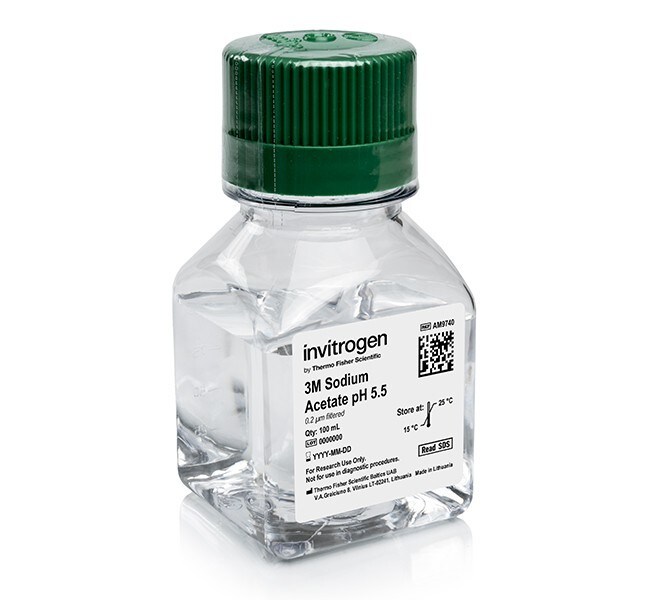
乙酸钠 (3 M)、pH 5.5,无 RNase
Ambion® 分子生物学级 3 M 乙酸钠溶液以每瓶 100 mL 的瓶装形式提供。该 溶液经认证具有无了解更多信息
| 货号 | 数量 |
|---|---|
| AM9740 | 100 mL |
货号 AM9740
价格(CNY)
476.00
飞享价
Ends: 31-Dec-2026
674.00共减 198.00 (29%)
Each
数量:
100 mL
价格(CNY)
476.00
飞享价
Ends: 31-Dec-2026
674.00共减 198.00 (29%)
Each
Ambion® 分子生物学级 3 M 乙酸钠溶液以每瓶 100 mL 的瓶装形式提供。该 溶液经认证具有无 RNase 、经济实惠和即开即用等特点。由于 RNA 酶无处不在,生产与 RNA 配合使用的产品异常困难。Ambion®的无核酸酶试剂和缓冲液在多家经过专门设计以防止核酸酶引入的工厂生产。在生产过程的几个不同阶段均执行高灵敏度的 RNase 检测,以确保达到最佳品质。这些试剂在非特异性污染核酸内切酶、核酸外切酶以及 RNase 活性等方面经过严格测试。
仅供科研使用。不可用于诊断程序。
规格
化学名称或材料醋酸钠
适用于(应用)RNA 应用
包装类型瓶装
产品线Ambion
纯度分子生物学级
数量100 mL
运输条件室温
最大浓度3 M
形式瓶装
pHpH 值 5.5
Unit SizeEach
内容与储存
在室温下储存。