Search


引用和文献 (8)
Invitrogen™
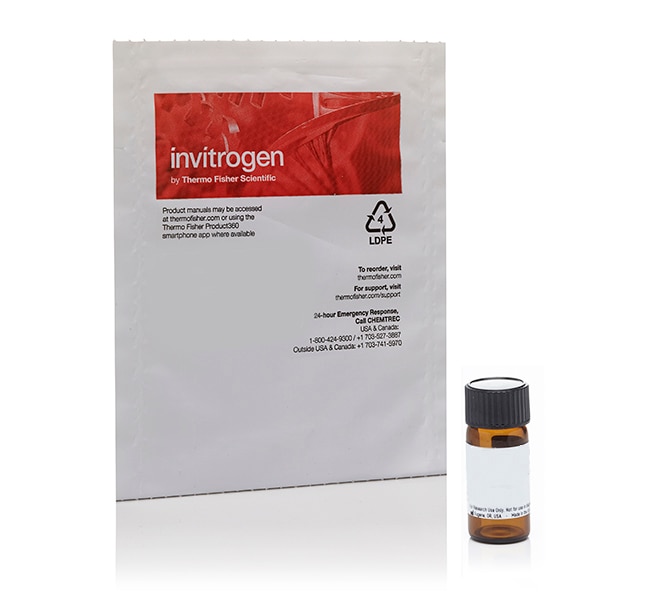
BODIPY™ 665/676(脂质过氧化传感器)
亲脂性探针(BODIPY™ 665/676 染料)可检测脂质的过氧化水平。这种探针与过氧自由基反应后,荧光发生变化。了解更多信息
| 货号 | 数量 |
|---|---|
| B3932 | 5 mg |
货号 B3932
价格(CNY)
2,875.00
飞享价
Ends: 31-Dec-2026
3,938.00共减 1,063.00 (27%)
Each
数量:
5 mg
价格(CNY)
2,875.00
飞享价
Ends: 31-Dec-2026
3,938.00共减 1,063.00 (27%)
Each
亲脂性探针(BODIPY™ 665/676 染料)可检测脂质的过氧化水平。这种探针与过氧自由基反应后,荧光发生变化。
仅供科研使用。不可用于诊断程序。
规格
颜色Far-red
适用于(应用)Cell Analysis, Cell Metabolism, Cell Viability, Proliferation and Function, Nitro-Oxidative Stress, Reactive Oxygen Species
数量5 mg
运输条件Room Temperature
目标功能Lipid peroxidation
检测方法Fluorescence
激发/发射665/676 nm
指示器ROS
产品线BODIPY
产品类型Lipid Sensor
Unit SizeEach
引用和文献 (8)
引用和文献
Abstract
Synthesis, chiroptical properties, and solid-state structure determination of two new chiral dipyrrin difluoroboryl chelates.
Journal:J Am Chem Soc
PubMed ID:14871109
Two new types of optically active BODIPY fluorophores bearing chiral phenyl substituents either at the meso-position or at both external alpha-positions have been synthesized. Their chiroptical properties are strongly dependent both on the position of the chiral group and on the protonation of the chromophore. The solid-state structures of one
Aggregation of puroindoline in phospholipid monolayers spread at the air-liquid interface.
Journal:Biophys J
PubMed ID:14507728
Puroindolines, cationic and cystine-rich low molecular weight lipid binding proteins from wheat seeds, display unique foaming properties and antimicrobial activity. To unravel the mechanism involved in these properties, the interaction of puroindoline-a (PIN-a) with dipalmitoylphosphatidylcholine (DPPC) and dipalmitoylphosphatidylglycerol (DPPG) monolayers was studied by coupling Langmuir-Blodgett and imaging techniques. Compression isotherms
Antioxidant activities of astaxanthin and related carotenoids.
Journal:J Agric Food Chem
PubMed ID:10775364
The antioxidant activities of astaxanthin and related carotenoids have been measured by employing a newly developed fluorometric assay. This assay is based on 4,4-difluoro-3,5-bis(4-phenyl-1, 3-butadienyl)-4-bora-3a,4a-diaza-s-indacene (BODIPY 665/676) as an indicator; 2,2'-azobis-2,4-dimethylvaleronitrile (AMVN) as a peroxyl radical generator; and 6-hydroxy-2,5,7, 8-tetramethylchroman-2-carboxylic acid (Trolox) as a calibrator in an organic and liposomal
Multiple C2 domain-containing transmembrane proteins promote lipid droplet biogenesis and growth at specialized endoplasmic reticulum subdomains.
Journal:Mol Biol Cell
PubMed ID:33826368
Surface-associated lipid droplets: an intermediate site for lipid transport in human adipocytes?
Journal:Adipocyte
PubMed ID:33108251