Search


引用和文献 (5)
Invitrogen™
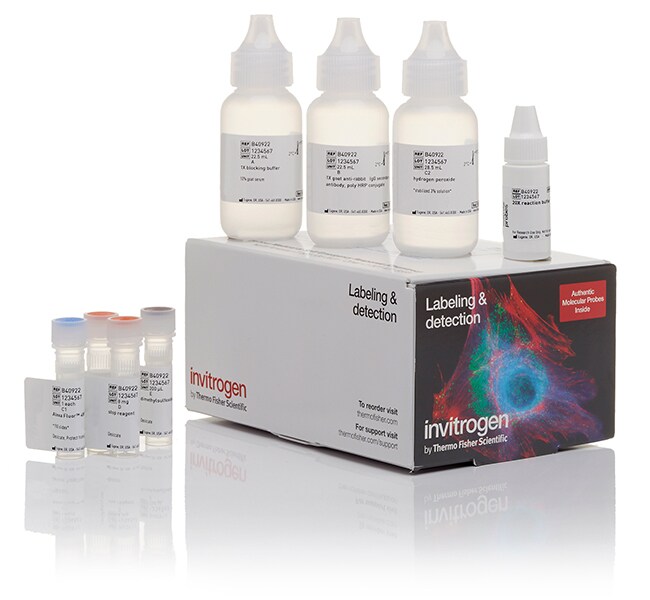
Alexa Fluor™ 488 酪胺 SuperBoost™ 试剂盒,山羊抗兔 IgG
SuperBoost™ 酪胺信号放大是检测多色荧光免疫组织化学 (ICC)、免疫组织化学 (IHC ) 和原位杂交 (ISH) 应用中的低丰度靶标的最灵敏方法。SuperBoost了解更多信息
Have Questions?
更改视图

| 货号 | 数量 |
|---|---|
| B40922 | 足以用于 150 个玻片 |
| B40943 | 50 张玻片 |
货号 B40922
价格(CNY)
5,897.00
飞享价
Ends: 31-Dec-2026
8,189.00共减 2,292.00 (28%)
Each
数量:
足以用于 150 个玻片
价格(CNY)
5,897.00
飞享价
Ends: 31-Dec-2026
8,189.00共减 2,292.00 (28%)
Each
SuperBoost™ 酪胺信号放大是检测多色荧光免疫组织化学 (ICC)、免疫组织化学 (IHC ) 和原位杂交 (ISH) 应用中的低丰度靶标的最灵敏方法。SuperBoost 试剂盒集 AlexaFluor™ 染料的亮度与聚-HRP 介导的酪胺标记反应的出色信号放大功能于一身,灵敏度相当于标准方法的 10-200 倍。SuperBoost 试剂盒灵敏度也是常规酪胺放大技术(如 TSA™)的 2-10 倍。为实现优异的研究结果,SuperBoost 试剂盒可提供成像方法难以提供的更为清晰的关键指标结果。
SuperBoost 试剂盒使用简便,可根据标准 ICC、IHC 或 FISH 实验方案轻松灵活调整,适用于任意类型的细胞或组织。使用 SuperBoost 试剂盒标记的细胞适用于任意类型的显微镜,可生成高分辨率的多重分析图像。本款特定试剂盒包含可使用标准绿色/FITC/GFP 过滤器立方体检测到的 AlexaFluor 488 酪胺(激发/发射波长 496/524)。该试剂盒还具有 poly-HRP 偶联山羊抗兔 IgG 二抗。
SuperBoost 试剂盒的特性包括:
•通过荧光成像技术超高灵敏度检测低含量或复杂靶标
•采用标准滤光片的简单实验方案和检测过程
•适用于高分辨率多通路图像—与 DAPI、二抗和其他 SuperBoost 试剂盒共标记
•相对于标准 ICC/IHC/ISH 实验,所需的一抗量减少了 10-100 倍
SuperBoost 试剂盒基于酪胺信号放大系统,利用辣根过氧化物酶 (HRP) 的催化活性在原位高密度标记靶标蛋白或核酸序列。使用 SuperBoost 试剂盒进行的典型 ICC/IHC/ISH 实验所需一抗量比标准 ICC/IHC/ISH 实验少 10-100 倍。SuperBoost 试剂盒可提供远高于背景的特异性信号强度,因此可以轻松优化实验方案,以便从观测到较高的内源性自发荧光的样品中检测特异性信号
SuperBoost 试剂盒的优点
利用 Alexa Fluor 酪胺增强信号:SuperBoost 试剂盒利用可与 HRP 反应的 Alexa Fluor 酰胺,最终将明亮、光稳定的 Alexa Fluor 染料沉积在周围蛋白质和其他类似分子上。SuperBoost 试剂盒是唯一款能够集 Alexa Fluor 染料的亮度与酪胺信号放大的增强功能于一身,以生成优异的信号的试剂盒。
Poly-HRP 优点:与 TSA 不同,SuperBoost 试剂盒采用了 poly-HRP 偶联的二抗。在此系统中,多种 HRP 酶与短链聚合物偶联,比常规 HRP 系统将信号增强数倍。poly-HRP 的结构形式使抗体能够像常规 HRP 偶联二抗一样,有效透过细胞或组织。酶/抗体蛋白摩尔比的平均值为“4”。
反应终止液:与任何基于酶的标记系统一样,此系统也会发生信号过溢的情况。SuperBoost 试剂盒包含 HRP 终止液,可终止 HRP 反应。可利用 HRP 终止液获取尽可能高的信号,同时又不会导致背景信号升高。使用优化的 HRP 反应时间生成的图像与使用标准 ICC/IHC/ISH 方法产生的图像一样清晰,但灵敏度提高了 10-200 倍。
背景更低:SuperBoost 试剂盒包含用于消除或减少内源性过氧化物酶和荧光背景信号的封闭剂。这些封闭剂有助于确保仅增强特异性信号,同时阻断非特异性/背景信号。
SuperBoost 试剂盒使用简便,可根据标准 ICC、IHC 或 FISH 实验方案轻松灵活调整,适用于任意类型的细胞或组织。使用 SuperBoost 试剂盒标记的细胞适用于任意类型的显微镜,可生成高分辨率的多重分析图像。本款特定试剂盒包含可使用标准绿色/FITC/GFP 过滤器立方体检测到的 AlexaFluor 488 酪胺(激发/发射波长 496/524)。该试剂盒还具有 poly-HRP 偶联山羊抗兔 IgG 二抗。
SuperBoost 试剂盒的特性包括:
•通过荧光成像技术超高灵敏度检测低含量或复杂靶标
•采用标准滤光片的简单实验方案和检测过程
•适用于高分辨率多通路图像—与 DAPI、二抗和其他 SuperBoost 试剂盒共标记
•相对于标准 ICC/IHC/ISH 实验,所需的一抗量减少了 10-100 倍
SuperBoost 试剂盒基于酪胺信号放大系统,利用辣根过氧化物酶 (HRP) 的催化活性在原位高密度标记靶标蛋白或核酸序列。使用 SuperBoost 试剂盒进行的典型 ICC/IHC/ISH 实验所需一抗量比标准 ICC/IHC/ISH 实验少 10-100 倍。SuperBoost 试剂盒可提供远高于背景的特异性信号强度,因此可以轻松优化实验方案,以便从观测到较高的内源性自发荧光的样品中检测特异性信号
SuperBoost 试剂盒的优点
利用 Alexa Fluor 酪胺增强信号:SuperBoost 试剂盒利用可与 HRP 反应的 Alexa Fluor 酰胺,最终将明亮、光稳定的 Alexa Fluor 染料沉积在周围蛋白质和其他类似分子上。SuperBoost 试剂盒是唯一款能够集 Alexa Fluor 染料的亮度与酪胺信号放大的增强功能于一身,以生成优异的信号的试剂盒。
Poly-HRP 优点:与 TSA 不同,SuperBoost 试剂盒采用了 poly-HRP 偶联的二抗。在此系统中,多种 HRP 酶与短链聚合物偶联,比常规 HRP 系统将信号增强数倍。poly-HRP 的结构形式使抗体能够像常规 HRP 偶联二抗一样,有效透过细胞或组织。酶/抗体蛋白摩尔比的平均值为“4”。
反应终止液:与任何基于酶的标记系统一样,此系统也会发生信号过溢的情况。SuperBoost 试剂盒包含 HRP 终止液,可终止 HRP 反应。可利用 HRP 终止液获取尽可能高的信号,同时又不会导致背景信号升高。使用优化的 HRP 反应时间生成的图像与使用标准 ICC/IHC/ISH 方法产生的图像一样清晰,但灵敏度提高了 10-200 倍。
背景更低:SuperBoost 试剂盒包含用于消除或减少内源性过氧化物酶和荧光背景信号的封闭剂。这些封闭剂有助于确保仅增强特异性信号,同时阻断非特异性/背景信号。
For Research Use Only. Not for use in diagnostic procedures.
规格
产品类型酪胺 SuperBoost 试剂盒
数量足以用于 150 个玻片
运输条件经批准可在室温下或置于湿冰上运输
偶联物Alexa Fluor 488
产品线SuperBoost
Unit SizeEach
内容与储存
1 个试剂盒足以用于 150 个显微镜玻片 (18 x 18 mm),其中含有:封闭缓冲液 (1X),22.5 mL聚-HRP 偶联山羊抗兔二抗 (1X),22.5 mL Alexa Fluor 酪胺试剂 过氧化氢
常见问题解答 (FAQ)
我用了一种神经元特异性抗体标记自己的神经元,但我无法从偶联荧光染料的一抗中获得足够的信号。我该如何改善?
我的抗原丰度极低,如何放大信号?
With a SuperBoost tyramide kit, I got excessive and non-specific labeling. What can I do to limit background and acquire a more localized labeling?
Is it possible to perform dual TSA labeling with SuperBoost tyramide kits?
How are SuperBoost tyramide kits different from the original TSA labeling kits?
引用和文献 (5)
引用和文献
Abstract
Tyramide Signal Amplification for Immunofluorescent Enhancement.
Journal:
PubMed ID:26160574
'Enzyme-linked signal amplification is a key technique used to enhance the immunohistochemical detection of protein, mRNA, and other molecular species. Tyramide signal amplification (TSA) is based on a catalytic reporter deposit in close vicinity to the epitope of interest. The advantages of this technique are its simplicity, enhanced sensitivity, high
Codeficiency of Lysosomal Mucolipins 3 and 1 in Cochlear Hair Cells Diminishes Outer Hair Cell Longevity and Accelerates Age-Related Hearing Loss.
Journal:J Neurosci
PubMed ID:29453205
Acquired hearing loss is the predominant neurodegenerative condition associated with aging in humans. Although mutations on several genes are known to cause congenital deafness in newborns, few genes have been implicated in age-related hearing loss (ARHL), perhaps because its cause is likely polygenic. Here, we generated mice lacking lysosomal calcium
Activation of the AKT Pathway in the Ascending Aorta With Bicuspid Aortic Valve.
Journal:Circ J
PubMed ID:30089758
Dilatation of the ascending aorta affects those patients with bicuspid aortic valve (BAV), even after valvular surgery, possibly due to tissue fragility. The goal of the study was the molecular characterization of aorta with BAV compared to that with normal tricuspid aortic valve (TAV). Methods and Results: The subjects were
Transcriptomal signatures of vaccine adjuvants and accessory immunostimulation of sentinel cells by toll-like receptor 2/6 agonists.
Journal:Hum Vaccin Immunother
PubMed ID:29852079
An important component of vaccine development is the identification of safe and effective adjuvants. We sought to identify transcriptomal signatures of innate immune stimulating molecules using next-generation RNA sequencing with the goal of being able to utilize such signatures in identifying novel immunostimulatory compounds with adjuvant activity. The CC family
BMP-IHH-mediated interplay between mesenchymal stem cells and osteoclasts supports calvarial bone homeostasis and repair.
Journal:Bone Res
PubMed ID:30345151
Calvarial bones are connected by fibrous sutures. These sutures provide a niche environment that includes mesenchymal stem cells (MSCs), osteoblasts, and osteoclasts, which help maintain calvarial bone homeostasis and repair. Abnormal function of osteogenic cells or diminished MSCs within the cranial suture can lead to skull defects, such as craniosynostosis. Despite the