Search


引用和文献 (2)
Invitrogen™
Alexa Fluor™ 594 Tyramide SuperBoost™ 试剂盒,链霉亲和素
SuperBoost™ 酪胺信号放大是检测多色荧光免疫组织化学 (ICC)、免疫组织化学 (IHC ) 和原位杂交 (ISH) 应用中的低丰度靶标的最灵敏方法。SuperBoost了解更多信息
| 货号 | 数量 |
|---|---|
| B40935 | 150 Slides |
货号 B40935
价格(CNY)
8,148.00
Each
数量:
150 Slides
价格(CNY)
8,148.00
Each
SuperBoost™ 酪胺信号放大是检测多色荧光免疫组织化学 (ICC)、免疫组织化学 (IHC ) 和原位杂交 (ISH) 应用中的低丰度靶标的最灵敏方法。SuperBoost 试剂盒集 AlexaFluor™ 染料的亮度与 poly-HRP 介导的酪胺标记反应的出色信号放大功能于一身,灵敏度相当于标准方法10-200倍。为实现优异的研究结果,SuperBoost 试剂盒可提供成像方法难以提供的更为清晰的关键区域。
SuperBoost 试剂盒使用简便,可根据标准 ICC、IHC 或 FISH 实验方案轻松灵活调整,适用于任意类型的细胞或组织。使用 SuperBoost 试剂盒标记的细胞适用于任意类型的显微镜,可生成高分辨率的多重分析图像。本款特定试剂盒包含可使用标准红色/Texas Red 过滤器立方体检测到的 AlexaFluor 594 酪胺 (591/617 ex/em)。该试剂盒还含有 HRP 标记链霉亲和素。
SuperBoost 试剂盒的功能包括:
•通过荧光成像技术超高灵敏度检测低含量或复杂靶标
• 采用标准滤光片的简单实验方案和检测过程
• 适用于配合—DAPI、二抗或其他 SuperBoost 共标记,获得高分辨率的多重分析图像
• 相对于标准 ICC/IHC/ISH 实验,所需的一抗量减少了10-100倍
SuperBoost 试剂盒基于酪胺信号放大系统,利用辣根过氧化物酶 (HRP) 的催化活性在原位高密度标记靶标蛋白或核酸序列。使用 SuperBoost 试剂盒进行的普通 ICC/IHC/ISH 实验所需一抗量比标准 ICC/IHC/ISH 实验少了10-100倍。SuperBoost 试剂盒可提供远高于背景的特异性信号强度,因此可以轻松优化实验方案,以便从观测到较高的内源性自发荧光的样品中检测特异性信号
SuperBoost 试剂盒的优点
利用 Alexa Fluor 酪胺增强信号:SuperBoost 试剂盒利用可与 HRP 反应的 Alexa Fluor 酰胺,最终将明亮、光稳定的 Alexa Fluor 染料沉积在周围蛋白质和其他类似分子上。SuperBoost 试剂盒是唯一将 Alexa Fluor 染料的亮度与酪酰胺信号放大技术相结合以产生优质信号的试剂盒。
反应终止液:与任何基于酶的标记系统一样,此系统也会发生信号过溢的情况。SuperBoost 试剂盒包含 HRP 终止液,可终止 HRP 反应。可利用 HRP 终止液获取尽可能高的信号,同时又不会导致背景信号升高。优化的 HRP 反应所获得的图像与标准 ICC/IHC/ISH 方法产生的图像一样清晰,但灵敏度提高了10-200倍。
背景更低:SuperBoost 试剂盒包含用于消除或减少内源性过氧化物酶和荧光背景信号的封闭剂。这些封闭剂有助于确保仅增强特异性信号,同时阻断非特异性/背景信号。
SuperBoost 试剂盒使用简便,可根据标准 ICC、IHC 或 FISH 实验方案轻松灵活调整,适用于任意类型的细胞或组织。使用 SuperBoost 试剂盒标记的细胞适用于任意类型的显微镜,可生成高分辨率的多重分析图像。本款特定试剂盒包含可使用标准红色/Texas Red 过滤器立方体检测到的 AlexaFluor 594 酪胺 (591/617 ex/em)。该试剂盒还含有 HRP 标记链霉亲和素。
SuperBoost 试剂盒的功能包括:
•通过荧光成像技术超高灵敏度检测低含量或复杂靶标
• 采用标准滤光片的简单实验方案和检测过程
• 适用于配合—DAPI、二抗或其他 SuperBoost 共标记,获得高分辨率的多重分析图像
• 相对于标准 ICC/IHC/ISH 实验,所需的一抗量减少了10-100倍
SuperBoost 试剂盒基于酪胺信号放大系统,利用辣根过氧化物酶 (HRP) 的催化活性在原位高密度标记靶标蛋白或核酸序列。使用 SuperBoost 试剂盒进行的普通 ICC/IHC/ISH 实验所需一抗量比标准 ICC/IHC/ISH 实验少了10-100倍。SuperBoost 试剂盒可提供远高于背景的特异性信号强度,因此可以轻松优化实验方案,以便从观测到较高的内源性自发荧光的样品中检测特异性信号
SuperBoost 试剂盒的优点
利用 Alexa Fluor 酪胺增强信号:SuperBoost 试剂盒利用可与 HRP 反应的 Alexa Fluor 酰胺,最终将明亮、光稳定的 Alexa Fluor 染料沉积在周围蛋白质和其他类似分子上。SuperBoost 试剂盒是唯一将 Alexa Fluor 染料的亮度与酪酰胺信号放大技术相结合以产生优质信号的试剂盒。
反应终止液:与任何基于酶的标记系统一样,此系统也会发生信号过溢的情况。SuperBoost 试剂盒包含 HRP 终止液,可终止 HRP 反应。可利用 HRP 终止液获取尽可能高的信号,同时又不会导致背景信号升高。优化的 HRP 反应所获得的图像与标准 ICC/IHC/ISH 方法产生的图像一样清晰,但灵敏度提高了10-200倍。
背景更低:SuperBoost 试剂盒包含用于消除或减少内源性过氧化物酶和荧光背景信号的封闭剂。这些封闭剂有助于确保仅增强特异性信号,同时阻断非特异性/背景信号。
仅供科研使用。不可用于诊断程序。
规格
产品类型酪胺试剂盒
数量150 Slides
运输条件经批准可在室温下或置于湿冰上运输
偶联物Alexa Fluor 594
产品线SuperBoost
Unit SizeEach
内容与储存
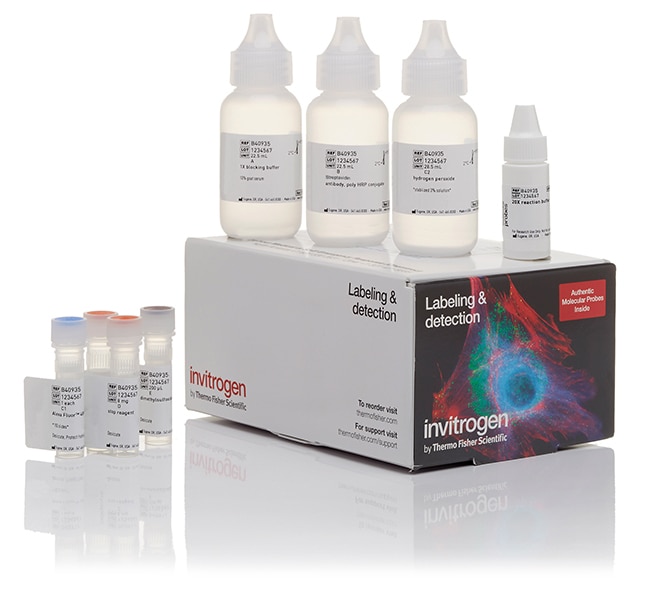
1个试剂盒足以用于150个显微镜玻片 (18 x 18 mm),其中含有:封闭缓冲液 (1 X),22.5 mLHRP-偶联链霉素亲和素 (1 X),22.5 mL Alexa Fluor 酪胺试剂 过氧化氢(稳定的 3% 溶液
常见问题解答 (FAQ)
我用了一种神经元特异性抗体标记自己的神经元,但我无法从偶联荧光染料的一抗中获得足够的信号。我该如何改善?
我的抗原丰度极低,如何放大信号?
With a SuperBoost tyramide kit, I got excessive and non-specific labeling. What can I do to limit background and acquire a more localized labeling?
Is it possible to perform dual TSA labeling with SuperBoost tyramide kits?
How are SuperBoost tyramide kits different from the original TSA labeling kits?
引用和文献 (2)
引用和文献
Abstract
SID-1 Functions in Multiple Roles To Support Parental RNAi in Caenorhabditis elegans.
Journal:Genetics
PubMed ID:28751423
'Systemic RNA interference (RNAi) in Caenorhbaditis elegans requires sid-1, sid-3, and sid-5 Injected, expressed, or ingested double-stranded RNA (dsRNA) is transported between cells, enabling RNAi in most tissues, including the germline and progeny (parental RNAi). A recent report claims that parental RNAi also requires the yolk receptor rme-2 Here, we
FGF23 is synthesised locally by renal tubules and activates injury-primed fibroblasts.
Journal:Sci Rep
PubMed ID:28611350
In kidney disease, higher circulating levels of the mineral-regulating hormone fibroblast growth factor (FGF)-23 are predictive of disease progression but direct pathogenic effects on the kidney are unknown. We sought evidence of local renal synthesis in response to unilateral ureteric obstruction in the mouse, and pro-fibrotic actions of FGF23 on