Search


引用和文献 (35)
Invitrogen™
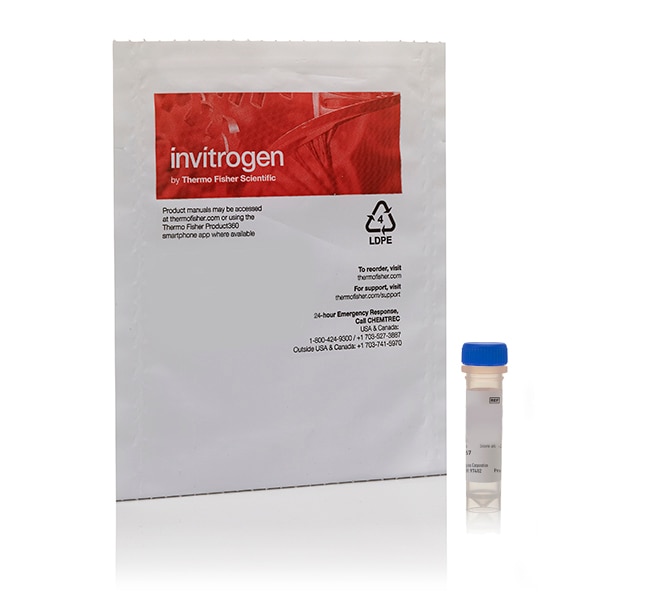
CellEvent™ 半胱天冬酶-3/7 检测试剂
CellEvent 半胱天冬酶-3/7 检测试剂是永远检测细胞凋亡的新型荧光底物。这些底物可检测活细胞中活化的半胱天冬酶-3/7,这些活细胞可通过抗体检测工作流程进行固定和多通路检测。
Have Questions?
更改视图

| 货号 | 数量 | 颜色 | 激发/发射 | dimFormat |
|---|---|---|---|---|
| C10423 | 1 x 100 μL 样品瓶 | 绿色 | ∼502/530 nm | |
| C10430 | 1 小瓶 | 红色 | ∼590/610 nm | |
| C10431 | 5 小瓶 | 红色 | ∼590/610 nm | |
| C10432 | 1 小瓶 | 绿色 | ∼502/530 nm | |
| C10433 | 5 小瓶 | 绿色 | ∼502/530 nm | |
| C10434 | 2小瓶(1小瓶为绿色,1小瓶为红色) | 红色,绿色 | ∼590/610 nm,∼502/530 nm | |
| C10723 | 1 x 25 µL 样品瓶 | 绿色 | ∼502/530 nm |
货号 C10423
价格(CNY)
7,296.00
飞享价
Ends: 31-Dec-2026
10,133.00共减 2,837.00 (28%)
Each
数量:
1 x 100 μL 样品瓶
颜色:
绿色
激发/发射:
∼502/530 nm
价格(CNY)
7,296.00
飞享价
Ends: 31-Dec-2026
10,133.00共减 2,837.00 (28%)
Each
CellEvent 半胱天冬酶-3/7 绿色和 CellEvent 半胱天冬酶-3/7 红色检测试剂是适用于活细胞中活化的半胱天冬酶-3/7 的新型荧光底物,这些活细胞可通过免疫荧光 (IF) 和免疫细胞化学 (ICC) 等抗体检测工作流程进行固定和多通路检测。半胱天冬酶-3 的激活是细胞凋亡过程中的重要事件,使得这些优化试剂可用于分析凋亡细胞。CellEvent 半胱天冬酶-3/7 红色检测试剂也可用于检测 GFP 表达细胞中的细胞凋亡。
这些指示剂的特点包括:
•用于细胞凋亡分析的经优化半胱天冬酶-3/7 底物
• 易于使用—只需加入和读取;无需细胞裂解
• 用于时程测量;易于选择目标时间点
• 与活细胞荧光成像和甲醛固定法兼容
• 支持多通道检测—与其他荧光试剂结合,证实同一细胞或细胞群中的细胞凋亡
CellEvent™ 半胱天冬酶-3/7 绿色检测试剂:最大吸收/发射波长 ∼502/530 nm。可使用 FITC/GFP 传统滤光片组进行检测。
CellEvent™ 半胱天冬酶-3/7 红色检测试剂:最大吸收/发射波长 ∼590/610 nm。可使用传统 Texas 红色滤光片组进行检测。
CellEvent™ 半胱天冬酶-3/7 红色检测试剂和 CellEvent™ 半胱天冬酶-3/7 绿色检测试剂以干粉形式提供。仅需向干粉中加入 100µL PBS 即可制备 100X 储备液。用完全培养基按 1:100 的比例稀释该 100X 储备液,染色细胞 30-60 分钟,然后用荧光显微镜分析。
CellEvent™ 半胱天冬酶-3/7 红色检测试剂也以即用型 DMSO 溶液形式提供。DMSO 溶液为 400X 即用型储备液。仅需用生长培养基按 1:400 的比例稀释该储备液,然后染色细胞 30-60 分钟。
为了防止凋亡细胞被洗掉,染色结束时无需洗涤。染色细胞可进行活分析或用 4% 多聚甲醛溶液固定,例如含 Image-IT™ 多聚甲醛 4% 的 0.1M 磷酸盐缓冲液 (pH 7.4)(货号:I28800)。这些固定细胞可以进一步处理,以用于 ICC 工作流程。
底物特异性
CellEvent 半胱天冬酶-3/7 检测试剂是与核酸结合染料偶联的四氨基酸肽 (DEVD)。DEVD 肽序列是半胱天冬酶-3/7 的切割位点,并且偶联的染料不发出荧光,直到从肽上断裂并与 DNA 结合为止。
作用机制
由于 DEVD 肽可抑制染料与 DNA 结合的能力,CellEvent 半胱天冬酶-3/7 绿色检测试剂本身不发出荧光。然而,凋亡细胞中半胱天冬酶-3/7 激活后,DEVD 肽断裂,使染料能够结合到 DNA 上并反应产生明亮的荧光。
简易的三步方案
使用 CellEvent 半胱天冬酶 3/7 检测试剂,只需将其添加到细胞中,孵育 30–60 分钟,即可进行观察。含已激活半胱天冬酶-3/7 的凋亡细胞具有明亮的绿色或红色细胞核,而不含已激活半胱天冬酶 3/7 的细胞只发出微弱的荧光信号。
测定的多功能性可实现对活细胞进行检测和固定
该稳健的测定使研究人员能够对活细胞中半胱天冬酶-3/7 的激活进行检查。此外,由于清洗步骤不是检测所必需的,通常在清洗步骤丢失的脆弱的凋亡细胞会被保存。重要的是,CellEvent 半胱天冬酶 3/7 检测试剂发出的荧光信号可在固定和透化过程中保存下来。这允许灵活地进行终点测定,并使用免疫细胞化学方法探测其他关注的蛋白质。
•用于细胞凋亡分析的经优化半胱天冬酶-3/7 底物
• 易于使用—只需加入和读取;无需细胞裂解
• 用于时程测量;易于选择目标时间点
• 与活细胞荧光成像和甲醛固定法兼容
• 支持多通道检测—与其他荧光试剂结合,证实同一细胞或细胞群中的细胞凋亡
CellEvent™ 半胱天冬酶-3/7 绿色检测试剂:最大吸收/发射波长 ∼502/530 nm。可使用 FITC/GFP 传统滤光片组进行检测。
CellEvent™ 半胱天冬酶-3/7 红色检测试剂:最大吸收/发射波长 ∼590/610 nm。可使用传统 Texas 红色滤光片组进行检测。
CellEvent™ 半胱天冬酶-3/7 红色检测试剂和 CellEvent™ 半胱天冬酶-3/7 绿色检测试剂以干粉形式提供。仅需向干粉中加入 100µL PBS 即可制备 100X 储备液。用完全培养基按 1:100 的比例稀释该 100X 储备液,染色细胞 30-60 分钟,然后用荧光显微镜分析。
CellEvent™ 半胱天冬酶-3/7 红色检测试剂也以即用型 DMSO 溶液形式提供。DMSO 溶液为 400X 即用型储备液。仅需用生长培养基按 1:400 的比例稀释该储备液,然后染色细胞 30-60 分钟。
为了防止凋亡细胞被洗掉,染色结束时无需洗涤。染色细胞可进行活分析或用 4% 多聚甲醛溶液固定,例如含 Image-IT™ 多聚甲醛 4% 的 0.1M 磷酸盐缓冲液 (pH 7.4)(货号:I28800)。这些固定细胞可以进一步处理,以用于 ICC 工作流程。
底物特异性
CellEvent 半胱天冬酶-3/7 检测试剂是与核酸结合染料偶联的四氨基酸肽 (DEVD)。DEVD 肽序列是半胱天冬酶-3/7 的切割位点,并且偶联的染料不发出荧光,直到从肽上断裂并与 DNA 结合为止。
作用机制
由于 DEVD 肽可抑制染料与 DNA 结合的能力,CellEvent 半胱天冬酶-3/7 绿色检测试剂本身不发出荧光。然而,凋亡细胞中半胱天冬酶-3/7 激活后,DEVD 肽断裂,使染料能够结合到 DNA 上并反应产生明亮的荧光。
简易的三步方案
使用 CellEvent 半胱天冬酶 3/7 检测试剂,只需将其添加到细胞中,孵育 30–60 分钟,即可进行观察。含已激活半胱天冬酶-3/7 的凋亡细胞具有明亮的绿色或红色细胞核,而不含已激活半胱天冬酶 3/7 的细胞只发出微弱的荧光信号。
测定的多功能性可实现对活细胞进行检测和固定
该稳健的测定使研究人员能够对活细胞中半胱天冬酶-3/7 的激活进行检查。此外,由于清洗步骤不是检测所必需的,通常在清洗步骤丢失的脆弱的凋亡细胞会被保存。重要的是,CellEvent 半胱天冬酶 3/7 检测试剂发出的荧光信号可在固定和透化过程中保存下来。这允许灵活地进行终点测定,并使用免疫细胞化学方法探测其他关注的蛋白质。
For Research Use Only. Not for use in diagnostic procedures.
规格
颜色绿色
激发/发射∼502/530 nm
适用于(设备)荧光显微镜、高内涵仪器
配方2 mM 溶液,溶于 DMSO
孵育时间30 min
标签类型其他标记或染料
产品线CellEvent
产品类型半胱天冬酶 3/7 绿色检测试剂
数量1 x 100 μL 样品瓶
反应时间30 min
运输条件室温
偶联物CellEvent™ 半胱天冬酶 3/7 绿色
检测方法荧光
Unit SizeEach
内容与储存
100 μL,2 mM 溶液,溶于 DMSO。在 ≤-20°C 下干燥、避光储存。
常见问题解答 (FAQ)
哪种细胞凋亡荧光检测方法能在Countess II FL全自动细胞计数仪上使用?
我能固定我的CellEvent Caspase 3/7标记的细胞么?
我希望在微孔板实验中测定细胞增殖和细胞凋亡。您有推荐的产品么?
流式细胞术的优势有哪些?
我能在流式细胞仪上进行哪些应用?
引用和文献 (35)
引用和文献
Abstract
Combination Small Molecule MEK and PI3K Inhibition Enhances Uveal Melanoma Cell Death in a Mutant GNAQ- and GNA11-Dependent Manner.
Journal:Clin Cancer Res
PubMed ID:22733540
Activating Q209L/P mutations in GNAQ or GNA11 (GNAQ/11) are present in approximately 80% of uveal melanomas. Mutant GNAQ/11 are not currently therapeutically targetable. Inhibiting key down-stream effectors of GNAQ/11 represents a rational therapeutic approach for uveal melanomas that harbor these mutations. The mitogen-activated protein/extracellular signal-regulated kinase/mitogen-activated protein kinase (MEK/MAPK) and
Perforin rapidly induces plasma membrane phospholipid flip-flop.
Journal:PLoS One
PubMed ID:21931672
'The cytotoxic cell granule secretory pathway is essential for host defense. This pathway is fundamentally a form of intracellular protein delivery where granule proteases (granzymes) from cytotoxic lymphocytes are thought to diffuse through barrel stave pores generated in the plasma membrane of the target cell by the pore forming protein
Membrane sialidase NEU3 is highly expressed in human melanoma cells promoting cell growth with minimal changes in the composition of gangliosides.
Journal:Cancer Sci
PubMed ID:21895867
'NEU3 is a membrane sialidase specific for gangliosides. Its increased expression and implication in some cancers have been reported. Here, we analyzed NEU3 expression in malignant melanoma cell lines and its roles in the cancer phenotypes. Quantitative RT-PCR revealed that high levels of the NEU3 gene were expressed at almost
Pardaxin, an Antimicrobial Peptide, Triggers Caspase-Dependent and ROS-Mediated Apoptosis in HT-1080 Cells.
Journal:Mar Drugs
PubMed ID:22073006
Pardaxin is an antimicrobial peptide (AMP) that was first isolated from secretions of the Red Sea Moses sole. The role of pardaxin in inducing apoptosis for preventing cancer has not yet been investigated. In the present study, we examined the antitumor activity of pardaxin against human fibrosarcoma HT-1080 cells; pardaxin
Development of a highly sensitive in vitro endothelial cell toxicity assay for evaluating ricin toxin A chain-based vaccines or therapeutics.
Journal:Toxicon
PubMed ID:31207351
'The ricin toxin A chain (RTA) is responsible for ricin intoxication due to inhibition of protein synthesis. RTA is also known to cause endothelial toxicity [via a 3 amino acid sequence (x)D(y) motif that acts as a natural disintegrin] resulting in vascular leak syndrome (VLS) in humans. An in vitro