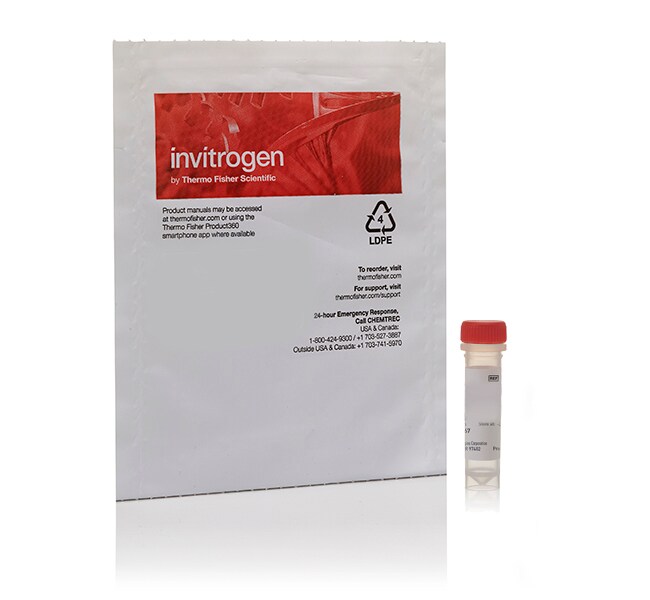
Click-iT™ sDIBO Alkynes for copper-free click chemistry
Invitrogen™

Click-iT™ sDIBO Alkynes for copper-free click chemistry

Green features
Experience copper-free 'click chemistry' with Click-IT™ Alexa Fluor™, and sDIBO Alkyne reagents, which are ideal for surface labeling of live cells and minimize damage to enzymes and fluorescent proteins.
Have Questions?
Change viewbuttonViewtableView
Catalog NumberLabel or DyeReactive MoietyMolecular Weight (g/mol)
C20025SDP esterSDP ester, sDIBO Alkyne∼1050
C10407
also known as C-10407
Alexa Fluor™ 594DIBO Alkyne∼1200
C20020Alexa Fluor™ 488sDIBO Alkyne∼1400
C20021Alexa Fluor™ 555sDIBO Alkyne∼1800
C20022Alexa Fluor™ 647sDIBO Alkyne∼1900
C20023BiotinsDIBO Alkyne∼1000
Catalog number C20025
Price (CNY)
5,447.00
Each
Add to cart
Label or Dye:
SDP ester
Reactive Moiety:
SDP ester, sDIBO Alkyne
Molecular Weight (g/mol):
∼1050
Price (CNY)
5,447.00
Each
Add to cart
Achieve efficient labeling of azides with Click-It sDIBO Alkynes. Our Click-IT sDIBO alkynes enable the labeling of azido labeled targets without the need for copper catalysis and are available with a variety of Alexa Fluor or biotin labels, as well as amine or thiol reactive groups for creating your own conjugates. Macromolecules that have been azido-modified enzymatically, chemically, or metabolically can now be labeled easily, yielding soluble bioconjugates.

Click-iT sDIBO Alkyne labels react with azides via a copper-free Click chemistry reaction to form a stable triazole linkage with an Alexa Fluor, Biotin, or label of your choice. Copper-free click reactions using our sDIBO alkynes are ideal for surface labeling of live cells; they also minimize damage to fluorescent proteins like GFP or R-PE. For intracellular labeling, the nonspecific binding of DIBO alkynes creates a background signal, and a labeling strategy using picolyl azides is the preferred solution in these instances.

Click chemistry-labeled molecules can be applied to complex biological samples and be detected with unprecedented sensitivity due to extremely low background. Macromolecules that have been azide-modified enzymatically, chemically, or metabolically can be labeled more easily, yielding more soluble bioconjugates with improved biological labeling utility.

To make a concentrated stock solution from 2–5 mM, dissolve the dye-alkyne in high quality anhydrous DMSO. Store frozen, desiccated, and protected from light. Click-iT SDP Ester sDIBO alkyne is susceptible to hydrolysis, so prepare the stock solution fresh on the day of the experiment.

For Research Use Only. Not for use in diagnostic procedures.
Specifications
Green FeaturesLess hazardous
Kit ContentsContains 1 mg of SDP Ester sDIBO Alkyne
Labeling MethodClick Chemistry
Labeling TargetAzide
Label or DyeSDP ester
Molecular Weight (g/mol)∼1050
Quantity1 mg
Reactive MoietySDP ester, sDIBO Alkyne
Shipping ConditionDry Ice
Product LineClick-iT™
Unit SizeEach
Contents & Storage
Store at ≤ -20°C. Desiccation recommended. Protect material from long-term exposure to light; may be exposed to light for short periods of time

Frequently asked questions (FAQs)

What concentration and solvent do you recommend for making a stock solution of Click-iT sDIBO Alkynes for copper-free click chemistry?

For Click-iT sDIBO Alkynes for coper-free click chemistry (Cat. Nos. C10407, C20020, C20021, C20022, C20023, C20025), we recommend a 2-5 mM stock solution in DMSO.

Find additional tips, troubleshooting help, and resources within our Cell Analysis Support Center.