Search


引用和文献 (6)
Invitrogen™
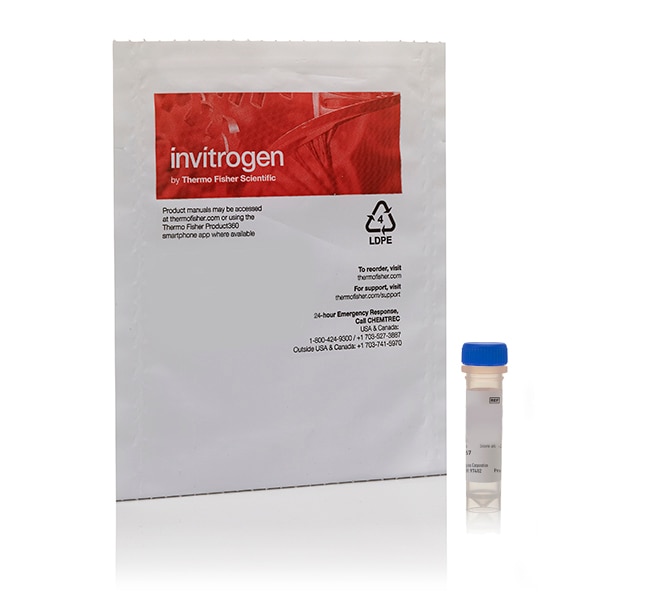
CellMask™ 细胞膜染色剂
Invitrogen CellMask™ 细胞膜染色剂能够快速、均匀地标记几乎所有类型细胞的细胞膜。这种染色剂迅速起效,并可通过任何成像仪器采用标准显微镜滤光片组进行检测。
Have Questions?
更改视图

| 货号 | 颜色 |
|---|---|
| C37608 | 绿色 |
| C10046 | 深红色 |
| C10045 | 橙色 |
货号 C37608
价格(CNY)
2,550.00
飞享价
Ends: 31-Dec-2026
3,541.00共减 991.00 (28%)
Each
颜色:
绿色
价格(CNY)
2,550.00
飞享价
Ends: 31-Dec-2026
3,541.00共减 991.00 (28%)
Each
Invitrogen CellMask™ 细胞膜染色剂能够快速、均匀地标记几乎所有类型细胞的细胞膜。这种染色剂迅速起效,并可通过任何成像仪器采用标准显微镜滤光片组进行检测。根据细胞类型和实验条件,细胞膜染色将持续 60–90 分钟而不会出现可检测到的内化,为大多数活细胞动态研究提供了足够的时间。该染料可固定,但不可透化。
Invitrogen CellMask™ 细胞膜染色剂能够快速、均匀地标记几乎所有类型细胞的细胞膜。这种染色剂迅速起效,并可通过任何成像仪器采用标准显微镜滤光片组进行检测。根据细胞类型和实验条件,细胞膜染色将持续 60–90 分钟而不会出现可检测到的内化,为大多数活细胞动态研究提供了足够的时间。这种染色剂可固定,但不可透化。
CellMask™ 细胞膜染色剂的特点包括:
• 灵敏度—特异性和快速的细胞膜染色
• 出色的保留力—染色可持续 60–90 分钟
• 可用于常用的显微镜通道,绿色、橙色、深红色和近红外
其他方法的缺点
细胞膜是细胞边界的便利标记物,因此许多探针已用于细胞膜染色。通常使用亲脂性染料;但是,它们会快速内化,导致成像时间窗非常狭窄。荧光标记的凝集素(如麦胚凝集素)也已经被用作细胞膜染料。偶联的凝集素依赖细胞表面的糖进行染色,因此染色不一致,并且不同细胞类型之间存在差异。稳健的细胞膜染色对于包括转位测定和细胞膜动态变化在内的各种应用都非常重要,并且可用作传统及自动化成像和分析中的通用细胞鉴定工具。
CellMask™ 细胞膜染色剂的作用原理
CellMask™ 细胞膜染色剂经设计用于对各种哺乳动物细胞类型的细胞膜进行均匀染色,与 DiI、DiO 以及标记的麦胚凝集素等传统方法相比,其内化较为缓慢。
CellMask™ 细胞膜染色剂为两亲性分子,包含亲脂性基团(用于实现出色的膜加载)以及带负电荷的亲水性染料(用于将探针锚定在细胞膜中)。CellMask™ 细胞膜染色剂在为活细胞成像提供充足机会的同时,染色模式在甲醛固定后仍然可以保持,从而支持其他多参数成像选择。但是,使用 CellMask™ 细胞膜染色后不能进行去垢剂提取,因此不能与需要透化处理的探针一起使用。
CellMask™ 细胞膜染色剂的特点包括:
• 灵敏度—特异性和快速的细胞膜染色
• 出色的保留力—染色可持续 60–90 分钟
• 可用于常用的显微镜通道,绿色、橙色、深红色和近红外
其他方法的缺点
细胞膜是细胞边界的便利标记物,因此许多探针已用于细胞膜染色。通常使用亲脂性染料;但是,它们会快速内化,导致成像时间窗非常狭窄。荧光标记的凝集素(如麦胚凝集素)也已经被用作细胞膜染料。偶联的凝集素依赖细胞表面的糖进行染色,因此染色不一致,并且不同细胞类型之间存在差异。稳健的细胞膜染色对于包括转位测定和细胞膜动态变化在内的各种应用都非常重要,并且可用作传统及自动化成像和分析中的通用细胞鉴定工具。
CellMask™ 细胞膜染色剂的作用原理
CellMask™ 细胞膜染色剂经设计用于对各种哺乳动物细胞类型的细胞膜进行均匀染色,与 DiI、DiO 以及标记的麦胚凝集素等传统方法相比,其内化较为缓慢。
CellMask™ 细胞膜染色剂为两亲性分子,包含亲脂性基团(用于实现出色的膜加载)以及带负电荷的亲水性染料(用于将探针锚定在细胞膜中)。CellMask™ 细胞膜染色剂在为活细胞成像提供充足机会的同时,染色模式在甲醛固定后仍然可以保持,从而支持其他多参数成像选择。但是,使用 CellMask™ 细胞膜染色后不能进行去垢剂提取,因此不能与需要透化处理的探针一起使用。
仅供科研使用。不可用于诊断程序。
规格
颜色绿色
描述CellMask™ 绿色细胞膜染料
适用于(设备)共聚焦显微镜、荧光显微镜
产品线Cellmask
数量100 μL
容积(公制)100 μL
标签类型荧光染料
产品类型细胞膜染色剂
亚细胞定位细胞膜
Unit SizeEach
内容与储存
在冷冻冰箱(–5° 至 –30°C)中避光储存。
常见问题解答 (FAQ)
我想标记细胞膜,但可选的染料有多种,该如何选择?
Can I use CellMask Plasma membrane stains or Alexa Fluor dye labeled wheat germ agglutinin to label the plasma membrane of my paraffin sections?
How long does the staining last with CellMask Plasma Membrane Stains?
What dyes are used to make the CellMask stains?
I want to label the plasma membrane of my cells, but there are several dyes to choose from. Which one should I use?
引用和文献 (6)
引用和文献
Abstract
BAR scaffolds drive membrane fission by crowding disordered domains.
Journal:J Cell Biol
PubMed ID:30504247
'Cellular membranes are continuously remodeled. The crescent-shaped bin-amphiphysin-rvs (BAR) domains remodel membranes in multiple cellular pathways. Based on studies of isolated BAR domains in vitro, the current paradigm is that BAR domain-containing proteins polymerize into cylindrical scaffolds that stabilize lipid tubules. But in nature, proteins that contain BAR domains often
Altering integrin engagement regulates membrane localization of K
Journal:J Cell Sci
PubMed ID:31391240
How ion channels localize and distribute on the cell membrane remains incompletely understood. We show that interventions that vary cell adhesion proteins and cell size also affect the membrane current density of inward-rectifier K
Anchoring cortical granules in the cortex ensures trafficking to the plasma membrane for post-fertilization exocytosis.
Journal:Nat Commun
PubMed ID:31118423
Following fertilization, cortical granules exocytose ovastacin, a metalloendopeptidase that cleaves ZP2 in the zona pellucida surrounding mouse eggs to prevent additional sperm binding. Using high- and super-resolution imaging with ovastacin
Membrane Mechanical Properties Regulate the Effect of Strain on Spontaneous Electrophysiology in Human iPSC-Derived Neurons.
Journal:Neuroscience
PubMed ID:30817953
Peripheral nerves contain neuron fibers vital for movement and sensation and are subject to continuous elongation and compression during everyday movement. At supraphysiological strains conduction blocks occur, resulting in permanent or temporary loss of function. The mechanisms underpinning these alterations in electrophysiological activity remain unclear; however, there is evidence that
APOL1 C-Terminal Variants May Trigger Kidney Disease through Interference with APOL3 Control of Actomyosin.
Journal:Cell Rep
PubMed ID:32187552
The C-terminal variants G1 and G2 of apolipoprotein L1 (APOL1) confer human resistance to the sleeping sickness parasite Trypanosoma rhodesiense, but they also increase the risk of kidney disease. APOL1 and APOL3 are death-promoting proteins that are partially associated with the endoplasmic reticulum and Golgi membranes. We report that in