Search

Invitrogen™
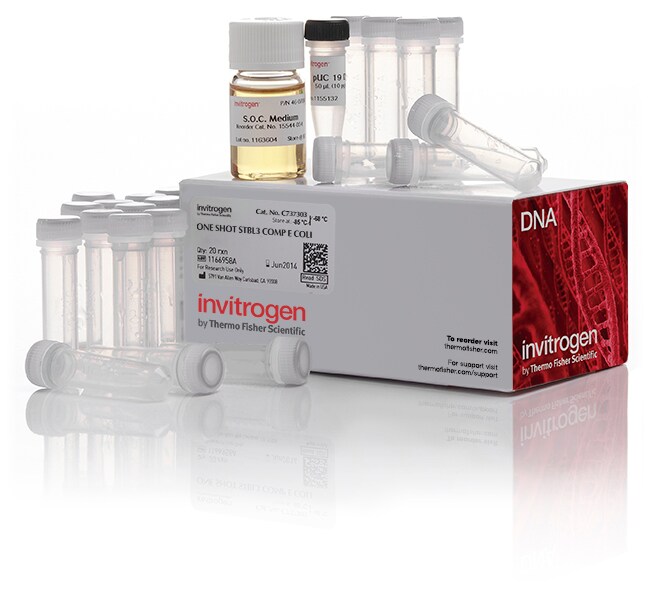
One Shot™ Stbl3™ 化学感受态大肠杆菌
One Shot™ Stbl3™ 化学感受态大肠杆菌专门设计用于克隆慢病毒表达载体中的直接重复序列。与 TOP10 大肠杆菌不同,这些细胞能够降低在 ViraPower™ 慢病毒表达载体和其他逆转录病毒载体中发现的长末端重复片段 (LTR)了解更多信息
| 货号 | 数量 |
|---|---|
| C737303 | 20 x 50μL |
货号 C737303
价格(CNY)
3,230.00
飞享价
Ends: 31-Dec-2026
4,037.00共减 807.00 (20%)
Each
数量:
20 x 50μL
价格(CNY)
3,230.00
飞享价
Ends: 31-Dec-2026
4,037.00共减 807.00 (20%)
Each
One Shot™ Stbl3™ 化学感受态大肠杆菌专门设计用于克隆慢病毒表达载体中的直接重复序列。与 TOP10 大肠杆菌不同,这些细胞能够降低在 ViraPower™ 慢病毒表达载体和其他逆转录病毒载体中发现的长末端重复片段 (LTR) 的同源重组频率。Stbl3™ 细胞的 DNA 得率通常是 TOP10 等替代菌株的 >10 倍(参见表)。One Shot™ Stbl3™ 化学感受态细胞可提供:
•慢病毒载体增殖的理想性能
• 基因组克隆容量增强 (mcrB, mrr)
• 预期效率为 >1 × 10⁸ 转化体/µg 质粒 DNA
• 高 DNA 得率
推荐用途
Stbl3™ 大肠杆菌菌株源自 HB101 大肠杆菌菌株,推荐用于克隆慢病毒 DNA 等含有直接重复序列的不稳定插入片段(例如 Invitrogen™ ViraPower™ 慢病毒表达试剂盒)。One Shot™ Stbl3™ 化学感受态细胞的转化效率大于 1 × 10⁸ cfu/µg 质粒 DNA。
基因型:F-mcrB mrrhsdS20(rB-, mB-) recA13 supE44 ara-14 galK2 lacY1 proA2 rpsL20(StrR) xyl-5 λ-leumtl-1
查找您需要的细胞株和规格
我们可提供多种感受态细胞以增殖不稳定 DNA 插入片段。
•MAX Efficiency™ Stbl2™ 感受态细胞—稳定克隆直接重复和逆转录病毒序列及串联阵列基因 (5 × 200 µL)(>1 × 10⁹ cfu/µg 质粒 DNA)
• One Shot™ Stbl3™ 化学感受态大肠杆菌—克隆含有直接重复序列的不稳定插入片段 (20 × 50 µL)(>1 × 10⁸ cfu/µg 质粒 DNA)
• ElectroMAX™ Stbl4™ 感受态细胞—高转化效率(>5 × 10⁹ cfu/µg 质粒 DNA),适用于生成 cDNA 和基因组文库以及克隆不稳定插入片段
•慢病毒载体增殖的理想性能
• 基因组克隆容量增强 (mcrB, mrr)
• 预期效率为 >1 × 10⁸ 转化体/µg 质粒 DNA
• 高 DNA 得率
推荐用途
Stbl3™ 大肠杆菌菌株源自 HB101 大肠杆菌菌株,推荐用于克隆慢病毒 DNA 等含有直接重复序列的不稳定插入片段(例如 Invitrogen™ ViraPower™ 慢病毒表达试剂盒)。One Shot™ Stbl3™ 化学感受态细胞的转化效率大于 1 × 10⁸ cfu/µg 质粒 DNA。
基因型:F-mcrB mrrhsdS20(rB-, mB-) recA13 supE44 ara-14 galK2 lacY1 proA2 rpsL20(StrR) xyl-5 λ-leumtl-1
查找您需要的细胞株和规格
我们可提供多种感受态细胞以增殖不稳定 DNA 插入片段。
•MAX Efficiency™ Stbl2™ 感受态细胞—稳定克隆直接重复和逆转录病毒序列及串联阵列基因 (5 × 200 µL)(>1 × 10⁹ cfu/µg 质粒 DNA)
• One Shot™ Stbl3™ 化学感受态大肠杆菌—克隆含有直接重复序列的不稳定插入片段 (20 × 50 µL)(>1 × 10⁸ cfu/µg 质粒 DNA)
• ElectroMAX™ Stbl4™ 感受态细胞—高转化效率(>5 × 10⁹ cfu/µg 质粒 DNA),适用于生成 cDNA 和基因组文库以及克隆不稳定插入片段
仅供科研使用。不可用于诊断程序。
规格
耐抗生素细菌(Yes) Streptomycin
蓝色/白色筛查否
是否可克隆甲基化 DNA是
克隆不稳定 DNA适用于克隆不稳定 DNA
是否含 F' 附加体缺乏 F’附加体
高通量能力不兼容高通量应用(手动)
提高质粒质量否
质粒可用于 > 20 kb 质粒
制备无甲基化 DNA不适合制备未甲基化DNA
产品线One Shot
产品类型感受态细胞
数量20 x 50μL
减少克隆重组现象是
运输条件干冰
T1 噬菌体 - 抗性 (tonA)否
转化效率级别中等效率 (10^8-10^9 cfu⁄μg)
产品规格One Shot
种属大肠杆菌
Unit SizeEach
内容与储存
包含:
• One Shot™ Stbl3™ 感受态大肠杆菌:21 小瓶,各 50 µL
• pUC19 DNA (10 pg/µL):1 小瓶,50 µL
• S.O.C. 培养基:1 瓶,6 mL
感受态细胞储存在 -80°C 下。pUC19 DNA 储存在 -20°C 下。SOC 培养基储存在 4°C 或室温下。
• One Shot™ Stbl3™ 感受态大肠杆菌:21 小瓶,各 50 µL
• pUC19 DNA (10 pg/µL):1 小瓶,50 µL
• S.O.C. 培养基:1 瓶,6 mL
感受态细胞储存在 -80°C 下。pUC19 DNA 储存在 -20°C 下。SOC 培养基储存在 4°C 或室温下。