Search


引用和文献 (26)
Invitrogen™
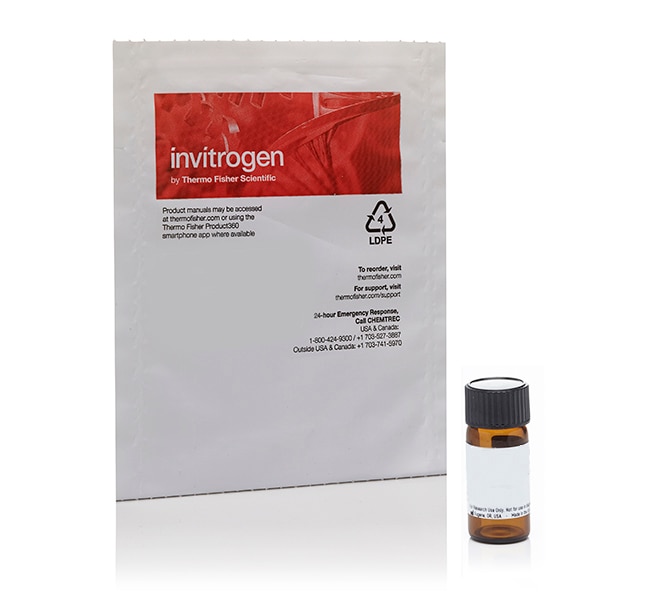
葡聚糖、Oregon Green™ 488;10,000 MW,阴离子
标记的葡聚糖是最常用于显微镜研究的亲水多糖,用于监测细胞分裂、追踪活细胞的移动并报告细胞质基质的流体动力学特性。标记的葡聚糖通常通过显微注射进入细胞。是否需要不同的发射光谱或更长时间的追踪?查看我们的其他哺乳动物细胞追踪产品。葡聚糖规格:•标记 (Ex/Em):Oregon Green™ 488 (496/524)•大小:10,000 MW•电荷:阴离子•可固定:不可固定Molecular了解更多信息
| 货号 | 数量 |
|---|---|
| D7170 | 5 mg |
货号 D7170
价格(CNY)
5,067.00
Each
数量:
5 mg
价格(CNY)
5,067.00
Each
标记的葡聚糖是最常用于显微镜研究的亲水多糖,用于监测细胞分裂、追踪活细胞的移动并报告细胞质基质的流体动力学特性。标记的葡聚糖通常通过显微注射进入细胞。
是否需要不同的发射光谱或更长时间的追踪?查看我们的其他哺乳动物细胞追踪产品。
葡聚糖规格:
•标记 (Ex/Em):Oregon Green™ 488 (496/524)
•大小:10,000 MW
•电荷:阴离子
•可固定:不可固定
Molecular Probes™ 葡聚糖的高生产标准
我们在若干分子量范围内提供超过 50 种荧光和生物素化葡聚糖偶联物。葡聚糖是亲水性多糖,特征为具有中等至较高分子量,水溶性良好,毒性较低。它们通常也表现出低免疫原性。由于它们较不常见的聚-(α-D-1,6-葡萄糖) 连接(使它们能够耐受大多数内源性细胞糖苷酶的切割),葡聚糖具有生物惰性。
在大多数情况下,与其他来源的葡聚糖相比,Molecular Probes™ 荧光葡聚糖更明亮且负电荷更高。此外,我们使用严格的方法尽可能去除未偶联的染料,然后通过薄层色谱分析测定葡聚糖偶联物,以确保不存在低分子量污染物。
广泛的取代基和分子量选择范围
Molecular Probes™ 葡聚糖偶联到生物素或各种荧光基团,包括我们的 7 种 Alexa Fluor™ 染料(Molecular Probes 葡聚糖偶联物–表 14.4),提供以下标称分子量 (MW) 进行选择:3,000;10,000;40,000;70,000;500,000;2,000,000 道尔顿。
葡聚糖净电荷和固定能力
我们利用染料与葡聚糖分子的琥珀酰亚胺偶联,这在大多数情况下会产生中性或阴离子葡聚糖。用于产生 Rhodamine Green™ 和 Alexa Fluor™ 488 葡聚糖的反应可产生中性、阴离子或阳离子最终产物。Alexa Fluor™、Cascade Blue™、荧光黄、荧光素和 Oregon Green™ 葡聚糖本质为阴离子,而大多数用两性离子罗丹明 B、四甲基罗丹明和 Texas Red™ 染料标记的葡聚糖基本为中性。为产生更多的高度阴离子葡聚糖,我们利用专利程序向葡聚糖载体添加了负电荷基团;这些产物为指定的 “聚阴离子”葡聚糖。
某些应用需要用甲醛或戊二醛处理葡聚糖示踪剂,以便用于后续分析。对于这些应用,我们提供大多数荧光基团或生物素葡聚糖偶联物的 “赖氨酸可固定” 版本。这些葡聚糖具有共价结合的赖氨酸残基,允许葡聚糖示踪剂通过醛介导的固定与周围生物分子结合,通过免疫组织化学和超微结构技术进行后续检测。我们还证明我们所有的 10,000 MW Alexa Fluor™ 葡聚糖偶联物均可用醛类固定剂固定。
使用标记的葡聚糖的关键应用
有一系列引用文献描述了标记葡聚糖的用途。一些最常见的用途包括:
•活细胞中的神经元示踪(顺行和逆行)
•活细胞中细胞谱系的示踪
•神经解剖示踪
•检查细胞间通讯(例如,间隙连接、伤口愈合过程以及胚胎发育期间)
•研究血管可透过性和血脑屏障的完整性
•追踪内吞作用
•监测酸化(一些葡聚糖–染料偶联物具有 pH 值敏感性)
•研究细胞质基质的流体动力学特性
仅供研究使用。不得用于任何动物或人类的治疗或诊断。
是否需要不同的发射光谱或更长时间的追踪?查看我们的其他哺乳动物细胞追踪产品。
葡聚糖规格:
•标记 (Ex/Em):Oregon Green™ 488 (496/524)
•大小:10,000 MW
•电荷:阴离子
•可固定:不可固定
Molecular Probes™ 葡聚糖的高生产标准
我们在若干分子量范围内提供超过 50 种荧光和生物素化葡聚糖偶联物。葡聚糖是亲水性多糖,特征为具有中等至较高分子量,水溶性良好,毒性较低。它们通常也表现出低免疫原性。由于它们较不常见的聚-(α-D-1,6-葡萄糖) 连接(使它们能够耐受大多数内源性细胞糖苷酶的切割),葡聚糖具有生物惰性。
在大多数情况下,与其他来源的葡聚糖相比,Molecular Probes™ 荧光葡聚糖更明亮且负电荷更高。此外,我们使用严格的方法尽可能去除未偶联的染料,然后通过薄层色谱分析测定葡聚糖偶联物,以确保不存在低分子量污染物。
广泛的取代基和分子量选择范围
Molecular Probes™ 葡聚糖偶联到生物素或各种荧光基团,包括我们的 7 种 Alexa Fluor™ 染料(Molecular Probes 葡聚糖偶联物–表 14.4),提供以下标称分子量 (MW) 进行选择:3,000;10,000;40,000;70,000;500,000;2,000,000 道尔顿。
葡聚糖净电荷和固定能力
我们利用染料与葡聚糖分子的琥珀酰亚胺偶联,这在大多数情况下会产生中性或阴离子葡聚糖。用于产生 Rhodamine Green™ 和 Alexa Fluor™ 488 葡聚糖的反应可产生中性、阴离子或阳离子最终产物。Alexa Fluor™、Cascade Blue™、荧光黄、荧光素和 Oregon Green™ 葡聚糖本质为阴离子,而大多数用两性离子罗丹明 B、四甲基罗丹明和 Texas Red™ 染料标记的葡聚糖基本为中性。为产生更多的高度阴离子葡聚糖,我们利用专利程序向葡聚糖载体添加了负电荷基团;这些产物为指定的 “聚阴离子”葡聚糖。
某些应用需要用甲醛或戊二醛处理葡聚糖示踪剂,以便用于后续分析。对于这些应用,我们提供大多数荧光基团或生物素葡聚糖偶联物的 “赖氨酸可固定” 版本。这些葡聚糖具有共价结合的赖氨酸残基,允许葡聚糖示踪剂通过醛介导的固定与周围生物分子结合,通过免疫组织化学和超微结构技术进行后续检测。我们还证明我们所有的 10,000 MW Alexa Fluor™ 葡聚糖偶联物均可用醛类固定剂固定。
使用标记的葡聚糖的关键应用
有一系列引用文献描述了标记葡聚糖的用途。一些最常见的用途包括:
•活细胞中的神经元示踪(顺行和逆行)
•活细胞中细胞谱系的示踪
•神经解剖示踪
•检查细胞间通讯(例如,间隙连接、伤口愈合过程以及胚胎发育期间)
•研究血管可透过性和血脑屏障的完整性
•追踪内吞作用
•监测酸化(一些葡聚糖–染料偶联物具有 pH 值敏感性)
•研究细胞质基质的流体动力学特性
仅供研究使用。不得用于任何动物或人类的治疗或诊断。
仅供科研使用。不可用于诊断程序。
规格
标签或染料其他标记或染料
产品类型葡聚糖
数量5 mg
运输条件室温
激发/发射496/524 nm
产品线Oregon Green
Unit SizeEach
内容与储存
储存在冰箱(-5 至 -30°C)中并避光。
引用和文献 (26)
引用和文献
Abstract
The CRE/CREB pathway is transiently expressed in thalamic circuit development and contributes to refinement of retinogeniculate axons.
Journal:Neuron
PubMed ID:11516398
'The development of precise connections in the mammalian brain proceeds through refinement of initially diffuse patterns, a process that occurs largely within critical developmental windows. To elucidate the molecular pathways that orchestrate these early periods of circuit remodeling, we have examined the role of a calcium- and cAMP-regulated transcriptional pathway.
Development of a delivery vehicle for intracellular transport of botulinum neurotoxin antagonists.
Journal:FEBS Lett
PubMed ID:11904143
'A targeted delivery vehicle (DV) was developed for intracellular transport of emerging botulinum neurotoxin (BoNT) antagonists. The DV consisted of the isolated heavy chain (HC) of BoNT/A coupled to a 10-kDa amino dextran via the heterobifunctional linker 3-(2-pyridylthio)-propionyl hydrazide. The HC served to target BoNT-sensitive cells and promote internalization of
Loss of the chloride channel ClC-7 leads to lysosomal storage disease and neurodegeneration.
Journal:EMBO J
PubMed ID:15706348
'ClC-7 is a chloride channel of late endosomes and lysosomes. In osteoclasts, it may cooperate with H(+)-ATPases in acidifying the resorption lacuna. In mice and man, loss of ClC-7 or the H(+)-ATPase a3 subunit causes osteopetrosis, a disease characterized by defective bone resorption. We show that ClC-7 knockout mice additionally
Dermal microvascular endothelial cells express the 180-kDa macrophage mannose receptor in situ and in vitro.
Journal:J Immunol
PubMed ID:11067894
'Expression of the 180-kDa mannose receptor (MR) is mainly found on cells of the macrophage lineage. MR mediates the uptake of micro-organisms and host-derived glycoproteins. We demonstrate that endothelium of the human skin in situ and dermal microvascular endothelial cells (DMEC) in vitro expressed MR at both the protein and
Characterization of cellular optoporation with distance.
Journal:Anal Chem
PubMed ID:10740880
'We have developed and characterized cellular optoporation with visible wavelengths of light using standard uncoated glass cover slips as the absorptive media. A frequency-doubled Nd:YAG laser pulse was focused at the interface of the glass surface and aqueous buffer, creating a stress wave and transiently permeabilizing nearby cells. Following optoporation