Search

Thermo Scientific™
phi29 DNA 聚合酶 (10 U/μL)
phi29 DNA 聚合酶是一种具有高持续合成能力的聚合酶,具有强大的链置换活性,可实现高效的等温 DNA 扩增。
Have Questions?
更改视图

| 货号 | 数量 |
|---|---|
| EP0091 | 2.5μg (250 U) |
| EP0092 | 10μg (1000 U) |
| EP0094 | 50μg (5000 U) |
货号 EP0091
价格(CNY)
648.00
飞享价
Ends: 31-Dec-2026
926.00共减 278.00 (30%)
Each
数量:
2.5μg (250 U)
价格(CNY)
648.00
飞享价
Ends: 31-Dec-2026
926.00共减 278.00 (30%)
Each
Thermo Scientific™ phi29 DNA 聚合酶是一种具有高持续合成能力的聚合酶(高于 70 kb)具有强大的链置换活性,可实现高效等温 DNA 扩增。phi29 DNA 聚合酶还具有优先作用于单链 DNA 或 RNA 的 3'→5’核酸外切酶(校正读码)活性。因此强烈建议使用 3'-端修饰的引物。
Thermo Scientific phi29 DNA 聚合酶是一种具有高持续合成能力的聚合酶(高于 70 kb)具有强大的链置换活性,可实现高效等温 DNA 扩增。phi29 DNA 聚合酶还具有优先作用于单链 DNA 或 RNA 的3’→5核酸外切酶(校正读码)活性。因此,强烈建议使用3'-修饰的引物。
产品优势
• 在已知 的DNA 聚合酶中具有最高的合成能力和链置换活性–可合成超过 70kb 的 DNA 片段
•高度精确的 DNA 合成
• 即使从极少量的模板中也可获得极高的扩增 DNA 产量
•扩增产物可直接用于下游应用(PCR,限制性酶切,SNP 基因分型等)
应用
• 滚环扩增 (RCA):生成周期性 DNA 纳米模板
• 多重置换扩增 (MDA)
•全基因组的无偏扩增(WGA,请参阅支持数据中图 1):
• 用于 SNP 和 STR 检测的 DNA 扩增
•单个细胞中游离 DNA 的扩增
• 病原微生物或宏基因组
•滤纸血斑样品中的DNA扩增
•用于测序的 DNA 模板制备
• 蛋白引物 DNA 扩增
•采用锁式探针的原位基因分型
基于重组的克隆
• 致死性 DNA 的无细胞克隆
• RNA 引物 DNA 扩增
注
向含有 phi29 DNA 聚合酶的反应混合物中添加焦磷酸酶可能会增强 DNA 的合成。
在某些应用中使用此酶可能受专利保护,并且可能需要许可证。
产品优势
• 在已知 的DNA 聚合酶中具有最高的合成能力和链置换活性–可合成超过 70kb 的 DNA 片段
•高度精确的 DNA 合成
• 即使从极少量的模板中也可获得极高的扩增 DNA 产量
•扩增产物可直接用于下游应用(PCR,限制性酶切,SNP 基因分型等)
应用
• 滚环扩增 (RCA):生成周期性 DNA 纳米模板
• 多重置换扩增 (MDA)
•全基因组的无偏扩增(WGA,请参阅支持数据中图 1):
• 用于 SNP 和 STR 检测的 DNA 扩增
•单个细胞中游离 DNA 的扩增
• 病原微生物或宏基因组
•滤纸血斑样品中的DNA扩增
•用于测序的 DNA 模板制备
• 蛋白引物 DNA 扩增
•采用锁式探针的原位基因分型
基于重组的克隆
• 致死性 DNA 的无细胞克隆
• RNA 引物 DNA 扩增
注
向含有 phi29 DNA 聚合酶的反应混合物中添加焦磷酸酶可能会增强 DNA 的合成。
在某些应用中使用此酶可能受专利保护,并且可能需要许可证。
仅供科研使用。不可用于诊断程序。
规格
最大浓度10 U/μL
最佳反应温度30°C
反应时间4 hours
运输条件Dry Ice
适用于(应用)MDA-WGA, RCA
聚合酶phi29 DNA 聚合酶
产品类型Stand-alone enzyme
数量2.5μg (250 U)
Unit SizeEach
内容与储存
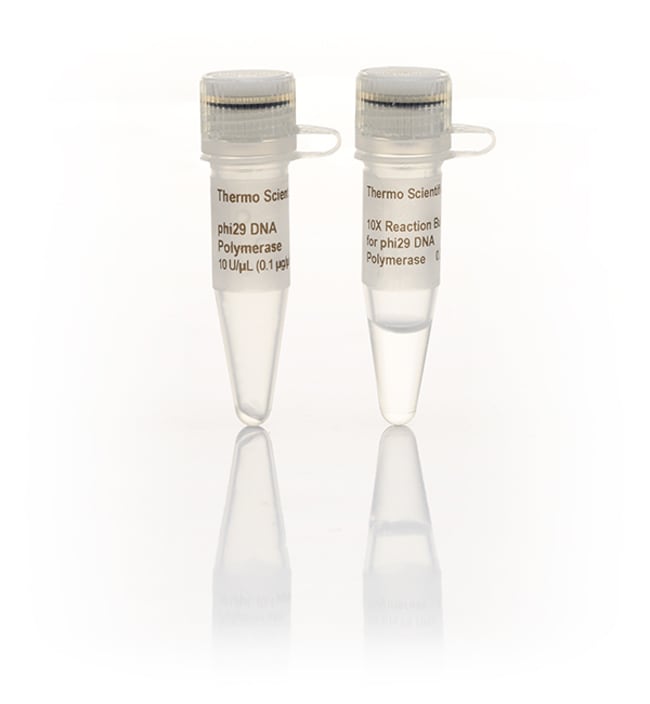
• phi29 DNA Polymerase (250 units at 10 U/μL)
• 10X Reaction Buffer for phi29 DNA Polymerase
• Store at –15 to –25°C.
• 10X Reaction Buffer for phi29 DNA Polymerase
• Store at –15 to –25°C.