Search

Thermo Scientific™
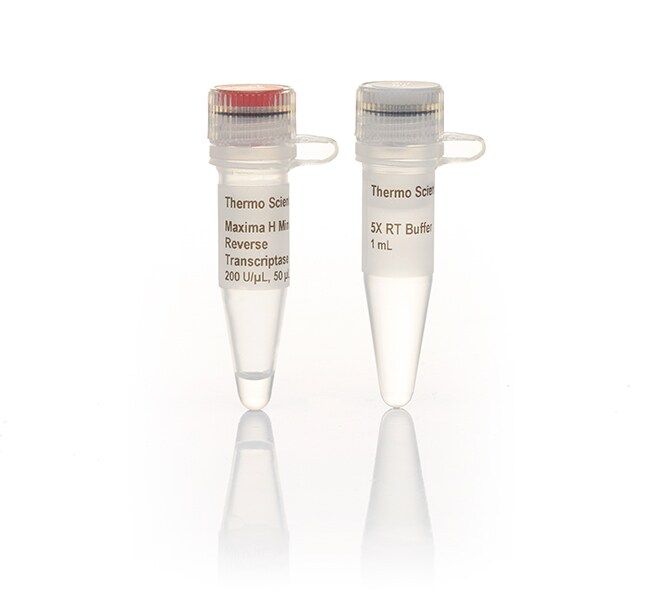
Maxima H Minus 反转录酶 (200 U/μL)
Thermo Scientific Maxima 反转录酶 (RT) 通过 M-MuLV RT 的体外进化制得。该酶具有了解更多信息
Have Questions?
更改视图

| 货号 | 数量 |
|---|---|
| EP0753 | 4 x 10,000 单位 |
| EP0751 | 2,000 单位 |
| EP0752 | 10,000 单位 |
货号 EP0753
价格(CNY)
5,063.00
飞享价
Ends: 31-Dec-2026
7,233.00共减 2,170.00 (30%)
Each
数量:
4 x 10,000 单位
价格(CNY)
5,063.00
飞享价
Ends: 31-Dec-2026
7,233.00共减 2,170.00 (30%)
Each
Thermo Scientific Maxima 反转录酶 (RT) 通过 M-MuLV RT 的体外进化制得。该酶具有 RNA 依赖性和 DNA 依赖性的聚合酶活性,但由于 M-MuLV RT 的 RNase H 域中的突变而缺乏 RNase H 活性。与野生型 M-MuLV RT 相比,该工程化酶具有显著提高的热稳定性,高50倍 的持续合成能力,稳健性和提升的合成速率。
消除 RNase H 活性使该酶能够产生长达 20 kb的 RNA 转录本。由于其热稳定性较高,该酶在整个反转录反应过程中保持完整活性,并产生高产量的 cDNA。反应温度可提升至 65°C,以高效转录具有复杂二级结构的 RNA 可以进行高效的转录,或利用基因特异性的引物提高特异性。Maxima H Minus 酶具有极高的生产力,可提高对常见反应抑制剂(例如胍,甲酰胺和乙醇)的抗性。
产品优势
•热稳定性—在反应混合物中于 50°C 孵育60分钟后,具有 90% 的活性。
•最高活性温度 65°C
•全长 cDNA 的高产量,高达 20 kb
• 高敏感性—可从较宽范围的总 RNA 量(1 pg 至 5 μg)进行可重现的 cDNA 的合成
•高效—15 至 30 分钟内完成 cDNA 的合成
• 对常见反应抑制剂的抗性增强
•整合了修饰的核苷酸
应用
•用于 RT-PCR 和实时 RT-PCR 的第一链 cDNA 合成。
•在高温下进行反转录,以减少二级结构的影响。
•用于克隆和表达的cDNA 的合成。
•用于微阵列的标记 cDNA 探针的产生。
•通过引物延伸分析 RNA。
注
•也可用::Maxima H Minus 第一链 cDNA 合成试剂盒。
消除 RNase H 活性使该酶能够产生长达 20 kb的 RNA 转录本。由于其热稳定性较高,该酶在整个反转录反应过程中保持完整活性,并产生高产量的 cDNA。反应温度可提升至 65°C,以高效转录具有复杂二级结构的 RNA 可以进行高效的转录,或利用基因特异性的引物提高特异性。Maxima H Minus 酶具有极高的生产力,可提高对常见反应抑制剂(例如胍,甲酰胺和乙醇)的抗性。
产品优势
•热稳定性—在反应混合物中于 50°C 孵育60分钟后,具有 90% 的活性。
•最高活性温度 65°C
•全长 cDNA 的高产量,高达 20 kb
• 高敏感性—可从较宽范围的总 RNA 量(1 pg 至 5 μg)进行可重现的 cDNA 的合成
•高效—15 至 30 分钟内完成 cDNA 的合成
• 对常见反应抑制剂的抗性增强
•整合了修饰的核苷酸
应用
•用于 RT-PCR 和实时 RT-PCR 的第一链 cDNA 合成。
•在高温下进行反转录,以减少二级结构的影响。
•用于克隆和表达的cDNA 的合成。
•用于微阵列的标记 cDNA 探针的产生。
•通过引物延伸分析 RNA。
注
•也可用::Maxima H Minus 第一链 cDNA 合成试剂盒。
仅供科研使用。不可用于诊断程序。
规格
最终产品类型第一链 cDNA
产品规格管装
最佳反应温度50°C 至 55°C
数量4 x 10,000 单位
反应形式单独组分
试剂类型反转录
逆转录酶Maxima H Minus
核糖核酸酶 H 活性减少
运输条件干冰
尺寸(最终产品)长达 20 kb
原始材料RNA
技术反转录
最大浓度200 U/μL
高 GC PCR 扩增效果高
反应速度15 至 30 min.
Unit SizeEach
内容与储存
• Maxima H Minus 逆转录酶,4 x 10,000 单位 (200 U/μL)
• 5X RT 缓冲液
储在 –20°C 下。