Search


引用和文献 (20)
Invitrogen™
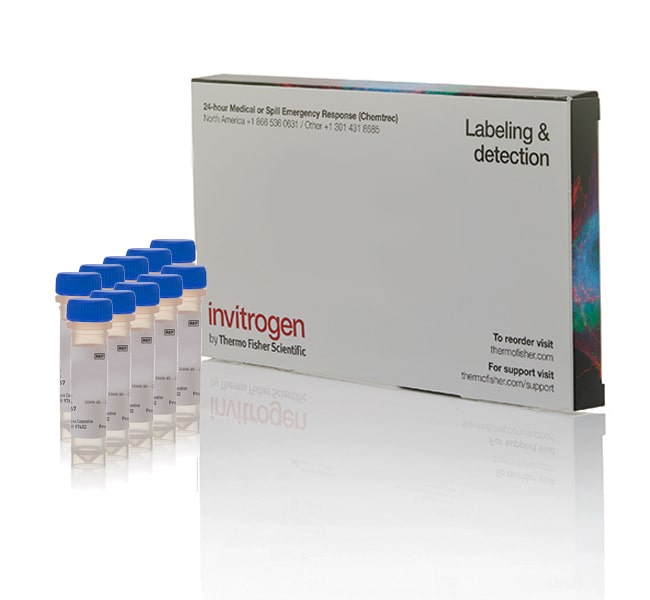
Fluo-5F,AM,细胞可透过性 - 特殊包装
标记钙指示剂是结合 Ca2+ 离子后荧光强度增加的分子。Fluo-5F、fluo-5N 和 fluo-4ff 是具有较低 Ca2+ 结合亲和力的了解更多信息
| 货号 | 数量 |
|---|---|
| F14222 | 10 x 50 μg |
货号 F14222
价格(CNY)
4,716.00
飞享价
Ends: 31-Dec-2026
6,460.00共减 1,744.00 (27%)
Each
数量:
10 x 50 μg
价格(CNY)
4,716.00
飞享价
Ends: 31-Dec-2026
6,460.00共减 1,744.00 (27%)
Each
标记钙指示剂是结合 Ca2+ 离子后荧光强度增加的分子。Fluo-5F、fluo-5N 和 fluo-4ff 是具有较低 Ca2+ 结合亲和力的 fluo-4 类似物,使其适于检测 1 µM 至 1 mM 范围(将使 fluo-3 和 fluo-4 反应饱和)内的细胞内钙水平。将溶解后的指示剂直接加入含有培养细胞的培养皿中,即可向细胞上样 AM 酯形式的这类钙离子指示剂。这些指示剂与氩离子激光源在 488 nm 处的激发波长兼容,使其适用于共聚焦显微镜检查、流式细胞仪和微孔板筛选应用。
了解更多有关离子指示剂(包括钙、钾、pH 值和膜电位指示剂)的信息 ›
钙指示剂(AM 酯)规格:
•标签(Ca2+– 结合形式的激发/发射波长):Fluo-5F (494/516 nm)
• 结合 Ca2+ 后荧光强度增加:>100 倍
• 缓冲液中 Ca2+ 的 Kd:∼2.3 µM
• 结合 Ca2+ 后,荧光增加,波长稍有变化
使用 TPEN 控制重金属阳离子
另外,基于 BAPTA 的指示剂可结合各种重金属阳离子(例如 Mn2+、Zn2+、Pb2+),亲和力远高于 Ca2+。可以使用重金属选择性螯合剂 TPEN 来控制由这些离子引起的钙测量值扰动。
荧光钙指示剂的更多选择
我们提供大量的 Molecular Probes™ 钙指示剂供各种实验场景选择使用。更多信息请参阅《Molecular Probes™ 手册》中的可见光激发的荧光 Ca2+ 指示剂—第 19.3 节。
对于 UV 激发的 Ca2+ 指示剂、基于蛋白的 Ca2+ 指示剂、Ca2+ 指示剂的偶联物以及其他金属离子(即 Mg2+、Zn2+)的荧光指示剂,请查看 Molecular Probes™ 手册中的 Ca2+、Mg2+、Zn2+ 以及其他金属离子指示剂—第 19 章。
仅供科研使用。不可用于人或动物的治疗或诊断。
了解更多有关离子指示剂(包括钙、钾、pH 值和膜电位指示剂)的信息 ›
钙指示剂(AM 酯)规格:
•标签(Ca2+– 结合形式的激发/发射波长):Fluo-5F (494/516 nm)
• 结合 Ca2+ 后荧光强度增加:>100 倍
• 缓冲液中 Ca2+ 的 Kd:∼2.3 µM
• 结合 Ca2+ 后,荧光增加,波长稍有变化
使用 TPEN 控制重金属阳离子
另外,基于 BAPTA 的指示剂可结合各种重金属阳离子(例如 Mn2+、Zn2+、Pb2+),亲和力远高于 Ca2+。可以使用重金属选择性螯合剂 TPEN 来控制由这些离子引起的钙测量值扰动。
荧光钙指示剂的更多选择
我们提供大量的 Molecular Probes™ 钙指示剂供各种实验场景选择使用。更多信息请参阅《Molecular Probes™ 手册》中的可见光激发的荧光 Ca2+ 指示剂—第 19.3 节。
对于 UV 激发的 Ca2+ 指示剂、基于蛋白的 Ca2+ 指示剂、Ca2+ 指示剂的偶联物以及其他金属离子(即 Mg2+、Zn2+)的荧光指示剂,请查看 Molecular Probes™ 手册中的 Ca2+、Mg2+、Zn2+ 以及其他金属离子指示剂—第 19 章。
仅供科研使用。不可用于人或动物的治疗或诊断。
仅供科研使用。不可用于诊断程序。
规格
检测方法荧光
染料类型基于荧光染料
数量10 x 50 μg
运输条件室温
适用于(应用)细胞活力与增殖
适用于(设备)共聚焦显微镜, 荧光显微镜, 高内涵分析仪, HTS 读数仪, 微孔板读数仪, 荧光成像仪
产品类型钙指示剂
Unit SizeEach
内容与储存
在冷冻冰箱(-5°C 至 -30°C)中避光储存。
常见问题解答 (FAQ)
I am doing calcium flux imaging with your Fura-2 calibration kit, but am seeing a large variability in ratio in different places around the slide. I am correcting for uniform illumination, using the product as directed, and sealing the coverslip with nail polish.
I need to label cells with Fluo-4, AM, for a calcium flux assay. How long after labeling will the dye be retained?
引用和文献 (20)
引用和文献
Abstract
A light-dependent increase in free Ca2+ concentration in the salamander rod outer segment.
Journal:J Physiol
PubMed ID:11306652
'1. The Ca(2+) indicator dye fluo-5F was excited by an argon ion laser to measure changes in free Ca(2+) concentration ([Ca2+]i) in the outer segments of isolated salamander rods rapidly exposed to a 0 Ca(2+), 0 Na(+) solution designed to minimise surface membrane Ca(2+) fluxes. Over 30-60 s of laser
Catheter lock solutions influence staphylococcal biofilm formation on abiotic surfaces.
Journal:Nephrol Dial Transplant
PubMed ID:16627606
'BACKGROUND: Microbial biofilms form on central venous catheters and may be associated with systemic infections as well as decreased dialysis efficiency due to catheter thrombosis. The most widely used anticoagulant catheter lock solution in the US is sodium heparin. We have previously shown that sodium heparin in clinically relevant concentrations
Dopaminergic regulation of dendritic calcium: fast multisite calcium imaging.
Journal:Methods Mol Biol
PubMed ID:23296782
'Optimal dopamine tone is required for the normal cortical function; however it is still unclear how cortical-dopamine-release affects information processing in individual cortical neurons. Thousands of glutamatergic inputs impinge onto elaborate dendritic trees of neocortical pyramidal neurons. In the process of ensuing synaptic integration (information processing), a variety of calcium
The effect of light on outer segment calcium in salamander rods.
Journal:J Physiol
PubMed ID:12949220
'Calcium acts as a second messenger in vertebrate rods, regulating the recovery phase of the light response and modulating sensitivity during light-adaptation. Since light not only decreases the outer segment calcium concentration ([Ca2+]i) by closing cyclic nucleotide-gated channels but can also increase [Ca2+]i by releasing Ca2+ from buffer sites or
Imaging calcium entry sites and ribbon structures in two presynaptic cells.
Journal:J Neurosci
PubMed ID:12684438
'We investigated the location of calcium entry sites and synaptic ribbons in the type-Mb goldfish bipolar neuron and the bullfrog saccular hair cell. Cells were loaded with a fast calcium indicator (Fluo-3 or Fluo-5F) and an excess of a high-affinity but slow Ca buffer (EGTA). The cell surface was imaged