Search


引用和文献 (17)
Invitrogen™
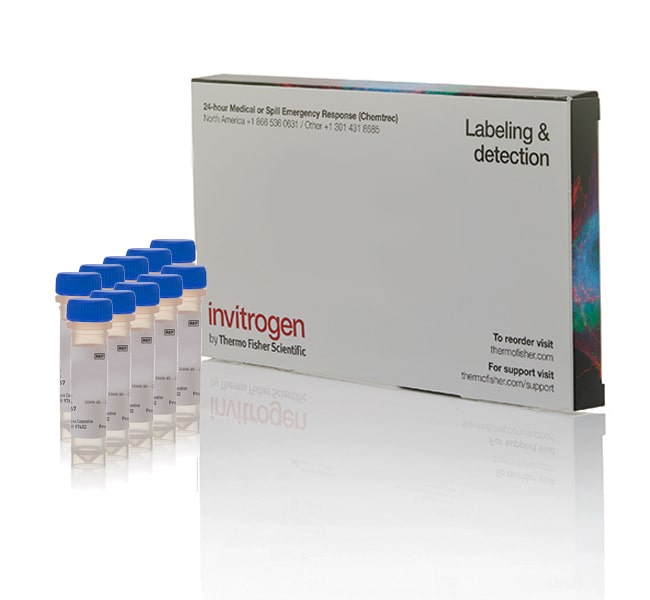
Fluo-4FF,AM,细胞渗透性 - 特殊包装
标记的钙指示剂是结合 Ca2+ 后显示荧光增加的分子。Fluo-5F、fluo-5N 和 fluo-4ff 是具有较低 Ca2+ 结合亲和力的了解更多信息
| 货号 | 数量 |
|---|---|
| F23981 | 10 x 50 μg |
货号 F23981
价格(CNY)
3,864.00
飞享价
Ends: 31-Dec-2026
5,293.00共减 1,429.00 (27%)
Each
数量:
10 x 50 μg
价格(CNY)
3,864.00
飞享价
Ends: 31-Dec-2026
5,293.00共减 1,429.00 (27%)
Each
标记的钙指示剂是结合 Ca2+ 后显示荧光增加的分子。Fluo-5F、fluo-5N 和 fluo-4ff 是具有较低 Ca2+ 结合亲和力的 fluo-4 类似物,使其适于检测 1 µM 至 1 mM 范围(将使 fluo-3 和 fluo-4 反应饱和)内的细胞内钙水平。将溶解后的指示剂直接加入含有培养细胞的培养皿中,即可向细胞上样 AM 酯形式的这类钙离子指示剂。这些指示剂与氩离子激光源在 488 nm 处的激发波长兼容,使其适用于共聚焦显微镜检查、流式细胞仪和微孔板筛选应用。
了解更多有关离子指示剂(包括钙、钾、pH 值和膜电位指示剂)的信息 ›
钙指示剂(AM 酯)规格:
•标签(Ca2+– 结合形式的激发/发射波长):Fluo-4ff (494/516 nm)
• 结合 Ca2+ 后荧光强度增加:>100 倍
• 在缓冲液中与 Ca2+ 结合的 Kd:∼9.7 µM
• 结合 Ca2+ 后,荧光增加,波长稍有变化
使用 TPEN 控制重金属阳离子
另外,基于 BAPTA 的指示剂可结合各种重金属阳离子(例如 Mn2+、Zn2+、Pb2+),亲和力远高于 Ca2+。可以使用重金属选择性螯合剂 TPEN 来控制由这些离子引起的钙测量值扰动。
荧光钙指示剂的更多选择
我们提供大量的 Molecular Probes™ 钙指示剂供各种实验场景选择使用。更多信息请参阅《Molecular Probes™ 手册》中的可见光激发的荧光 Ca2+ 指示剂—第 19.3 节。
对于 UV 激发的 Ca2+ 指示剂、基于蛋白的 Ca2+ 指示剂、Ca2+ 指示剂的偶联物以及其他金属离子(即 Mg2+、Zn2+)的荧光指示剂,请查看 Molecular Probes™ 手册中的 Ca2+、Mg2+、Zn2+ 以及其他金属离子指示剂—第 19 章。
仅供科研使用。不可用于人或动物的治疗或诊断。
了解更多有关离子指示剂(包括钙、钾、pH 值和膜电位指示剂)的信息 ›
钙指示剂(AM 酯)规格:
•标签(Ca2+– 结合形式的激发/发射波长):Fluo-4ff (494/516 nm)
• 结合 Ca2+ 后荧光强度增加:>100 倍
• 在缓冲液中与 Ca2+ 结合的 Kd:∼9.7 µM
• 结合 Ca2+ 后,荧光增加,波长稍有变化
使用 TPEN 控制重金属阳离子
另外,基于 BAPTA 的指示剂可结合各种重金属阳离子(例如 Mn2+、Zn2+、Pb2+),亲和力远高于 Ca2+。可以使用重金属选择性螯合剂 TPEN 来控制由这些离子引起的钙测量值扰动。
荧光钙指示剂的更多选择
我们提供大量的 Molecular Probes™ 钙指示剂供各种实验场景选择使用。更多信息请参阅《Molecular Probes™ 手册》中的可见光激发的荧光 Ca2+ 指示剂—第 19.3 节。
对于 UV 激发的 Ca2+ 指示剂、基于蛋白的 Ca2+ 指示剂、Ca2+ 指示剂的偶联物以及其他金属离子(即 Mg2+、Zn2+)的荧光指示剂,请查看 Molecular Probes™ 手册中的 Ca2+、Mg2+、Zn2+ 以及其他金属离子指示剂—第 19 章。
仅供科研使用。不可用于人或动物的治疗或诊断。
仅供科研使用。不可用于诊断程序。
规格
检测方法荧光
染料类型基于荧光染料
数量10 x 50 μg
运输条件室温
适用于(应用)细胞活力与增殖
适用于(设备)共聚焦显微镜, 荧光显微镜, 高内涵分析仪, HTS 读数仪, 微孔板读数仪, 荧光成像仪
产品类型染料
Unit SizeEach
内容与储存
在冷冻冰箱(-5°C 至 -30°C)中避光储存。
常见问题解答 (FAQ)
I am doing calcium flux imaging with your Fura-2 calibration kit, but am seeing a large variability in ratio in different places around the slide. I am correcting for uniform illumination, using the product as directed, and sealing the coverslip with nail polish.
I need to label cells with Fluo-4, AM, for a calcium flux assay. How long after labeling will the dye be retained?
引用和文献 (17)
引用和文献
Abstract
LIM domain only 4 (LMO4) regulates calcium-induced calcium release and synaptic plasticity in the hippocampus.
Journal:J Neurosci
PubMed ID:22442089
'The LIM domain only 4 (LMO4) transcription cofactor activates gene expression in neurons and regulates key aspects of network formation, but the mechanisms are poorly understood. Here, we show that LMO4 positively regulates ryanodine receptor type 2 (RyR2) expression, thereby suggesting that LMO4 regulates calcium-induced calcium release (CICR) in central
nNOS(+) striatal neurons, a subpopulation spared in Huntington's Disease, possess functional NMDA receptors but fail to generate mitochondrial ROS in response to an excitotoxic challenge.
Journal:
PubMed ID:23720635
'Huntington''s disease (HD) is a neurodegenerative condition characterized by severe neuronal loss in the cortex and striatum that leads to motor and behavioral deficits. Excitotoxicity is thought to be involved in HD and several studies have indicated that NMDA receptor (NMDAR) overactivation can play a role in the selective neuronal
Mechanisms underlying cannabinoid inhibition of presynaptic Ca2+ influx at parallel fibre synapses of the rat cerebellum.
Journal:J Physiol
PubMed ID:15034129
'Activation of CB1 cannabinoid receptors in the cerebellum acutely depresses excitatory synaptic transmission at parallel fibre-Purkinje cell synapses by decreasing the probability of glutamate release. This depression involves the activation of presynaptic 4-aminopyridine-sensitive K(+) channels by CB1 receptors, which in turn inhibits presynaptic Ca(2+) influx controlling glutamate release at these
Cross-tolerance to otherwise lethal N-methyl-D-aspartate and oxygen-glucose deprivation in preconditioned cortical cultures.
Journal:Neuroscience
PubMed ID:11720781
'In vitro ischemic preconditioning induced by subjecting rat cortical cultures to nonlethal oxygen-glucose deprivation protects against a subsequent exposure to otherwise lethal oxygen-glucose deprivation. We provide evidence that attenuation of the postsynaptic N-methyl-D-aspartate (NMDA) receptor- and Ca(2+)-dependent neurotoxicity underlies oxygen-glucose deprivation tolerance. It is demonstrated that extended tolerance to otherwise
Mitochondrial calcium uniporter silencing potentiates caspase-independent cell death in MDA-MB-231 breast cancer cells.
Journal:Biochem Biophys Res Commun
PubMed ID:23602897
'The mitochondrial calcium uniporter (MCU) transports free ionic Ca(2+) into the mitochondrial matrix. We assessed MCU expression in clinical breast cancer samples using microarray analysis and the consequences of MCU silencing in a breast cancer cell line. Our results indicate that estrogen receptor negative and basal-like breast cancers are characterized