Search

Gibco™
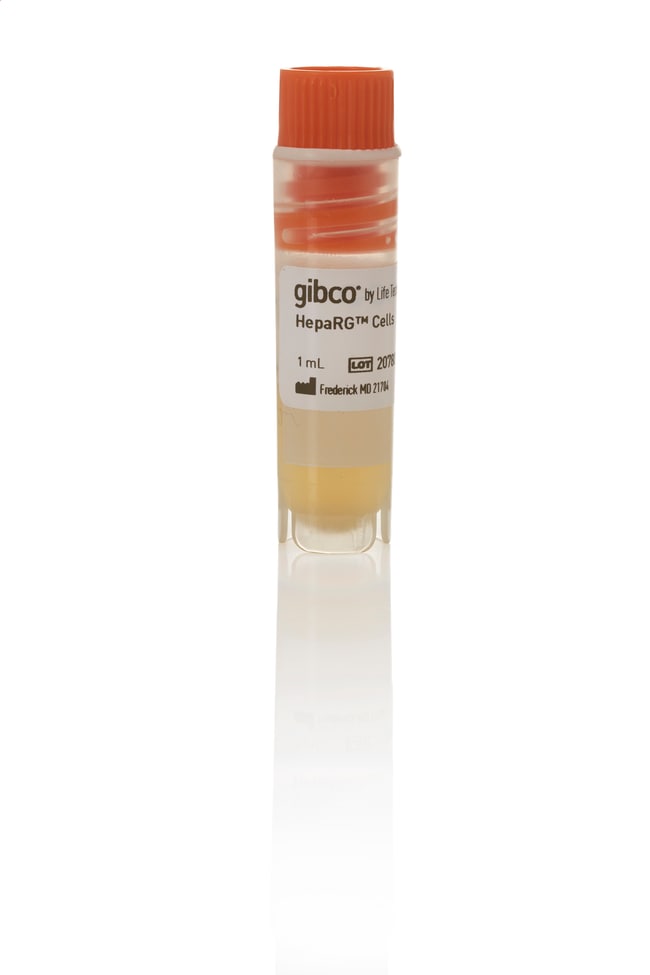
HepaRG™ 细胞,冷冻保存
HepaRG™ 细胞系是一种永生化肝细胞系,可保留原代人肝细胞的许多特征。HepaRG™ 细胞为终末分化细胞且以便利的冻存形式提供。对于需要可重现代谢数据的科学家而言,HepaRG™ 细胞是一种体外工具,可以在具有代谢完整性且可扩展的系统中提供可重现的结果。•可通过具有代谢完整性的系统获得生物相关性结果• 可评估化合物潜在的药物-药物相互作用• 可通过单个细胞群体获得可重现的结果生物相关性HepaRG™ 细胞显示出许多原代人肝细胞的特性,包括形态学了解更多信息
| 货号 | 数量 |
|---|---|
| HPRGC10 | 1 瓶 |
货号 HPRGC10
价格(CNY)
-
数量:
1 瓶
HepaRG™ 细胞系是一种永生化肝细胞系,可保留原代人肝细胞的许多特征。HepaRG™ 细胞为终末分化细胞且以便利的冻存形式提供。对于需要可重现代谢数据的科学家而言,HepaRG™ 细胞是一种体外工具,可以在具有代谢完整性且可扩展的系统中提供可重现的结果。
•可通过具有代谢完整性的系统获得生物相关性结果
• 可评估化合物潜在的药物-药物相互作用
• 可通过单个细胞群体获得可重现的结果
生物相关性
HepaRG™ 细胞显示出许多原代人肝细胞的特性,包括形态学、关键代谢酶的表达、核受体表达以及药物转运体。与 HepG2 和 Fa2N-4 细胞不同,HepaRG™ 细胞具有高 P450 活性和所有核受体的完全表达。
基于代谢预测药物-药物相互作用
HepaRG™ 细胞对典型的 P450 诱导剂和抑制剂的反应程度与原代肝细胞相同,允许将 HepaRG™ 细胞用于评估潜在的药物-药物相互作用。
无限的可重现性
HepaRG™ 细胞显示出许多原代人肝细胞的特性,基本上是单一供体。这些特性使用户在研究基于代谢的药物-药物相互作用时可以获得具有生理学意义的结果,而无需担心依赖供体组织时存在的供体变异性以及批量限制问题。(注:我们提供的是终末分化的细胞)。
HepaRG™ 是 BioPredic International 的商标。
•可通过具有代谢完整性的系统获得生物相关性结果
• 可评估化合物潜在的药物-药物相互作用
• 可通过单个细胞群体获得可重现的结果
生物相关性
HepaRG™ 细胞显示出许多原代人肝细胞的特性,包括形态学、关键代谢酶的表达、核受体表达以及药物转运体。与 HepG2 和 Fa2N-4 细胞不同,HepaRG™ 细胞具有高 P450 活性和所有核受体的完全表达。
基于代谢预测药物-药物相互作用
HepaRG™ 细胞对典型的 P450 诱导剂和抑制剂的反应程度与原代肝细胞相同,允许将 HepaRG™ 细胞用于评估潜在的药物-药物相互作用。
无限的可重现性
HepaRG™ 细胞显示出许多原代人肝细胞的特性,基本上是单一供体。这些特性使用户在研究基于代谢的药物-药物相互作用时可以获得具有生理学意义的结果,而无需担心依赖供体组织时存在的供体变异性以及批量限制问题。(注:我们提供的是终末分化的细胞)。
HepaRG™ 是 BioPredic International 的商标。
仅供科研使用。不可用于诊断程序。
规格
供体单一供体
池数量10 x 10^6
产品类型肝细胞
数量1 瓶
运输条件干冰
年龄成人
细胞系HepaRG™
细胞类型肝细胞
培养类型Hepatocyte Cell Culture
形式冻存
性别女性
种属人
组织Liver
Unit SizeEach
内容与储存
1 瓶,储存在低温储存杜瓦瓶或 -135°C 冷冻室中