Search


引用和文献 (4)
Invitrogen™
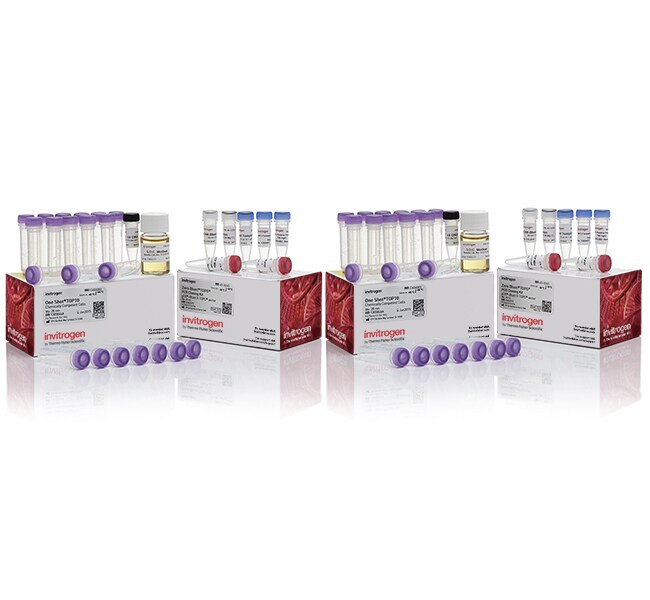
Zero Blunt™ TOPO™ PCR 克隆试剂盒,含 One Shot™ TOP10 化学感受态大肠杆菌细胞
Zero Blunt™ TOPO™ PCR 克隆试剂盒可提供用时5分钟的高效一步克隆策略(TOPO™ 克隆),用于将使用校正读码耐热聚合酶扩增的平末端 PCR 产物直接插入至质粒载体了解更多信息
Have Questions?
更改视图

| 货号 | 数量 |
|---|---|
| K280040 | 50 次反应 |
| K280020 | 25 次反应 |
| K2800J10 又称 K2800-J10 | 10 次反应 |
货号 K280040
价格(CNY)
8,694.00
飞享价
Ends: 31-Dec-2026
17,384.00共减 8,690.00 (50%)
Each
数量:
50 次反应
价格(CNY)
8,694.00
飞享价
Ends: 31-Dec-2026
17,384.00共减 8,690.00 (50%)
Each
Zero Blunt™ TOPO™ PCR 克隆试剂盒可提供用时5分钟的高效一步克隆策略(TOPO™ 克隆),用于将使用校正读码耐热聚合酶扩增的平末端 PCR 产物直接插入至质粒载体。各试剂盒均具有包含用于阳性选择的 ccdB 基因的 Zero Blunt™ TOPO™ 载体(参见图),仅允许含重组体的质粒载体生长。根据您的需要和预算,您可选择含多种感受态细胞或不含感受态细胞的 Zero™ Blunt™ TOPO™ 试剂盒。Zero™ Blunt™ TOPO™ PCR 克隆试剂盒特点:
快速且简便—从 PCR 至克隆仅需3步,手动操作时间短至5分钟
高效—可获得高达 95% 的含正确插入片段的克隆
久经考验—在过去十余年中性能可靠,引用次数超过4,000次
简单 —不需要连接酶、PCR 后程序或含有特异性序列的 PCR 引物。
Zero Blunt™ TOPO™ 克隆试剂盒—概述
载体:pCR™Blunt II-TOPO™ 载体—包含 ccdB 基因,可直接选择重组体
克隆方法:TOPO™ 克隆—使用校正读码耐热聚合酶扩增的平末端 PCR 产物基于拓扑异构酶 I 进行5分钟连接
感受态细胞:多种选择—从包含一般、高效、噬菌体 T1-抗性或快速生长型感受态细胞的试剂盒中选择或使用您的自有细胞。
设计用于校正读码聚合酶的 pCR™Blunt II-TOPO™ 载体—
pCR™Blunt II-TOPO™ 载体设计用于克隆由校正读码耐热聚合酶(如 Platinum™ Pfx DNA 聚合酶)生成的平末端 PCR 产物。pCR™Blunt II-TOPO™ 载体包含:
•位于 PCR 产物插入位点侧翼的 EcoRI 位点,可方便地切除插入片段
• 大肠杆菌中有卡那霉素和 Zeocin™ 抗性基因供您选择
• 用于体外 RNA 转录和测序的 SP6 启动子/引物位点
• 用于测序或 PCR 筛选的 M13 正向和反向引物位点
pCR™Blunt II-TOPO™ 克隆选择
pCR™-Blunt II-TOPO™ 可通过破坏致死性大肠杆菌基因 (ccdB) 直接选择重组体。载体含有与 LacZα 片段 C 端融合的 ccdB 基因。连接平末端 PCR 产物可破坏 LacZα-ccdB 基因融合的表达,从而在转化时仅允许阳性重组体生长。在平板接种时杀死含非重组载体的细胞。因此,无需进行蓝白斑筛选。
简化的基于 TOPO™ 的克隆
使用 TOPO™ 克隆技术,无需使用含特异性序列的 PCR 引物、PCR 后程序、载体制备或其他耗时长的 DNA 操作步骤。只需将 PCR 反应物直接添加至提供的拓扑异构酶带电载体中,孵育5分钟,并转化大肠杆菌感受态细胞。
高效克隆
携带所需插入片段的克隆高达 95%,您可以筛选更少的克隆体,节省时间和成本。该试剂盒中使用的 pCR™Blunt II-TOPO™ 载体含有致死性 ccdB 基因,用于高效选择由耐热校正聚合酶生成的平末端 PCR 重组产物。
克隆标准
在克隆方面,TOPO™ 克隆技术已作为一种可靠技术供成千上万的科学家使用达十余年。快速、简单易用且高效的 TOPO™ 克隆已在多种应用中应用于多种不同载体。
Zero Blunt™ TOPO™ PCR Cloning™ 试剂盒选项
根据您的需求,用于将平末端 PCR 产物直接插入质粒载体的 Zero Blunt™ TOPO™ PCR Cloning 试剂盒可与具有不同优势的多种感受态细胞一起购买。
一般克隆:TOP10 细胞(货号号 K2800-20、K2800-40)
高效克隆:TOP10 Electrocomp™ 细胞(货号号 K2860-01、K2860-40)
一般克隆,噬菌体 T1 抗性:DH5α-T1R(货号 K2820-20、K2820-40)
快速增长:Mach1™-T1R 化学感受态大肠杆菌(货号 K2830-20)
自行提供:灵活性高且可节省成本(货号 450254)
我们还提供另一个版本的试剂盒,包括 PureLink™ 快速质粒小提试剂盒(货号 K2800-02),用于分离清洁、已完成测序的重组质粒。
快速且简便—从 PCR 至克隆仅需3步,手动操作时间短至5分钟
高效—可获得高达 95% 的含正确插入片段的克隆
久经考验—在过去十余年中性能可靠,引用次数超过4,000次
简单 —不需要连接酶、PCR 后程序或含有特异性序列的 PCR 引物。
Zero Blunt™ TOPO™ 克隆试剂盒—概述
载体:pCR™Blunt II-TOPO™ 载体—包含 ccdB 基因,可直接选择重组体
克隆方法:TOPO™ 克隆—使用校正读码耐热聚合酶扩增的平末端 PCR 产物基于拓扑异构酶 I 进行5分钟连接
感受态细胞:多种选择—从包含一般、高效、噬菌体 T1-抗性或快速生长型感受态细胞的试剂盒中选择或使用您的自有细胞。
设计用于校正读码聚合酶的 pCR™Blunt II-TOPO™ 载体—
pCR™Blunt II-TOPO™ 载体设计用于克隆由校正读码耐热聚合酶(如 Platinum™ Pfx DNA 聚合酶)生成的平末端 PCR 产物。pCR™Blunt II-TOPO™ 载体包含:
•位于 PCR 产物插入位点侧翼的 EcoRI 位点,可方便地切除插入片段
• 大肠杆菌中有卡那霉素和 Zeocin™ 抗性基因供您选择
• 用于体外 RNA 转录和测序的 SP6 启动子/引物位点
• 用于测序或 PCR 筛选的 M13 正向和反向引物位点
pCR™Blunt II-TOPO™ 克隆选择
pCR™-Blunt II-TOPO™ 可通过破坏致死性大肠杆菌基因 (ccdB) 直接选择重组体。载体含有与 LacZα 片段 C 端融合的 ccdB 基因。连接平末端 PCR 产物可破坏 LacZα-ccdB 基因融合的表达,从而在转化时仅允许阳性重组体生长。在平板接种时杀死含非重组载体的细胞。因此,无需进行蓝白斑筛选。
简化的基于 TOPO™ 的克隆
使用 TOPO™ 克隆技术,无需使用含特异性序列的 PCR 引物、PCR 后程序、载体制备或其他耗时长的 DNA 操作步骤。只需将 PCR 反应物直接添加至提供的拓扑异构酶带电载体中,孵育5分钟,并转化大肠杆菌感受态细胞。
高效克隆
携带所需插入片段的克隆高达 95%,您可以筛选更少的克隆体,节省时间和成本。该试剂盒中使用的 pCR™Blunt II-TOPO™ 载体含有致死性 ccdB 基因,用于高效选择由耐热校正聚合酶生成的平末端 PCR 重组产物。
克隆标准
在克隆方面,TOPO™ 克隆技术已作为一种可靠技术供成千上万的科学家使用达十余年。快速、简单易用且高效的 TOPO™ 克隆已在多种应用中应用于多种不同载体。
Zero Blunt™ TOPO™ PCR Cloning™ 试剂盒选项
根据您的需求,用于将平末端 PCR 产物直接插入质粒载体的 Zero Blunt™ TOPO™ PCR Cloning 试剂盒可与具有不同优势的多种感受态细胞一起购买。
一般克隆:TOP10 细胞(货号号 K2800-20、K2800-40)
高效克隆:TOP10 Electrocomp™ 细胞(货号号 K2860-01、K2860-40)
一般克隆,噬菌体 T1 抗性:DH5α-T1R(货号 K2820-20、K2820-40)
快速增长:Mach1™-T1R 化学感受态大肠杆菌(货号 K2830-20)
自行提供:灵活性高且可节省成本(货号 450254)
我们还提供另一个版本的试剂盒,包括 PureLink™ 快速质粒小提试剂盒(货号 K2800-02),用于分离清洁、已完成测序的重组质粒。
仅供科研使用。不可用于诊断程序。
规格
细菌或酵母菌株TOP10
细胞类型化学感受态
克隆方法Blunt TOPO™
产品线One Shot
产品类型PCR 克隆试剂盒
促进剂SP6
数量50 次反应
载体Blunt DNA 克隆载体
产品规格试剂盒
Unit SizeEach
内容与储存
盒 1:
• 线性化和拓扑异构酶 I 活化 pCR™Blunt II-TOPO™ 载体
• 盐溶液
• dNTP
• 对照模板
• M13 正向和反向引物
• 无菌水
在 -5 至 -30°C 下储存。
妥善储存时,所有试剂均可稳定储存 6 个月。
盒 2:
• One Shot™ 化学感受态或 Electrocomp™ 大肠杆菌
• S.O.C. 培养基
• 超螺旋 pUC19 对照质粒
在 -68 至 -85°C 下储存。
• 线性化和拓扑异构酶 I 活化 pCR™Blunt II-TOPO™ 载体
• 盐溶液
• dNTP
• 对照模板
• M13 正向和反向引物
• 无菌水
在 -5 至 -30°C 下储存。
妥善储存时,所有试剂均可稳定储存 6 个月。
盒 2:
• One Shot™ 化学感受态或 Electrocomp™ 大肠杆菌
• S.O.C. 培养基
• 超螺旋 pUC19 对照质粒
在 -68 至 -85°C 下储存。
常见问题解答 (FAQ)
pCR2.1-TOPO和pCR4-TOPO载体有什么区别?
pCR2.1-TOPO 和pCRII-TOPO载体的区别是什么?
你们的TOPO克隆试剂盒包含一个对照模板和一个对照引物。我可以获得对照模板的序列吗?
对TOPO TA克隆来说最佳的插入片段:载体比例是多少?是否有公式来计算用量?
插入片段:载体的最佳比例是多少?是否有公式可以进行计算?
引用和文献 (4)
引用和文献
Abstract
Contribution of acquired carbapenem-hydrolyzing oxacillinases to carbapenem resistance in Acinetobacter baumannii.
Journal:Antimicrob Agents Chemother
PubMed ID:16048925
'Carbapenem-hydrolyzing oxacillinases are reported increasingly in Acinetobacter baumannii. Since they hydrolyze carbapenems at low levels, the roles of carbapenem-hydrolyzing oxacillinases OXA-23, OXA-40, and OXA-58 in A. baumannii were determined. The bla(OXA-23), bla(OXA-40), and bla(OXA-58) genes were inserted in broad-host-range plasmid pAT801 and transformed in Escherichia coli DH10B and in A.
A gene network for long-day flowering activates RFT1 encoding a mobile flowering signal in rice.
Journal:Development
PubMed ID:19762423
'Although some genes that encode sensory or regulatory elements for photoperiodic flowering are conserved between the long-day (LD) plant Arabidopsis thaliana and the short-day (SD) plant rice, the gene networks that control rice flowering, and particularly flowering under LD conditions, are not well understood. We show here that RICE FLOWERING
Estrogen receptor-mediated regulation of microRNA inhibits proliferation of vascular smooth muscle cells.
Journal:Arterioscler Thromb Vasc Biol
PubMed ID:23175673
Estradiol (E2) regulates gene transcription by activating estrogen receptor-a and estrogen receptor-ß. Many of the genes regulated by E2 via estrogen receptors are repressed, yet the molecular mechanisms that mediate E2-induced gene repression are currently unknown. We hypothesized that E2, acting through estrogen receptors, regulates expression of microRNAs (miRs) leading
Transmission of human immunodeficiency virus type 1 from a patient who developed AIDS to an elite suppressor.
Journal:J Virol
PubMed ID:18495769
Elite suppressors (ES) are untreated human immunodeficiency virus type 1 (HIV-1)-infected patients who maintain viral loads of <50 copies/ml. The mechanisms involved in this control of viral replication remain unclear. Prior studies suggested that these patients, as well as long-term nonprogressors, are infected with defective HIV-1 variants. Other reports have