Search


引用和文献 (12)
Invitrogen™
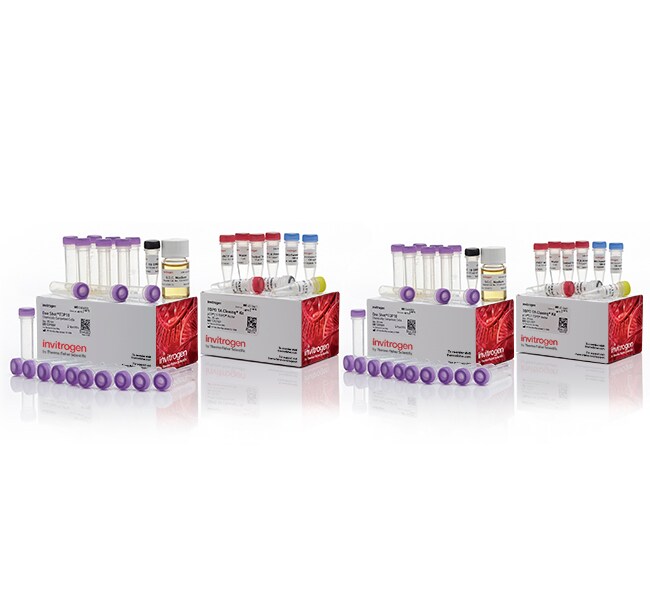
用于亚克隆的 TOPO™ TA Cloning ™ 试剂盒,含 One Shot™ TOP10 化学感受态大肠杆菌细胞
亚克隆用 TOPO™ TA Cloning™ 试剂盒可提供高效、5 分钟的一步克隆策略(“TOPO™ 克隆”),用于将了解更多信息
Have Questions?
更改视图

| 货号 | 数量 |
|---|---|
| K450040 | 50 次反应 |
| K4500J10 | 10 次反应 |
| K450001 | 25 次反应 |
货号 K450040
价格(CNY)
8,279.00
飞享价
Ends: 31-Dec-2026
16,554.00共减 8,275.00 (50%)
Each
数量:
50 次反应
价格(CNY)
8,279.00
飞享价
Ends: 31-Dec-2026
16,554.00共减 8,275.00 (50%)
Each
亚克隆用 TOPO™ TA Cloning™ 试剂盒可提供高效、5 分钟的一步克隆策略(“TOPO™ 克隆”),用于将 Taq 聚合酶–扩增 PCR 产物直接插入一个质粒载体上以进行亚克隆。每个试剂盒使用含便利限制性位点的 pCR™ 2.1-TOPO™ TA 载体进行亚克隆。根据您的需要和预算,您可选择含多种感受态细胞或不含感受态细胞的克隆试剂盒。用于亚克隆的 TOPO™ TA 克隆™试剂盒的特点:
•快速且简便—从 PCR 至克隆仅需3步,手动操作时间短至5分钟
• 高效—可获得高达 95% 含正确插入片段的克隆
• 久经考验—在过去十余年中性能可靠,引用次数超过4,000次
• 简单—不需要连接酶、PCR 后程序或含有特异性序列的 PCR 引物
用于亚克隆的 TOPO™ TA Cloning™ 试剂盒—概述
• 载体:pCR™ 2.1-TOPO™ TA 载体—含15个便利限制性位点(位于您插入片段侧翼)的亚克隆载体,可轻松实现定向亚克隆
• 克隆方法:TOPO™ TA Cloning™ —含 3′-A 突出端(Taq 聚合酶扩增)的 PCR 产物与含 T 突出端的 TOPO™ 载体基于拓扑异构酶 I 进行5分钟连接–
• 感受态细胞:多种选项—从包含一般、高效、噬菌体 T1 抗性或快速生长型感受态细胞的试剂盒中选择或使用您的自有细胞–
pCR™ 2.1-TOPO™ TA 载体—简化克隆和亚克隆
pCR™ 2.1-TOPO™ TA 载体使用 3'-胸苷 (T) 突出端进行线性化以直接连接 Taq 聚合酶–扩增 PCR 产物 (TA cloning™),并使用共价结合拓扑异构酶 I 进行“活化”。无需添加连接酶,在5分钟内即可完成克隆。位于 PCR 产物插入位点侧翼的 EcoRI 位点,可实现插入片段的简便切除或使用任何位于 PCR 插入片段侧翼的 15 个便利限制性位点的任意组合,可轻松实现定向亚克隆。
pCR™ 2.1-TOPO™ TA 克隆选择和操作
pCR™ 2.1-TOPO™ TA 载体包含氨苄青霉素和卡那霉素抗性标记物以及用于蓝/白斑筛选的 LacZα 基因。
简化的基于 TOPO™ 的克隆
使用 TOPO™ 克隆技术,无需使用含有特异性序列的 PCR 引物、PCR 后程序、载体制备或其他耗时长的 DNA 操作步骤。只需将 PCR 反应产物直接添加至提供的拓扑异构酶带电载体中,孵育 5 分钟,并使用大肠杆菌感受态细胞进行转化。
高效克隆
携带所需插入片段的克隆高达 95%,您可以筛选更少的克隆体,从而节省时间和成本。该试剂盒中使用的 pCR™ 2.1-TOPO™ TA 载体含有 3'-T 突出端,用于高效连接含 3'-A 突出端的 Taq 聚合酶–扩增 PCR 产物。
克隆标准
在克隆方面,TOPO™ 克隆技术已作为一种可靠技术供成千上万的科学家使用达十余年。快速、简单易用且高效的 TOPO ™克隆已在多种应用中应用于多种不同载体。
用于亚克隆的TOPO™ TA 克隆™试剂盒—试剂盒选项
根据您的需求,测序用 TOPO™ TA 克隆™试剂盒可与提供不同优势的多种感受态细胞一起购买:
• 一般克隆:TOP10 细胞(货号K4500-01、K4500-40)
•高效克隆:TOP10 Electrocomp™ 细胞(货号号 K4560-01、K4560-40)
• 一般克隆,噬菌体 T1 抗性:DH5α-T1R 细胞(货号 K4520-01、K4520-40)
• 快速生长:Mach1™ -T1R 化学感受态大肠杆菌(货号 K4510-20)
• 自行提供:灵活性高且可节省成本(货号 450641)
我们还提供2个版本的试剂盒,包括 PureLink™ 快速质粒小提试剂盒(货号 K4500-02 和 K4510-02)用于分离清洁、已完成测序的重组质粒。
•快速且简便—从 PCR 至克隆仅需3步,手动操作时间短至5分钟
• 高效—可获得高达 95% 含正确插入片段的克隆
• 久经考验—在过去十余年中性能可靠,引用次数超过4,000次
• 简单—不需要连接酶、PCR 后程序或含有特异性序列的 PCR 引物
用于亚克隆的 TOPO™ TA Cloning™ 试剂盒—概述
• 载体:pCR™ 2.1-TOPO™ TA 载体—含15个便利限制性位点(位于您插入片段侧翼)的亚克隆载体,可轻松实现定向亚克隆
• 克隆方法:TOPO™ TA Cloning™ —含 3′-A 突出端(Taq 聚合酶扩增)的 PCR 产物与含 T 突出端的 TOPO™ 载体基于拓扑异构酶 I 进行5分钟连接–
• 感受态细胞:多种选项—从包含一般、高效、噬菌体 T1 抗性或快速生长型感受态细胞的试剂盒中选择或使用您的自有细胞–
pCR™ 2.1-TOPO™ TA 载体—简化克隆和亚克隆
pCR™ 2.1-TOPO™ TA 载体使用 3'-胸苷 (T) 突出端进行线性化以直接连接 Taq 聚合酶–扩增 PCR 产物 (TA cloning™),并使用共价结合拓扑异构酶 I 进行“活化”。无需添加连接酶,在5分钟内即可完成克隆。位于 PCR 产物插入位点侧翼的 EcoRI 位点,可实现插入片段的简便切除或使用任何位于 PCR 插入片段侧翼的 15 个便利限制性位点的任意组合,可轻松实现定向亚克隆。
pCR™ 2.1-TOPO™ TA 克隆选择和操作
pCR™ 2.1-TOPO™ TA 载体包含氨苄青霉素和卡那霉素抗性标记物以及用于蓝/白斑筛选的 LacZα 基因。
简化的基于 TOPO™ 的克隆
使用 TOPO™ 克隆技术,无需使用含有特异性序列的 PCR 引物、PCR 后程序、载体制备或其他耗时长的 DNA 操作步骤。只需将 PCR 反应产物直接添加至提供的拓扑异构酶带电载体中,孵育 5 分钟,并使用大肠杆菌感受态细胞进行转化。
高效克隆
携带所需插入片段的克隆高达 95%,您可以筛选更少的克隆体,从而节省时间和成本。该试剂盒中使用的 pCR™ 2.1-TOPO™ TA 载体含有 3'-T 突出端,用于高效连接含 3'-A 突出端的 Taq 聚合酶–扩增 PCR 产物。
克隆标准
在克隆方面,TOPO™ 克隆技术已作为一种可靠技术供成千上万的科学家使用达十余年。快速、简单易用且高效的 TOPO ™克隆已在多种应用中应用于多种不同载体。
用于亚克隆的TOPO™ TA 克隆™试剂盒—试剂盒选项
根据您的需求,测序用 TOPO™ TA 克隆™试剂盒可与提供不同优势的多种感受态细胞一起购买:
• 一般克隆:TOP10 细胞(货号K4500-01、K4500-40)
•高效克隆:TOP10 Electrocomp™ 细胞(货号号 K4560-01、K4560-40)
• 一般克隆,噬菌体 T1 抗性:DH5α-T1R 细胞(货号 K4520-01、K4520-40)
• 快速生长:Mach1™ -T1R 化学感受态大肠杆菌(货号 K4510-20)
• 自行提供:灵活性高且可节省成本(货号 450641)
我们还提供2个版本的试剂盒,包括 PureLink™ 快速质粒小提试剂盒(货号 K4500-02 和 K4510-02)用于分离清洁、已完成测序的重组质粒。
仅供科研使用。不可用于诊断程序。
规格
细菌或酵母菌株TOP10
细胞类型化学感受态
克隆方法TOPO™-TA
产品线One Shot
产品类型克隆试剂盒
数量50 次反应
载体TOPO-TA 克隆载体
产品规格试剂盒
Unit SizeEach
内容与储存
盒 1:
• 拓扑异构酶 I 活化 pCR™2.1-TOPO™ 载体
• PCR 缓冲液
•盐溶液
• dNTP
• 对照模板
• M13 正向和反向引物
• 对照 PCR 引物
• 无菌水
在 -5 至 -30°C 下储存。
妥善储存时,所有试剂均可稳定储存 6 个月。
盒 2:
• One Shot™ 化学感受态或 Electrocomp™ 大肠杆菌
• S.O.C. 培养基
• 超螺旋 pUC19 对照质粒
在 -68 至 -85°C 下储存。
• 拓扑异构酶 I 活化 pCR™2.1-TOPO™ 载体
• PCR 缓冲液
•盐溶液
• dNTP
• 对照模板
• M13 正向和反向引物
• 对照 PCR 引物
• 无菌水
在 -5 至 -30°C 下储存。
妥善储存时,所有试剂均可稳定储存 6 个月。
盒 2:
• One Shot™ 化学感受态或 Electrocomp™ 大肠杆菌
• S.O.C. 培养基
• 超螺旋 pUC19 对照质粒
在 -68 至 -85°C 下储存。
常见问题解答 (FAQ)
我可将感受态细胞存储在液氮中吗?
我应该如何存储我的感受态E. Coli?
pCR2.1-TOPO和pCR4-TOPO载体有什么区别?
pCR2.1-TOPO 和pCRII-TOPO载体的区别是什么?
你们的TOPO克隆试剂盒包含一个对照模板和一个对照引物。我可以获得对照模板的序列吗?
引用和文献 (12)
引用和文献
Abstract
Autoregulation of pituitary corticotroph SOCS-3 expression: characterization of the murine SOCS-3 promoter.
Journal:Proc Natl Acad Sci U S A
PubMed ID:10359822
'Pituitary corticotroph SOCS-3 is a novel intracellular regulator of leukemia inhibitory factor (LIF)-mediated proopiomelanocortin gene expression and adrenocorticotropic hormone (ACTH) secretion, inhibiting LIF-activated Janus kinase-signal transducers and activators of transcription (STAT) signaling in a negative autoregulatory loop. We now demonstrate in corticotroph AtT-20 cells that LIF-stimulated endogenous SOCS-3 mRNA expression
Single base mismatches in the mRNA target site allow specific seed region-mediated off-target binding of siRNA targeting human coagulation factor 7.
Journal:RNA Biol
PubMed ID:22258146
'We have analyzed the off-target activity of two siRNAs (F7-1, F7-2) that knock-down human blood coagulation factor 7 mRNA. F7-1 modulates a significant number of non-target transcripts while F7-2 shows high selectivity for the target transcript under various experimental conditions. The 3''-UTRs of all F7-1 off-target genes show statistically significant
A host-specific function is required for ligation of a wide variety of ribozyme-processed RNAs.
Journal:Proc Natl Acad Sci U S A
PubMed ID:10618434
'Hepatitis delta virus (HDV) replicates its circular RNA genome via a rolling circle mechanism. During this process, cis-acting ribozymes cleave adjacent upstream sequences and thereby resolve replication intermediates to unit-length RNA. The subsequent ligation of these 5''OH and 2'',3''-cyclic phosphate termini to form circular RNA is an essential step in
Characterization of a Ustilago maydis gene specifically induced during the biotrophic phase: evidence for negative as well as positive regulation.
Journal:Mol Cell Biol
PubMed ID:10594035
The phytopathogenic basidiomycete Ustilago maydis requires its host plant, maize, for completion of its sexual cycle. To investigate the molecular events during infection, we used differential display to identify plant-induced U. maydis genes. We describe the U. maydis gene mig1 (for
Genetic engineering of phytochrome biosynthesis in bacteria.
Journal:Proc Natl Acad Sci U S A
PubMed ID:11553807
The bilin prosthetic groups of the phytochrome photoreceptors and the light-harvesting phycobiliprotein antennae arise from the oxygen-dependent ring opening of heme. Two ferredoxin-dependent enzymes contribute to this conversion: a heme oxygenase and a bilin reductase with discrete double-bond specificity. Using a dual plasmid system, one expressing a truncated cyanobacterial apophytochrome