Search


引用和文献 (4)
Invitrogen™
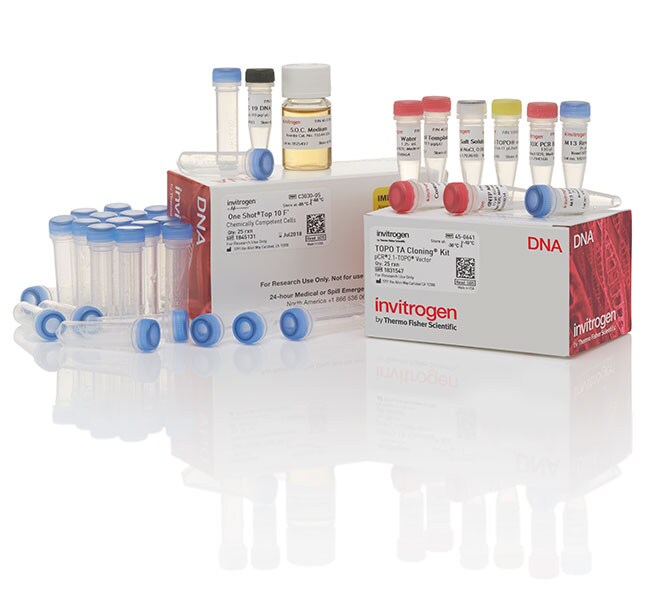
用于亚克隆的 TOPO™ TA Cloning™ 试剂盒,含 TOP10F' 大肠杆菌
亚克隆用 TOPO™ TA Cloning ™ 试剂盒可提供高效的一步法5分钟克隆策略(“TOPO™ 克隆”),用于将 Taq了解更多信息
Have Questions?
更改视图

| 货号 | 数量 |
|---|---|
| K455040 | 50 次反应 |
| K455001 | 25 次反应 |
货号 K455040
价格(CNY)
7,920.00
飞享价
Ends: 31-Dec-2026
15,839.00共减 7,919.00 (50%)
Each
数量:
50 次反应
价格(CNY)
7,920.00
飞享价
Ends: 31-Dec-2026
15,839.00共减 7,919.00 (50%)
Each
亚克隆用 TOPO™ TA Cloning ™ 试剂盒可提供高效的一步法5分钟克隆策略(“TOPO™ 克隆”),用于将 Taq 聚合酶扩增 PCR 产物直接插入到一个质粒载体上以进行亚克隆。每个试剂盒使用含便利限制性位点的 pCR™ 2.1-TOPO™ TA 载体进行亚克隆。根据您的需要和预算,您可选择含多种感受态细胞或不含感受态细胞的克隆试剂盒。用于亚克隆的 TOPO™ TA 克隆™试剂盒的特点:
•快速且简便—从 PCR 至克隆仅需 3 步,手动操作时间短至 5 分钟
• 高效—可获得高达 95% 含正确插入片段的克隆
• 久经考验—在过去十余年中性能可靠,引用次数超过 4,000 次
• 简单—不需要连接酶、PCR 后程序或含有特异性序列的 PCR 引物
用于亚克隆的 TOPO™ TA Cloning™ 试剂盒—概述
• 载体:pCR™ 2.1-TOPO™ TA 载体—含 15 个便利限制性位点(位于您插入片段侧翼)的亚克隆载体,可轻松实现定向亚克隆
• 克隆方法:TOPO™ TA Cloning ™ —含 3′-A 突出端(Taq 聚合酶扩增)的 PCR 产物与含 T 突出端的 TOPO™ 载体基于拓扑异构酶 I 进行 5 分钟连接
•感受态细胞:多种选择—从包含一般、高效、噬菌体 T1 抗性或快速生长型感受态细胞的试剂盒中选择或使用您的自有细胞
pCR™ 2.1-TOPO™ TA 载体—简化克隆和亚克隆
pCR™ 2.1-TOPO™ TA 载体使用 3'-胸苷 (T) 突出端进行线性化以直接连接 Taq 聚合酶扩增 PCR 产物(TA 克隆™),并使用共价结合拓扑异构酶 I 进行“活化”。无需添加连接酶,在 5 分钟内即可完成克隆。位于 PCR 产物插入位点侧翼的 EcoRI 位点,可实现插入片段的简便切除或使用任何位于 PCR 插入片段侧翼的 15 个便利限制性位点的任意组合,可轻松实现定向亚克隆。
pCR™ 2.1-TOPO™ TA 克隆选择和操作
pCR™ 2.1-TOPO™ TA 载体包含氨苄青霉素和卡那霉素抗性标记物以及用于蓝/白斑筛选的 LacZα 基因。
简化的基于 TOPO™ 的克隆
使用 TOPO™ 克隆技术,无需使用含有特异性序列的 PCR 引物、PCR 后程序、载体制备或其他耗时长的 DNA 操作步骤。只需将 PCR 反应产物直接添加至提供的拓扑异构酶带电载体中,孵育 5 分钟,并转化大肠杆菌感受态细胞。
高效克隆
携带所需插入片段的克隆高达 95%,您可以筛选更少的克隆体,从而节省时间和成本。该试剂盒中使用的 pCR™ 2.1-TOPO™ TA 载体含有 3'-T 突出端,用于高效连接含 3'-A 突出端的 Taq 聚合酶扩增 PCR 产物。
克隆标准
在克隆方面,TOPO™ 克隆技术已作为一种可靠技术供成千上万的科学家使用达十余年。快速、简单易用且高效的 TOPO ™克隆已在多种应用中应用于多种不同载体。
用于亚克隆的TOPO™ TA 克隆™试剂盒—试剂盒选项
根据您的需求,测序用 TOPO™ TA 克隆™试剂盒可与提供不同优势的多种感受态细胞一起购买:
• 一般克隆:TOP10 细胞(货号K4500-01、K4500-40)
•高效克隆:TOP10 Electrocomp™ 细胞(货号号 K4560-01、K4560-40)
• 一般克隆,噬菌体 T1 抗性:DH5α-T1R 细胞(货号 K4520-01、K4520-40)
• 快速生长:Mach1™ -T1R 化学感受态大肠杆菌(货号 K4510-20)
• 自行提供:灵活性高且可节省成本(货号 450641)
我们还提供2个版本的试剂盒,包括 PureLink™ 快速质粒小提试剂盒(货号 K4500-02 和 K4510-02)用于分离清洁、已完成测序的重组质粒。
•快速且简便—从 PCR 至克隆仅需 3 步,手动操作时间短至 5 分钟
• 高效—可获得高达 95% 含正确插入片段的克隆
• 久经考验—在过去十余年中性能可靠,引用次数超过 4,000 次
• 简单—不需要连接酶、PCR 后程序或含有特异性序列的 PCR 引物
用于亚克隆的 TOPO™ TA Cloning™ 试剂盒—概述
• 载体:pCR™ 2.1-TOPO™ TA 载体—含 15 个便利限制性位点(位于您插入片段侧翼)的亚克隆载体,可轻松实现定向亚克隆
• 克隆方法:TOPO™ TA Cloning ™ —含 3′-A 突出端(Taq 聚合酶扩增)的 PCR 产物与含 T 突出端的 TOPO™ 载体基于拓扑异构酶 I 进行 5 分钟连接
•感受态细胞:多种选择—从包含一般、高效、噬菌体 T1 抗性或快速生长型感受态细胞的试剂盒中选择或使用您的自有细胞
pCR™ 2.1-TOPO™ TA 载体—简化克隆和亚克隆
pCR™ 2.1-TOPO™ TA 载体使用 3'-胸苷 (T) 突出端进行线性化以直接连接 Taq 聚合酶扩增 PCR 产物(TA 克隆™),并使用共价结合拓扑异构酶 I 进行“活化”。无需添加连接酶,在 5 分钟内即可完成克隆。位于 PCR 产物插入位点侧翼的 EcoRI 位点,可实现插入片段的简便切除或使用任何位于 PCR 插入片段侧翼的 15 个便利限制性位点的任意组合,可轻松实现定向亚克隆。
pCR™ 2.1-TOPO™ TA 克隆选择和操作
pCR™ 2.1-TOPO™ TA 载体包含氨苄青霉素和卡那霉素抗性标记物以及用于蓝/白斑筛选的 LacZα 基因。
简化的基于 TOPO™ 的克隆
使用 TOPO™ 克隆技术,无需使用含有特异性序列的 PCR 引物、PCR 后程序、载体制备或其他耗时长的 DNA 操作步骤。只需将 PCR 反应产物直接添加至提供的拓扑异构酶带电载体中,孵育 5 分钟,并转化大肠杆菌感受态细胞。
高效克隆
携带所需插入片段的克隆高达 95%,您可以筛选更少的克隆体,从而节省时间和成本。该试剂盒中使用的 pCR™ 2.1-TOPO™ TA 载体含有 3'-T 突出端,用于高效连接含 3'-A 突出端的 Taq 聚合酶扩增 PCR 产物。
克隆标准
在克隆方面,TOPO™ 克隆技术已作为一种可靠技术供成千上万的科学家使用达十余年。快速、简单易用且高效的 TOPO ™克隆已在多种应用中应用于多种不同载体。
用于亚克隆的TOPO™ TA 克隆™试剂盒—试剂盒选项
根据您的需求,测序用 TOPO™ TA 克隆™试剂盒可与提供不同优势的多种感受态细胞一起购买:
• 一般克隆:TOP10 细胞(货号K4500-01、K4500-40)
•高效克隆:TOP10 Electrocomp™ 细胞(货号号 K4560-01、K4560-40)
• 一般克隆,噬菌体 T1 抗性:DH5α-T1R 细胞(货号 K4520-01、K4520-40)
• 快速生长:Mach1™ -T1R 化学感受态大肠杆菌(货号 K4510-20)
• 自行提供:灵活性高且可节省成本(货号 450641)
我们还提供2个版本的试剂盒,包括 PureLink™ 快速质粒小提试剂盒(货号 K4500-02 和 K4510-02)用于分离清洁、已完成测序的重组质粒。
仅供科研使用。不可用于诊断程序。
规格
细菌或酵母菌株TOP10F´
克隆方法TOPO™-TA
产品线One Shot
产品类型克隆试剂盒
促进剂T7
数量50 次反应
载体TOPO-TA 克隆载体
产品规格试剂盒
Unit SizeEach
内容与储存
盒 1:
• 拓扑异构酶 I 活化 pCR™2.1-TOPO™ 载体
• PCR 缓冲液
•盐溶液
• dNTP
• 对照模板
• M13 正向和反向引物
• 对照 PCR 引物
• 无菌水
在 -5 至 -30°C 下储存。
妥善储存时,所有试剂均可稳定储存 6 个月。
盒 2:
• One Shot™ 化学感受态或 Electrocomp™ 大肠杆菌
• S.O.C. 培养基
• 超螺旋 pUC19 对照质粒
在 -68 至 -85°C 下储存。
• 拓扑异构酶 I 活化 pCR™2.1-TOPO™ 载体
• PCR 缓冲液
•盐溶液
• dNTP
• 对照模板
• M13 正向和反向引物
• 对照 PCR 引物
• 无菌水
在 -5 至 -30°C 下储存。
妥善储存时,所有试剂均可稳定储存 6 个月。
盒 2:
• One Shot™ 化学感受态或 Electrocomp™ 大肠杆菌
• S.O.C. 培养基
• 超螺旋 pUC19 对照质粒
在 -68 至 -85°C 下储存。
常见问题解答 (FAQ)
我可将感受态细胞存储在液氮中吗?
我应该如何存储我的感受态E. Coli?
pCR2.1-TOPO和pCR4-TOPO载体有什么区别?
pCR2.1-TOPO 和pCRII-TOPO载体的区别是什么?
你们的TOPO克隆试剂盒包含一个对照模板和一个对照引物。我可以获得对照模板的序列吗?
引用和文献 (4)
引用和文献
Abstract
Genetic engineering of phytochrome biosynthesis in bacteria.
Journal:Proc Natl Acad Sci U S A
PubMed ID:11553807
The bilin prosthetic groups of the phytochrome photoreceptors and the light-harvesting phycobiliprotein antennae arise from the oxygen-dependent ring opening of heme. Two ferredoxin-dependent enzymes contribute to this conversion: a heme oxygenase and a bilin reductase with discrete double-bond specificity. Using a dual plasmid system, one expressing a truncated cyanobacterial apophytochrome
Novel isoforms of the sodium channels Nav1.8 and Nav1.5 are produced by a conserved mechanism in mouse and rat.
Journal:J Biol Chem
PubMed ID:15047701
The voltage-gated sodium channel Nav1.8 is only expressed in subsets of neurons in dorsal root ganglia (DRG), trigeminal and nodose ganglia. We have isolated mouse partial-length Nav1.8 cDNA clones spanning exon 17 sequence which have 17 nucleotide substitutions and 12 predicted amino acid differences from the published sequence. The absence
Cysteinyl-tRNA synthetase is not essential for viability of the archaeon Methanococcus maripaludis.
Journal:Proc Natl Acad Sci U S A
PubMed ID:11717392
The methanogenic archaea Methanocaldococcus jannaschii and Methanothermobacter thermautotrophicus contain a dual-specificity prolyl-tRNA synthetase (ProCysRS) that accurately forms both prolyl-tRNA (Pro-tRNA) and cysteinyl-tRNA (Cys-tRNA) suitable for in vivo translation. This intriguing enzyme may even perform its dual role in organisms that possess a canonical single-specificity cysteinyl-tRNA synthetase (CysRS), raising the question
Allurin, a 21-kDa sperm chemoattractant from Xenopus egg jelly, is related to mammalian sperm-binding proteins.
Journal:Proc Natl Acad Sci U S A
PubMed ID:11562501
Previously, we demonstrated that a protein from Xenopus egg jelly exhibits sperm chemoattractant activity when assayed by either video microscopy or by sperm passage across a porous filter. Here we describe the isolation and purification of allurin, the protein responsible for this activity. Freshly oviposited jellied eggs were soaked in