Search


引用和文献 (102)
Invitrogen™
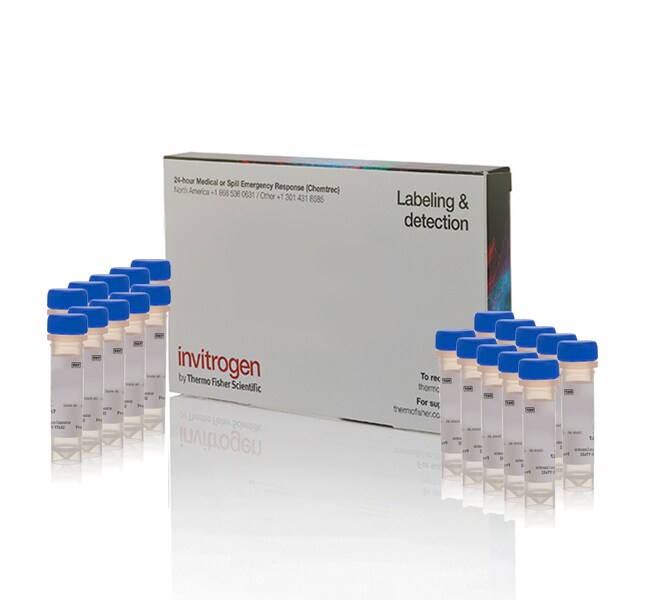
LysoTracker™ Green DND-26,特殊包装
LysoTracker Green DND-26 是一种可透过细胞、不可固定的绿色荧光染料,可对细胞内的酸性区室(如溶酶体)进行染色。Green DND-26 的最大激发和发射波长为了解更多信息
| 货号 | 数量 |
|---|---|
| L7526 | 20 x 50 μL |
货号 L7526
价格(CNY)
4,326.00
飞享价
Ends: 31-Dec-2026
6,008.00共减 1,682.00 (28%)
Each
数量:
20 x 50 μL
价格(CNY)
4,326.00
飞享价
Ends: 31-Dec-2026
6,008.00共减 1,682.00 (28%)
Each
LysoTracker Green DND-26 是一种可透过细胞、不可固定的绿色荧光染料,可对细胞内的酸性区室(如溶酶体)进行染色。Green DND-26 的最大激发和发射波长为 504/511 nm,可使用 FITC 滤光片有效激发。LysoTracker 探针有多种荧光颜色可选。
酸性细胞器的简单、高度特异性的一步染色和示踪
LysoTracker 探针由一种与弱碱结合的荧光基团组成,仅在中性 pH 条件下被部分质子化。在中性电荷状态下,LysoTracker 探针可自由扩散穿过活细胞的完整质膜。 由于溶酶体内固有的酸性,在扩散进入溶酶体时,弱碱性基团会被质子化。在这种带电状态下,探针不易扩散穿过细胞器膜,为酸性细胞器(如溶酶体)的独特染色提供了局部积累。LysoTracker 探针在纳摩尔浓度下有效,对酸性细胞器具有高度选择性,并提供不依赖抗体检测的简单一步染色。
由于产生并储存消化酶(水解酶),溶酶体为酸性。溶酶体的酸性环境能够降解碳水化合物、脂质、核酸和多肽。细胞外蛋白、病毒或细菌还可被内化和运输至溶酶体,通过溶酶体蛋白水解途径降解。此外,错误折叠的蛋白质或受损的细胞器会通过诱导自噬成为溶酶体降解的靶标。自噬对细胞分化、营养剥夺期间的生存和正常生长控制都很重要。各种随酸性环境变化的探针可利用溶酶体内固有的酸性,以及生物合成或发病过程中 pH 值的任何变化。LysoTracker 产品可为酸性环境的活细胞染色提供荧光检测,还可用于标记和示踪溶酶体等酸性细胞器。
酸性细胞器的简单、高度特异性的一步染色和示踪
LysoTracker 探针由一种与弱碱结合的荧光基团组成,仅在中性 pH 条件下被部分质子化。在中性电荷状态下,LysoTracker 探针可自由扩散穿过活细胞的完整质膜。 由于溶酶体内固有的酸性,在扩散进入溶酶体时,弱碱性基团会被质子化。在这种带电状态下,探针不易扩散穿过细胞器膜,为酸性细胞器(如溶酶体)的独特染色提供了局部积累。LysoTracker 探针在纳摩尔浓度下有效,对酸性细胞器具有高度选择性,并提供不依赖抗体检测的简单一步染色。
由于产生并储存消化酶(水解酶),溶酶体为酸性。溶酶体的酸性环境能够降解碳水化合物、脂质、核酸和多肽。细胞外蛋白、病毒或细菌还可被内化和运输至溶酶体,通过溶酶体蛋白水解途径降解。此外,错误折叠的蛋白质或受损的细胞器会通过诱导自噬成为溶酶体降解的靶标。自噬对细胞分化、营养剥夺期间的生存和正常生长控制都很重要。各种随酸性环境变化的探针可利用溶酶体内固有的酸性,以及生物合成或发病过程中 pH 值的任何变化。LysoTracker 产品可为酸性环境的活细胞染色提供荧光检测,还可用于标记和示踪溶酶体等酸性细胞器。
仅供科研使用。不可用于诊断程序。
规格
颜色绿色
最大浓度1 mM
描述LysoTracker™ Green DND-26
检测方法荧光
发射绿色
激发波长范围504/511
适用于(设备)荧光显微镜、荧光成像仪
产品线LysoTracker
数量20 x 50 μL
运输条件室温
标签类型不可固定、活细胞器染色
产品类型染料
亚细胞定位溶酶体Lysosomes
Unit SizeEach
内容与储存
在 ≤–20°C
• 下干燥处避光储存
• 避免反复冻融,切勿存放在无霜冰箱中
• 如有可能,尽量分装成一次性装形式储存
• 下干燥处避光储存
• 避免反复冻融,切勿存放在无霜冰箱中
• 如有可能,尽量分装成一次性装形式储存
常见问题解答 (FAQ)
What is the recommended incubation time for LysoTracker Green DND-26 (Cat. No. L7526) and LysoSensor Yellow/Blue DND-160 (Cat. No. L7545)?
引用和文献 (102)
引用和文献
Abstract
Induction of autophagy and cell death by tamoxifen in cultured retinal pigment epithelial and photoreceptor cells.
Journal:Invest Ophthalmol Vis Sci
PubMed ID:22786900
We investigated the mechanism of tamoxifen (TAM) retinotoxicity using human retinal pigment epithelial (RPE)-derived (ARPE-19) and photoreceptor-derived (661W) cells. Cultured ARPE-19 and 661W cells were treated with 5 to 10 µM TAM, and the resultant cell death was quantified using lactate dehydrogenase (LDH) release assay. Cellular oxidative stress was determined
Biocompatibility, endocytosis, and intracellular trafficking of mesoporous silica and polystyrene nanoparticles in ovarian cancer cells: effects of size and surface charge groups.
Journal:Int J Nanomedicine
PubMed ID:22904626
Nanoparticles engineered to carry both a chemotherapeutic drug and a sensitive imaging probe are valid tools for early detection of cancer cells and to monitor the cytotoxic effects of anticancer treatment simultaneously. Here we report on the effect of size (10-30 nm versus 50 nm), type of material (mesoporous silica
Regulation of endocytosis via the oxygen-sensing pathway.
Journal:Nat Med
PubMed ID:19252501
'Tumor hypoxia is associated with disease progression, resistance to conventional cancer therapies and poor prognosis. Hypoxia, by largely unknown mechanisms, leads to deregulated accumulation of and signaling via receptor tyrosine kinases (RTKs) that are critical for driving oncogenesis. Here, we show that hypoxia or loss of von Hippel-Lindau protein--the principal
Quantitative measurement of mast cell degranulation using a novel flow cytometric annexin-V binding assay.
Journal:Cytometry
PubMed ID:10404150
'BACKGROUND: Mast cells are primary mediators of allergic inflammation. Antigen-mediated crosslinking of their cell surface immunoglobulin E (IgE) receptors results in degranulation and the release of proinflammatory mediators including histamine, tumor necrosis factor-alpha, and leukotrienes. METHODS: Mast cells were stimulated to degranulate by using either IgE crosslinking or ionophore treatment.
Inhibition of the vacuolar H(+)-pump with bafilomycin A1 does not induce acrosome reaction or activate proacrosin in mouse spermatozoa.
Journal:Biochem Biophys Res Commun
PubMed ID:16236270
'Acrosomal protease activation is regarded as an important event triggered by acrosomal reaction and leading to sperm passage through zona pellucida. Mammalian acrosome has an internal acid pH that probably helps to maintain inactive proenzymes that otherwise could be precociously activated and prevent normal fertilization. In this work, we have