Search


引用和文献 (62)
Invitrogen™
MitoTracker™ Dyes for Mitochondria Labeling
These mitochondria dyes are specially packaged in vials of 50 μg each to create freshly reconstituted dyes without the impact of freeze-thaw cycles to aid in a simplified sample prep for cell analysis workflow.
Have Questions?
更改视图

| 货号 | 描述 | 激发波长范围 |
|---|---|---|
| M7513 | MitoTracker Red CM-H2Xros | 579⁄599 |
| M22426 | MitoTracker Deep Red FM | 644⁄665 |
| M22425 | MitoTracker™ Red FM | 581⁄644 |
| M7512 | MitoTracker™ Red CMXRos | 579/599 |
| M7514 | MitoTracker™ Green FM | 490⁄516 |
| M7510 | MitoTracker Orange CMTMRos | 554⁄576 |
| M7511 | MitoTracker Orange CM-H2TMRos | 554⁄576 |
货号 M7513
价格(CNY)
4,550.00
飞享价
Ends: 31-Dec-2026
6,319.00共减 1,769.00 (28%)
Each
描述:
MitoTracker Red CM-H2Xros
激发波长范围:
579⁄599
价格(CNY)
4,550.00
飞享价
Ends: 31-Dec-2026
6,319.00共减 1,769.00 (28%)
Each
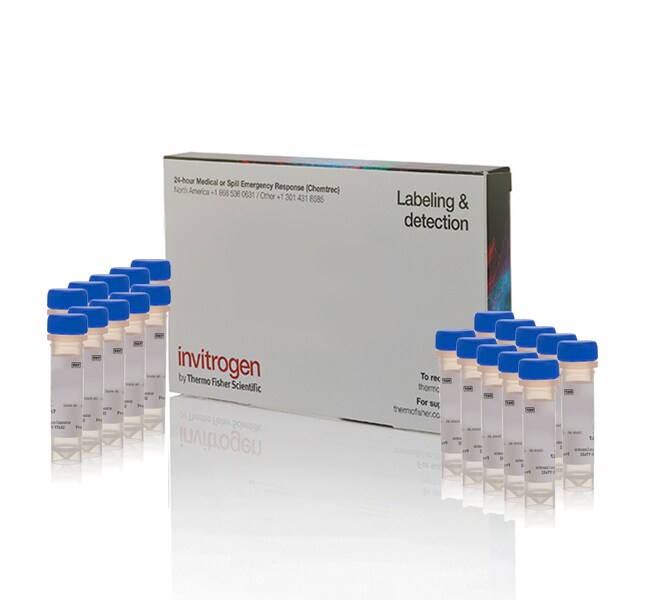
Rosamine & carbocyanine-based staining dyes MitoTracker Orange CMTMRos, Red CMXRos, Orange CM-H2TMRos, Red CM-H2XRos, Red FM, Green FM, & Deep Red FM enable mitochondria visualization with fluorescent imaging. These mitochondria dyes are specially packaged in vials of 50 μg each to create freshly reconstituted dyes without the impact of freeze-thaw cycles to aid in a simplified sample prep for cell analysis workflow.
Rosamine-based MitoTracker dyes for mitochondria labeling
Cell-permeant MitoTracker probes stain active mitochondria in live cells for labeling and localization in fluorescent cell imaging. Our rosamine-based mitochondrial staining dyes include MitoTracker Orange CMTMRos, a derivative of tetramethylrosamine, and MitoTracker Red CMXRos, a derivative of X-rosamine. MitoTracker Orange CM-H2TMRos and MitoTracker Red CM-H2XRos are reduced, nonfluorescent versions of the rosamine-based MitoTracker dyes that fluoresce upon oxidation. The fluorescent signal from the rosamine-based MitoTracker dyes is retained in the mitochondria even after aldehyde fixation and detergent permeabilization, making these mitochondria dyes flexible for many workflows including applications that require subsequent processing such as immunocytochemistry or in situ hybridization. MitoTrackerRed and Orange are well suited for multicolor labeling experiments because their fluorescence is well resolved from the green fluorescence of other probes.
Carbocyanine-based MitoTracker dyes for mitochondria labeling
Cell-permeant MitoTracker dyes stain active mitochondria in live cells for mitochondrial labeling and localization in fluorescent cell imaging. The carbocyanine-based dyes MitoTracker Green FM and MitoTracker Red FM accumulate in active mitochondria but are not well-retained in mitochondria after aldehyde fixation. The carbocyanine-based MitoTracker Deep Red FM stains active mitochondrial in live cells and is well-retained in mitochondria after aldehyde fixation and subsequent permeabilization with detergents for applications that require subsequent processing such as immunocytochemistry or in situ hybridization. MitoTracker Red FM and MitoTracker Deep Red FM are well suited for multicolor labeling experiments because their red fluorescence is well resolved from the green fluorescence of other probes.
Benefits of using MitoTracker mitochondria labeling dyes
MitoTracker dyes are provided in vials of 50 μg of lyophilized powder ready for reconstitution. To label mitochondria, live cells are simply incubated with the MitoTracker probe of your choice. The mitochondrial staining dyes passively diffuse across the plasma membrane and accumulate in active mitochondria. The MitoTracker dyes are offered in a range of wavelengths and can be used for mitochondrial localization in multicolor experiments.
Conventional fluorescent stains such as tetramethylrosamine and rhodamine 123 are readily sequestered by active mitochondria and are reversible in dynamic membrane potential measurements as they easily wash out of cells upon loss in membrane potential. In contrast, MitoTracker dyes contain a mildly thiol-reactive chloromethyl moiety so that mitochondrial staining is retained if the mitochondrial membrane potential is lost, allowing many of the MitoTracker dyes to be retained during cell fixation.
Throughout the cell life cycle, mitochondria use oxidizable substrates to produce an electrochemical proton gradient across the mitochondrial membrane (whose potential is negative), resulting in ATP production. MitoTracker dyes are ideal probes for mitochondria staining in experiments studying the cell cycle or processes such as apoptosis and other end point assays. MitoTracker dyes are also available for flow cytometry applications (Cat. No. M46750, M46751, M46752, and M46753).
Related products for mitochondrial membrane potential
For studying dynamic mitochondria membrane potential specifically, we recommend using JC-1 (cationic carbocyanine dye, Cat. No. T3168) or TMRM (tetramethyl rhodamine methyl ester, Cat. No. I34361) dyes. The MitoProbe JC-1 Assay Kit (Cat. No. M34152) contains the JC-1 dye in addition to the potent mitochondrial membrane-potential disrupter, CCCP, which depolarizes the mitochondrial membrane. These reagents can provide compensatory controls to correctly compensate green-to-red fluorescence ratio. TMRM is used for the detection of dynamic measurement of mitochondrial membrane potential.
仅供科研使用。不可用于诊断程序。
规格
颜色红色
描述MitoTracker Red CM-H2Xros
检测方法荧光
激发波长范围579⁄599
适用于(设备)荧光显微镜、流式细胞仪、微孔板读数仪
产品规格Special packaging
产品线MitoTracker
数量20 x 50 μg
运输条件室温
标签类型Fluorescent Dye
产品类型染料
亚细胞定位线粒体Mitochondria
Unit SizeEach
内容与储存
在冷冻冰箱(-5°C 至 -30°C)中避光储存。
常见问题解答 (FAQ)
当我测试线粒体膜电位时,未处理的细胞也会发出荧光,而且我在试验样品中没有看到显著差异。
It looks like my Mitotracker dye is staining more than just the mitochondria. Why?
I am testing mitochondrial membrane potential, but my untreated cells are fluorescing, and I'm not seeing a significant difference in my test sample.
引用和文献 (62)
引用和文献
Abstract
Mitochondrial transcription factor A induction by redox activation of nuclear respiratory factor 1.
Journal:The Journal of biological chemistry
PubMed ID:16230352
MRP2 and acquired tolerance to inorganic arsenic in the kidney of killifish (Fundulus heteroclitus).
Journal:Toxicol Sci
PubMed ID:17324950
'We used proximal tubules isolated from the killifish, Fundulus heteroclitus, to examine the effect of environmentally relevant, sublethal levels of arsenic on the function and expression of MRP2, an ABC transporter that transports xenobiotics into urine, including arsenic-glutathione conjugates. Exposure of fish to arsenic as sodium arsenite (4-14 days) increased
Circulating white blood cells and platelets amplify oxidative stress in heart failure.
Journal:Nat Clin Pract Cardiovasc Med
PubMed ID:18957960
'BACKGROUND: Mitochondria of circulating white blood cells (WBC) and platelets sense oxidative stress during capillary passage and react by producing reactive oxygen species (ROS). Although evidence indicates that congestive heart failure (CHF) is associated with oxidative stress, the role of WBC and platelets as mediators in CHF has not been
Two-photon fluorescence absorption and emission spectra of dyes relevant for cell imaging.
Journal:J Microsc
PubMed ID:12423261
'Two-photon absorption and emission spectra for fluorophores relevant in cell imaging were measured using a 45 fs Ti:sapphire laser, a continuously tuneable optical parametric amplifier for the excitation range 580-1150 nm and an optical multichannel analyser. The measurements included DNA stains, fluorescent dyes coupled to antibodies as well as organelle
Mitochondrial transmembrane potential changes support the concept of mitochondrial heterogeneity during apoptosis.
Journal:J Histochem Cytochem
PubMed ID:11561012
'Dissipation of mitochondrial membrane potential (DeltaPsi(m)) and release of cytochrome c from mitochondria appear to be key events during apoptosis. The precise relationship (cause or consequence) between both is currently unclear. We previously showed in a model of serum-free cultured granulosa explants that cytochrome c is retained in a subset