Search
Invitrogen
HLA-G Monoclonal Antibody (01G)
{{$productOrderCtrl.translations['antibody.pdp.commerceCard.promotion.promotions']}}
{{$productOrderCtrl.translations['antibody.pdp.commerceCard.promotion.promocode']}}: {{promo.promoCode}} {{promo.promoTitle}} {{promo.promoDescription}}. {{$productOrderCtrl.translations['antibody.pdp.commerceCard.promotion.learnmore']}}
{{$ctrl.translations['antibody.pdp.skuNotes.additionalInformation']}}:
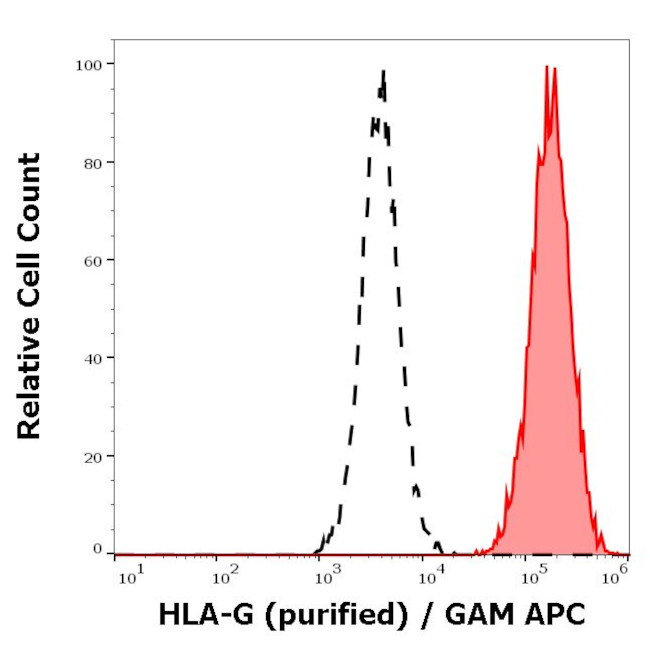
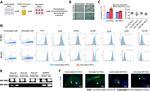
Please note: We are reviewing Western blot images included in the antibody testing data in our catalog, including those provided by third parties. Unless expressly labeled or annotated as “raw-unedited”, Western blot images included in the antibody testing data in our catalog may have been edited, optimized or otherwise adjusted for presentation.


产品信息
MA1-10359
应用
建议稀释比
已发表文章
产品规格
种属反应
Human
已发表种属
Human
宿主/亚型
Mouse
/ IgG1
分类
Monoclonal
类型
Antibody
克隆号
01G
抗原
HLA-B27 transgenic mice were imunized with H-2 identical murine cells transfected with and expressing genes encoding HLA-G and human beta2-microglobulin.
偶联物
Unconjugated
Unconjugated
Unconjugated
形式
Liquid
浓度
1 mg/mL
规格
100 µg
纯化类型
Protein A
保存液
PBS, pH 7.4
内含物
15mM sodium azide
保存条件
4°C, do not freeze
运输条件
Ambient (domestic); Wet ice (international)
RRID
产品详细信息
This antibody recognizes membrane-bound form of HLA-G (full-length HLA-G1), but not soluble forms. HLA-G belongs to the MHC Class I molecules (MHC Class Ib; nonclassical) and it is expressed on the surface of trophoblast cells.
It will not cross-react with mouse or rat.
靶标信息
HLA-G belongs to the HLA class I heavy chain paralogues. This class I molecule is a heterodimer consisting of a heavy chain and a light chain (beta-2 microglobulin). The heavy chain is anchored in the membrane. HLA-G is expressed on fetal derived placental cells. The heavy chain is approximately 45 kDa and its gene contains 8 exons. Exon one encodes the leader peptide, exons 2 and 3 encode the alpha1 and alpha2 domain, which both bind the peptide, exon 4 encodes the alpha3 domain, exon 5 encodes the transmembrane region, and exon 6 encodes the cytoplasmic tail.
HLA and MHC antibodies play a significant role in Immunopeptidomics, facilitating the identification and characterization of neoantigens through high-performance liquid chromatography coupled to tandem Mass Spectrometry.
仅用于科研。不用于诊断过程。未经明确授权不得转售。
生物信息学
蛋白别名: b2 microglobulin; DADB-15K14.8; HLA G antigen; HLA-G; HLA-G histocompatibility antigen, class I, G; HOSA-G1; MHC class I antigen G; MHC class I protein; MHC class Ib antigen; mutant MHC class I antigen; mutant MHC class Ib antigen; unnamed protein product
基因别名: MHC-G
UniProt ID: (Human) P17693
Entrez Gene ID: (Human) 3135
negative regulation of T cell mediated cytotoxicity
positive regulation of T cell mediated cytotoxicity
peripheral B cell tolerance induction
antigen processing and presentation of endogenous peptide antigen via MHC class Ib
antigen processing and presentation of exogenous peptide antigen via MHC class Ib
antigen processing and presentation of endogenous peptide antigen via MHC class I via ER pathway, TAP-independent
positive regulation of tolerance induction
positive regulation of T cell tolerance induction
regulation of natural killer cell mediated immunity
positive regulation of natural killer cell cytokine production
immune response-inhibiting cell surface receptor signaling pathway
immune response
cellular defense response
negative regulation of angiogenesis
positive regulation of interleukin-12 production
negative regulation of T cell proliferation
protection from natural killer cell mediated cytotoxicity
positive regulation of regulatory T cell differentiation
negative regulation of natural killer cell mediated cytotoxicity
negative regulation of immune response
negative regulation of protein kinase B signaling
positive regulation of macrophage cytokine production
protein homotrimerization
negative regulation of G0 to G1 transition
positive regulation of endothelial cell apoptotic process
positive regulation of cellular senescence
negative regulation of dendritic cell differentiation
Disclaimer

Clicking the images or links will redirect you to a website hosted by BenchSci that provides third-party scientific content. Neither the content nor the BenchSci technology and processes for selection have been evaluated by us; we are providing them as-is and without warranty of any kind, including for use or application of the Thermo Fisher Scientific products presented.

