Search
Invitrogen
ATP2C1 Monoclonal Antibody (4G12)
{{$productOrderCtrl.translations['antibody.pdp.commerceCard.promotion.promotions']}}
{{$productOrderCtrl.translations['antibody.pdp.commerceCard.promotion.promocode']}}: {{promo.promoCode}} {{promo.promoTitle}} {{promo.promoDescription}}. {{$productOrderCtrl.translations['antibody.pdp.commerceCard.promotion.learnmore']}}
{{$ctrl.translations['antibody.pdp.skuNotes.additionalInformation']}}:
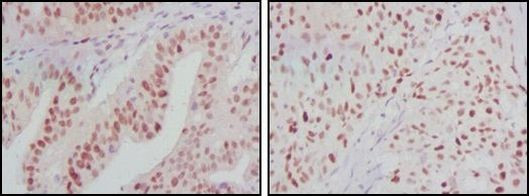

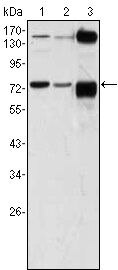
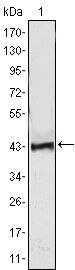
Please note: We are reviewing Western blot images included in the antibody testing data in our catalog, including those provided by third parties. Unless expressly labeled or annotated as “raw-unedited”, Western blot images included in the antibody testing data in our catalog may have been edited, optimized or otherwise adjusted for presentation.


产品信息
MA5-15592
应用
建议稀释比
已发表文章
产品规格
种属反应
Human,
Non-human primate
宿主/亚型
Mouse
/ IgG1
分类
Monoclonal
类型
Antibody
克隆号
4G12
抗原
Purified recombinant fragment of ATP2C1 expressed in E. Coli.
偶联物
Unconjugated
Unconjugated
Unconjugated
形式
Liquid
浓度
Conc. Not Determined
保存液
ascites
内含物
0.03% sodium azide
保存条件
Store at 4°C short term. For long term storage, store at -20°C, avoiding freeze/thaw cycles.
运输条件
Ambient (domestic); Wet ice (international)
RRID
产品详细信息
MA5-15592 targets ATP2C1 in indirect ELISA, IHC and WB applications and shows reactivity with Human and Non-human primate samples.
The MA5-15592 immunogen is purified recombinant fragment of ATP2C1 expressed in E. Coli.
MA5-15592 detects ATP2C1 which has a predicted molecular weight of approximately 100kDa.
靶标信息
ATP2C1, also known as secretory pathway Ca2+/Mn2+-ATPase (SPCA) 1, belongs to the family of P-type cation transport ATPases. This magnesium-dependent enzyme catalyzes the hydrolysis of ATP coupled with the transport of the calcium from the cytosol to the Golgi lumen. Defects in this gene cause Hailey-Hailey disease, an autosomal dominant disorder characterized by persistent blisters and erosions of the skin. Unlike the related protein ATP2C2, ATP2C1 is ubiquitously expressed and displays a lower maximal turnover rate for overall Ca2+-ATPase reaction and a higher apparent affinity for cytosolic Ca2+ activation of phosphorylation. Recent evidence suggests that ATP2C1 is a key regulator of insulin-like growth factor receptor (IGF1R) processing in tumor progression in basal breast cancers.
仅用于科研。不用于诊断过程。未经明确授权不得转售。
篇参考文献 (0)
您是否在文献中引用过该产品?请点击下方按钮邮件告知我们。
生物信息学
蛋白别名: ATP-dependent Ca(2+) pump PMR1; ATPase 2C1; ATPase, Ca(2+)-sequestering; ATPase, Ca++ transporting, type 2C, member 1; Ca(2+)/Mn(2+)-ATPase 2C1; calcium-transporting ATPase type 2C member 1 M; calcium-transporting ATPase type 2C member 1 MU; HUSSY 28; HUSSY-28; rat; secretory pathway Ca(2+)-transporting ATPase type 1; secretory pathway Ca2+/Mn2+ ATPase 1; SPCA1; ATP2C1b; SPCA1d; ATP2C1d; unnamed protein product
基因别名: ATP2C1A; BCPM; HHD; hSPCA1; PMR1; SPCA1
UniProt ID: (Human) P98194
Entrez Gene ID: (Human) 27032
calcium ion transport
manganese ion transport
cellular calcium ion homeostasis
epidermis development
calcium-dependent cell-cell adhesion via plasma membrane cell adhesion molecules
cellular manganese ion homeostasis
actin cytoskeleton organization
Golgi calcium ion homeostasis
Golgi calcium ion transport
positive regulation of Golgi to plasma membrane protein transport
positive regulation of I-kappaB kinase/NF-kappaB signaling
calcium ion transmembrane transport
manganese ion transmembrane transport
trans-Golgi network membrane organization
Disclaimer

Clicking the images or links will redirect you to a website hosted by BenchSci that provides third-party scientific content. Neither the content nor the BenchSci technology and processes for selection have been evaluated by us; we are providing them as-is and without warranty of any kind, including for use or application of the Thermo Fisher Scientific products presented.

