Search
Invitrogen
HSPA4 Recombinant Rabbit Monoclonal Antibody (SD0861)
{{$productOrderCtrl.translations['antibody.pdp.commerceCard.promotion.promotions']}}
{{$productOrderCtrl.translations['antibody.pdp.commerceCard.promotion.promocode']}}: {{promo.promoCode}} {{promo.promoTitle}} {{promo.promoDescription}}. {{$productOrderCtrl.translations['antibody.pdp.commerceCard.promotion.learnmore']}}
{{$ctrl.translations['antibody.pdp.skuNotes.additionalInformation']}}:
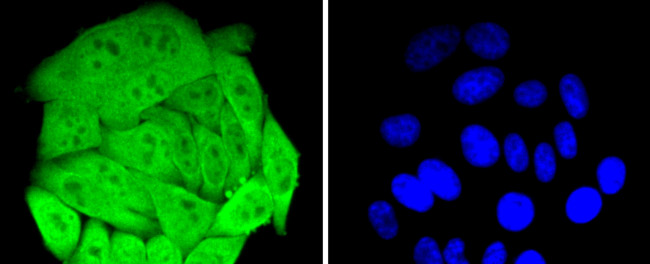

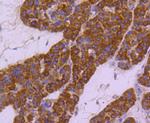
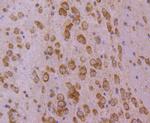
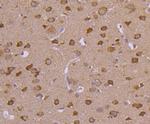
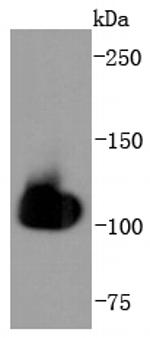
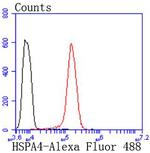
Please note: We are reviewing Western blot images included in the antibody testing data in our catalog, including those provided by third parties. Unless expressly labeled or annotated as “raw-unedited”, Western blot images included in the antibody testing data in our catalog may have been edited, optimized or otherwise adjusted for presentation.


产品信息
MA5-32403
应用
建议稀释比
已发表文章
产品规格
种属反应
Human,
Mouse,
Rat
宿主/亚型
Rabbit
/ IgG
Expression System
HEK293 cells
分类
Recombinant Monoclonal
类型
Antibody
克隆号
SD0861
抗原
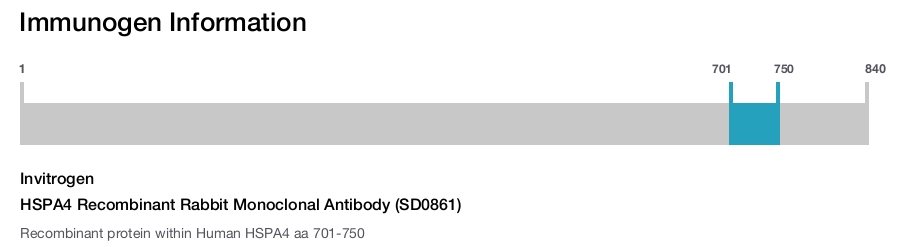
Recombinant protein within Human HSPA4 aa 701-750.
偶联物
Unconjugated
Unconjugated
Unconjugated
形式
Liquid
浓度
1 mg/mL
规格
100 µg
纯化类型
Protein A
保存液
TBS, pH 7.4, with 40% Glycerol, 0.05% BSA
内含物
0.05% sodium azide
保存条件
Store at 4°C short term. For long term storage, store at -20°C, avoiding freeze/thaw cycles.
运输条件
Ambient (domestic); Wet ice (international)
RRID
产品详细信息
Recombinant rabbit monoclonal antibodies are produced using in vitro expression systems. The expression systems are developed by cloning in the specific antibody DNA sequences from immunoreactive rabbits. Then, individual clones are screened to select the best candidates for production. The advantages of using recombinant rabbit monoclonal antibodies include: better specificity and sensitivity, lot-to-lot consistency, animal origin-free formulations, and broader immunoreactivity to diverse targets due to larger rabbit immune repertoire.
靶标信息
The HSP 70 family is composed of four highly conserved proteins: HSP 70, HSC 70, GRP 75 and GRP 78. HSP 70 expression is strongly induced in response to heat stress. HSP 70 and HSC 70 play key roles in the cytosolic endoplasmic reticulum and mitochondrial import machinery and are found in both the cytosol and nucleus of mammalian cells. GRP 78 is localized in the endoplasmic reticulum, where it receives imported secretory proteins and is involved in the folding and translocation of nascent peptide chains. GRP 75 expression is restricted to the mitochondrial matrix and aids in the translocation and folding of nascent polypeptide chains of both nuclear and mitochondrial origin. It has been postulated that members of the HSP 70 family act as force-generating motors, relying on the hydrolysis of ATP for their activity.
仅用于科研。不用于诊断过程。未经明确授权不得转售。
篇参考文献 (0)
您是否在文献中引用过该产品?请点击下方按钮邮件告知我们。
生物信息学
蛋白别名: epididymis secretory sperm binding protein Li 5a; heat shock 70-related protein APG-2; heat shock 70kD protein 4; Heat shock protein; heat shock protein 4; heat shock protein family A member 4; heat shock protein family H member 2; heat shock protein, 110 kDa; hsp70 RY; IRP94; ischemia responsive 94 kDa protein; unnamed protein product
基因别名: 70kDa; APG-2; HEL-S-5a; HS24/P52; Hsp110; Hsp70; Hsp70RY; HSPH2; irp94; mKIAA4025; RY
UniProt ID: (Human) P34932, (Rat) O88600
Entrez Gene ID: (Human) 3308, (Mouse) 15525, (Rat) 266759
negative regulation of protein phosphorylation
protein folding
negative regulation of gene expression
protein import into mitochondrial matrix
chaperone-mediated protein complex assembly
neuron apoptotic process
regulation of microglial cell activation
kidney development
negative regulation of apoptotic process
positive regulation of angiogenesis
response to unfolded protein
Disclaimer

Clicking the images or links will redirect you to a website hosted by BenchSci that provides third-party scientific content. Neither the content nor the BenchSci technology and processes for selection have been evaluated by us; we are providing them as-is and without warranty of any kind, including for use or application of the Thermo Fisher Scientific products presented.

