Search
Invitrogen
MUC4 Recombinant Rabbit Monoclonal Antibody (JM19-36)
{{$productOrderCtrl.translations['antibody.pdp.commerceCard.promotion.promotions']}}
{{$productOrderCtrl.translations['antibody.pdp.commerceCard.promotion.promocode']}}: {{promo.promoCode}} {{promo.promoTitle}} {{promo.promoDescription}}. {{$productOrderCtrl.translations['antibody.pdp.commerceCard.promotion.learnmore']}}
{{$ctrl.translations['antibody.pdp.skuNotes.additionalInformation']}}:
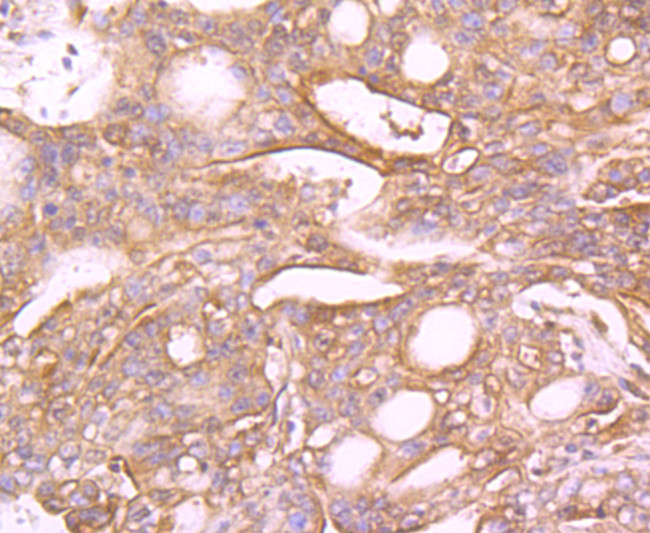

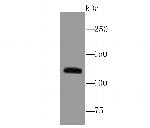
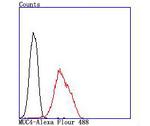
Please note: We are reviewing Western blot images included in the antibody testing data in our catalog, including those provided by third parties. Unless expressly labeled or annotated as “raw-unedited”, Western blot images included in the antibody testing data in our catalog may have been edited, optimized or otherwise adjusted for presentation.


产品信息
MA5-32725
产品规格
种属反应
Human,
Rat
宿主/亚型
Rabbit
/ IgG
Expression System
HEK293 cells
分类
Recombinant Monoclonal
类型
Antibody
克隆号
JM19-36
抗原
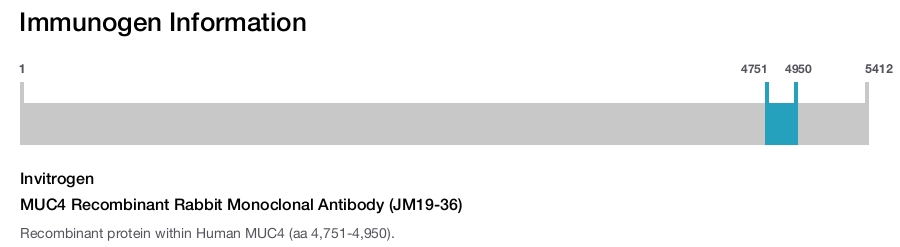
Recombinant protein within Human MUC4 (aa 4,751-4,950).
偶联物
Unconjugated
Unconjugated
Unconjugated
形式
Liquid
浓度
1 mg/mL
规格
100 µg
纯化类型
Protein A
保存液
TBS, pH 7.4, with 40% Glycerol, 0.05% BSA
内含物
0.05% sodium azide
保存条件
Store at 4°C short term. For long term storage, store at -20°C, avoiding freeze/thaw cycles.
运输条件
Ambient (domestic); Wet ice (international)
RRID
产品详细信息
Recombinant rabbit monoclonal antibodies are produced using in vitro expression systems. The expression systems are developed by cloning in the specific antibody DNA sequences from immunoreactive rabbits. Then, individual clones are screened to select the best candidates for production. The advantages of using recombinant rabbit monoclonal antibodies include: better specificity and sensitivity, lot-to-lot consistency, animal origin-free formulations, and broader immunoreactivity to diverse targets due to larger rabbit immune repertoire.
靶标信息
Membrane-bound mucin, a family of highly glycosylated proteins that constitute the major component of the mucus, the slimy and viscous secretion covering epithelial surfaces (PubMed:10880978). These glycoproteins play important roles in the protection of the epithelium and are implicated in epithelial renewal and differentiation (PubMed:10880978). Regulates cellular behavior through both anti-adhesive effects on cell-cell and cell-extracellular matrix interactions and its ability to act as an intramembrane ligand for ERBB2. Plays an important role in proliferation and differentiation of epithelial cells by inducing specific phosphorylation of ERBB2. In polarized epithelial cells, segregates ERBB2 and other ERBB receptors and prevents ERBB2 from acting as a coreceptor. The interaction with ERBB2 leads to enhanced expression of CDKN1B. The formation of a MUC4-ERBB2-ERBB3-NRG1 complex leads to down-regulation of CDKN1B, resulting in repression of apoptosis and stimulation of proliferation. Its ability to promote tumor growth may be mainly due to repression of apoptosis as opposed to proliferation. [UniProt]
仅用于科研。不用于诊断过程。未经明确授权不得转售。
篇参考文献 (0)
您是否在文献中引用过该产品?请点击下方按钮邮件告知我们。
生物信息学
蛋白别名: ascites sialoglycoprotein; ASGP; ASGP1; Heterodimeric complex composed of a mucin subunit, ASGP-1, which is predominantly O-glycosylated, and a cysteine-rich transmembrane subunit, ASGP-2, which is predominantly N-glycosylated; MUC-4; MUC4; mucin 4, tracheobronchial; Mucin4; pancreatic adenocarcinoma mucin; pre-sialomucin complex; pSMC; repeat sequence B; repeat sequence C; repeat sequence D; repeat sequence E; sialomucin ascites sialoglycoprotein-1; sialomucin complex; testis mucin; tracheobronchial mucin
基因别名: ASGP; ASGP-1; HSA276359; MUC-4; Psmc
UniProt ID: (Human) Q99102
Entrez Gene ID: (Human) 4585, (Rat) 303887
cell-matrix adhesion
maintenance of gastrointestinal epithelium
negative regulation of cell-matrix adhesion
hematopoietic progenitor cell differentiation
negative regulation of T cell mediated cytotoxicity directed against tumor cell target
lactation
response to xenobiotic stimulus
response to hormone
regulation of receptor activity
negative regulation of cell-cell adhesion
mammary gland development
post-embryonic camera-type eye development
response to estradiol
response to progesterone
cellular response to insulin stimulus
response to vitamin A
response to cytokine
negative regulation of apoptotic process
estrous cycle
digestive tract development
cellular response to transforming growth factor beta stimulus
Disclaimer

Clicking the images or links will redirect you to a website hosted by BenchSci that provides third-party scientific content. Neither the content nor the BenchSci technology and processes for selection have been evaluated by us; we are providing them as-is and without warranty of any kind, including for use or application of the Thermo Fisher Scientific products presented.

