Search
Invitrogen
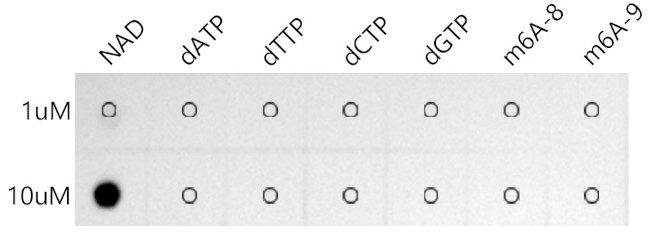
Coenzyme NAD Recombinant Rabbit Monoclonal Antibody (4A4R8)
{{$productOrderCtrl.translations['antibody.pdp.commerceCard.promotion.promotions']}}
{{$productOrderCtrl.translations['antibody.pdp.commerceCard.promotion.promocode']}}: {{promo.promoCode}} {{promo.promoTitle}} {{promo.promoDescription}}. {{$productOrderCtrl.translations['antibody.pdp.commerceCard.promotion.learnmore']}}
{{$ctrl.translations['antibody.pdp.skuNotes.additionalInformation']}}:
Please note: We are reviewing Western blot images included in the antibody testing data in our catalog, including those provided by third parties. Unless expressly labeled or annotated as “raw-unedited”, Western blot images included in the antibody testing data in our catalog may have been edited, optimized or otherwise adjusted for presentation.

产品信息
MA5-55188
产品规格
种属反应
Chemical
宿主/亚型
Rabbit
/ IgG
Expression System
HEK293 cells
分类
Recombinant Monoclonal
类型
Antibody
克隆号
4A4R8
抗原
NAD
偶联物
Unconjugated
Unconjugated
Unconjugated
形式
Liquid
浓度
1 mg/mL
规格
100 µg
纯化类型
Protein A
保存液
PBS, pH 7.3, with 50% glycerol, 0.05% BSA
内含物
0.05% ProClin 300
保存条件
-20°C, Avoid Freeze/Thaw Cycles
RRID
靶标信息
Coenzyme NAD, also known as nicotinamide adenine dinucleotide, is a crucial molecule involved in various cellular processes. It functions as a cofactor in redox reactions, playing a key role in energy metabolism and cellular respiration. NAD exists in two forms: NAD+ (oxidized) and NADH (reduced). NAD+ accepts electrons during catabolic reactions, such as glycolysis and the citric acid cycle, while NADH donates electrons during anabolic reactions, such as fatty acid synthesis. Additionally, NAD+ is a substrate for enzymes involved in DNA repair, signaling, and gene expression regulation. The balance between NAD+ and NADH is essential for maintaining cellular homeostasis, and disruptions in NAD metabolism have been implicated in various diseases, including cancer, neurodegenerative disorders, and metabolic disorders.
仅用于科研。不用于诊断过程。未经明确授权不得转售。
篇参考文献 (0)
您是否在文献中引用过该产品?请点击下方按钮邮件告知我们。
Disclaimer

Clicking the images or links will redirect you to a website hosted by BenchSci that provides third-party scientific content. Neither the content nor the BenchSci technology and processes for selection have been evaluated by us; we are providing them as-is and without warranty of any kind, including for use or application of the Thermo Fisher Scientific products presented.

