Search
Invitrogen
Phospho-SMAD2/SMAD3 (Ser465, Ser467, Ser423, Ser425) Recombinant Rabbit Monoclonal Antibody (ST0493)
{{$productOrderCtrl.translations['antibody.pdp.commerceCard.promotion.promotions']}}
{{$productOrderCtrl.translations['antibody.pdp.commerceCard.promotion.promocode']}}: {{promo.promoCode}} {{promo.promoTitle}} {{promo.promoDescription}}. {{$productOrderCtrl.translations['antibody.pdp.commerceCard.promotion.learnmore']}}
{{$ctrl.translations['antibody.pdp.skuNotes.additionalInformation']}}:
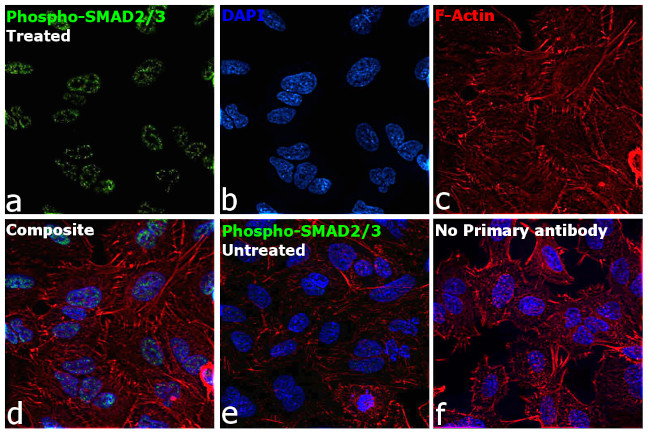
图: 1 / 13
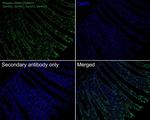
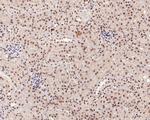
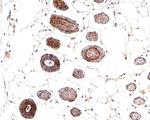
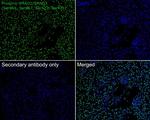
Phospho-SMAD2/SMAD3 (Ser465, Ser467, Ser423, Ser425) Antibody (MA5-56386) in ICC/IF
Immunofluorescence analysis of Phospho-SMAD2/SMAD3 (Ser465, Ser467/Ser423, Ser425) was performed using 70% confluent log phase A549 cells treated with TGF B1 (20 ng/mL for 15 mins) . The cells were fixed with 4% paraformaldehyde for 10 minutes, permeabilized with 0.1% Triton™ X-100 for 15 minutes and blocked with 2% BSA for 45 minutes at room temperature. The cells were labelled with Phospho-SMAD2/SMAD3 (Se... View More
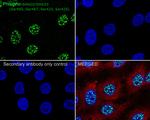
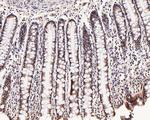
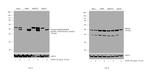
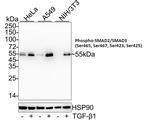
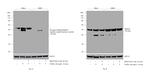
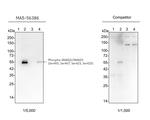
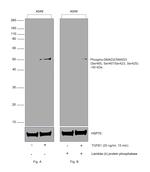
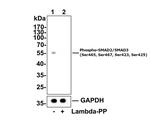
Please note: We are reviewing Western blot images included in the antibody testing data in our catalog, including those provided by third parties. Unless expressly labeled or annotated as “raw-unedited”, Western blot images included in the antibody testing data in our catalog may have been edited, optimized or otherwise adjusted for presentation.


产品信息
MA5-56386
应用
建议稀释比
已发表文章
产品规格
种属反应
Human,
Mouse
宿主/亚型
Rabbit
/ IgG
Expression System
HEK293 cells
分类
Recombinant Monoclonal
类型
Antibody
克隆号
ST0493
抗原
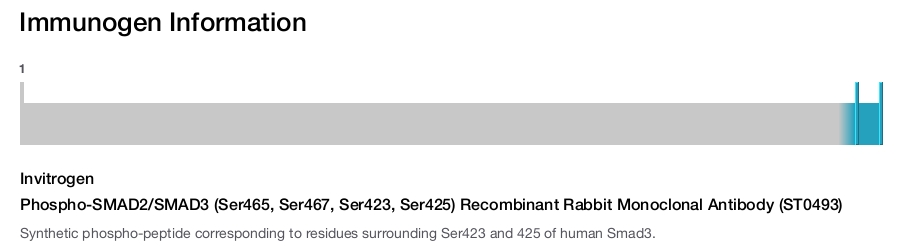
Synthetic phospho-peptide corresponding to residues surrounding Ser423 and 425 of human Smad3.
偶联物
Unconjugated
Unconjugated
Unconjugated
形式
Liquid
浓度
1 mg/mL
规格
100 µg
纯化类型
Protein A
保存液
PBS, pH 7.4, with 0.1% BSA, 40% glycerol
内含物
0.2% ProClin 950
保存条件
Store at 4°C short term. For long term storage, store at -20°C, avoiding freeze/thaw cycles.
运输条件
Wet ice
RRID
产品详细信息
Positive Control: A549 treated with 5 ng/mL TGF-beta1 for 24 hours whole cell lysate, C2C12 treated with 5 ng/mL TGF-beta1 for 24 hours whole cell lysate, HeLa starved overnight then treated with 10 ng/mL TGF-beta1 for 30 minutes cell lysate, NIH/3T3 starved overnight then treated with 10 ng/mL TGF-beta1 for 30 minutes cell lysate, A549, human large intestine tissue, mouse skin tissue, mouse kidney tissue.
Tissue Specificity: Low tissue specificity.
Subcellular Location: Cytoplasm, Nucleus.
Sequence Similarities: 100% Mouse.
Predicted band size: 48 kDa.
靶标信息
Smad proteins, the mammalian homologs of the Drosophila mothers against decapentaplegic (Mad), have been implicated as downstream effectors of TGFβ/BMP signaling. Smad1 (also designated Madr1 or JV4-1) and Smad5 are effectors of BMP-2 and BMP-4 function, while Smad2 (also designated Madr2 or JV18-1) and Smad3 are involved in TGFβ and Activin-mediated growth modulation. Smad4 (also designated DPC4) has been shown to mediate all of the above activities through interaction with various Smad family members. Smad6 and Smad7 regulate the response to Activin/TGFβ signaling by interfering with TGFβ-mediated phosphorylation of other Smad proteins.
仅用于科研。不用于诊断过程。未经明确授权不得转售。
篇参考文献 (0)
您是否在文献中引用过该产品?请点击下方按钮邮件告知我们。
生物信息学
蛋白别名: DKFZP586N0721; MAD homolog 2; MAD homolog 3; mad homolog JV15-2; mad protein homolog; MAD, mothers against decapentaplegic homolog 3; mad-related protein 2; mad3; mMad3; mother against DPP homolog 2; mothers against decapentaplegic homolog 2; mothers against decapentaplegic homolog 3; mothers against DPP homolog 2; mothers against DPP homolog 3; pSMAD2; Sma- and Mad-related protein 2; SMA- and MAD-related protein 3; SMAD; Smad 2; Smad 3; SMAD, mothers against DPP homolog 2; SMAD, mothers against DPP homolog 3; unnamed protein product
基因别名: 7120426M23Rik; CHTD8; hMAD-2; hMAD-3; hSMAD2; hSMAD3; HSPC193; HsT17436; JV15-2; JV18; JV18-1; LDS1C; LDS3; LDS6; mad3; MADH2; MADH3; MADR2; mMad2; Smad-2
UniProt ID: (Human) Q15796, (Human) P84022, (Mouse) Q62432, (Mouse) Q8BUN5
Entrez Gene ID: (Human) 4087, (Human) 4088, (Mouse) 17126, (Mouse) 17127
RNA polymerase II core promoter proximal region sequence-specific DNA binding
RNA polymerase II transcription factor activity, sequence-specific DNA binding
core promoter proximal region sequence-specific DNA binding
transcriptional activator activity, RNA polymerase II transcription regulatory region sequence-specific binding
DNA binding
chromatin binding
double-stranded DNA binding
transcription factor activity, sequence-specific DNA binding
transforming growth factor beta receptor binding
protein binding
phosphatase binding
ubiquitin protein ligase binding
type I transforming growth factor beta receptor binding
identical protein binding
SMAD binding
tau protein binding
RNA polymerase II sequence-specific DNA binding transcription factor binding
co-SMAD binding
I-SMAD binding
R-SMAD binding
disordered domain specific binding
DNA-binding transcription factor binding
transcription regulatory region sequence-specific DNA binding
RNA polymerase II regulatory region sequence-specific DNA binding
bacterial-type RNA polymerase transcriptional repressor activity, sequence-specific DNA binding
transcription corepressor binding
transcription coactivator binding
collagen binding
beta-catenin binding
zinc ion binding
ligand-dependent nuclear receptor binding
DEAD/H-box RNA helicase binding
enzyme binding
protein kinase binding
chromatin DNA binding
mineralocorticoid receptor binding
sterol response element binding
glucocorticoid receptor binding
protein homodimerization activity
ubiquitin binding
bHLH transcription factor binding
sequence-specific DNA binding
promoter-specific chromatin binding
negative regulation of transcription from RNA polymerase II promoter
MAPK cascade
skeletal system development
osteoblast differentiation
ureteric bud development
response to hypoxia
in utero embryonic development
mesoderm formation
somitogenesis
release of cytochrome c from mitochondria
liver development
heart looping
osteoblast development
immune system development
regulation of transcription, DNA-templated
regulation of transcription from RNA polymerase II promoter
apoptotic process
immune response
transforming growth factor beta receptor signaling pathway
JNK cascade
gastrulation
endoderm development
cell proliferation
negative regulation of cell proliferation
anatomical structure morphogenesis
embryonic pattern specification
response to gamma radiation
gene expression
positive regulation of gene expression
negative regulation of gene expression
positive regulation of alkaline phosphatase activity
positive regulation of epithelial to mesenchymal transition
regulation of striated muscle tissue development
regulation of transforming growth factor beta receptor signaling pathway
signal transduction involved in regulation of gene expression
cell differentiation
negative regulation of ossification
negative regulation of cell growth
adrenal gland development
positive regulation of cell migration
positive regulation of bone mineralization
thyroid gland development
positive regulation of chondrocyte differentiation
positive regulation of interleukin-1 beta production
regulation of transforming growth factor beta2 production
positive regulation of transforming growth factor beta3 production
activin receptor signaling pathway
negative regulation of osteoblast proliferation
cellular response to platelet-derived growth factor stimulus
nodal signaling pathway
T cell activation
negative regulation of protein catabolic process
response to cocaine
negative regulation of apoptotic process
proteasome-mediated ubiquitin-dependent protein catabolic process
cell-cell junction organization
positive regulation of nitric oxide biosynthetic process
negative regulation of fat cell differentiation
negative regulation of osteoblast differentiation
positive regulation of transcription, DNA-templated
positive regulation of transcription from RNA polymerase II promoter
paraxial mesoderm morphogenesis
developmental growth
embryonic foregut morphogenesis
embryonic cranial skeleton morphogenesis
regulation of epithelial cell proliferation
negative regulation of inflammatory response
regulation of immune response
protein stabilization
positive regulation of positive chemotaxis
negative regulation of cytosolic calcium ion concentration
positive regulation of stress fiber assembly
regulation of mitochondrial membrane potential
positive regulation of focal adhesion assembly
pericardium development
transdifferentiation
positive regulation of SMAD protein import into nucleus
SMAD protein signal transduction
regulation of dendritic spine morphogenesis
negative regulation of wound healing
trophoblast cell migration
negative regulation of lung blood pressure
lens fiber cell differentiation
cellular response to glucose stimulus
cellular response to growth factor stimulus
response to transforming growth factor beta
cellular response to transforming growth factor beta stimulus
positive regulation of canonical Wnt signaling pathway
apoptotic signaling pathway
extrinsic apoptotic signaling pathway
response to alcohol
cellular response to virus
transforming growth factor beta receptor superfamily signaling pathway
positive regulation of extracellular matrix assembly
negative regulation of pri-miRNA transcription from RNA polymerase II promoter
positive regulation of pri-miRNA transcription from RNA polymerase II promoter
negative regulation of cardiac muscle hypertrophy in response to stress
response to angiotensin
regionalization
determination of left/right asymmetry in lateral mesoderm
aortic valve morphogenesis
pulmonary valve morphogenesis
endocardial cushion morphogenesis
transcription, DNA-templated
zygotic specification of dorsal/ventral axis
mesoderm development
anterior/posterior pattern specification
positive regulation of BMP signaling pathway
primary miRNA processing
intracellular signal transduction
cell fate commitment
negative regulation of cell differentiation
negative regulation of transcription, DNA-templated
regulation of multicellular organismal process
mesenchyme development
secondary palate development
response to cholesterol
odontoblast differentiation
endoderm formation
protein phosphorylation
pattern specification process
heart development
response to glucose
post-embryonic development
insulin secretion
lung development
pancreas development
organ growth
negative regulation of lipopolysaccharide-mediated signaling pathway
developmental process
wound healing
positive regulation of protein import into nucleus
negative regulation of transforming growth factor beta production
regulation of miRNA transcription
Disclaimer

Clicking the images or links will redirect you to a website hosted by BenchSci that provides third-party scientific content. Neither the content nor the BenchSci technology and processes for selection have been evaluated by us; we are providing them as-is and without warranty of any kind, including for use or application of the Thermo Fisher Scientific products presented.

