Search
Invitrogen
Noggin Recombinant Rabbit Monoclonal Antibody (PSH10-62)
{{$productOrderCtrl.translations['antibody.pdp.commerceCard.promotion.promotions']}}
{{$productOrderCtrl.translations['antibody.pdp.commerceCard.promotion.promocode']}}: {{promo.promoCode}} {{promo.promoTitle}} {{promo.promoDescription}}. {{$productOrderCtrl.translations['antibody.pdp.commerceCard.promotion.learnmore']}}
{{$ctrl.translations['antibody.pdp.skuNotes.additionalInformation']}}:
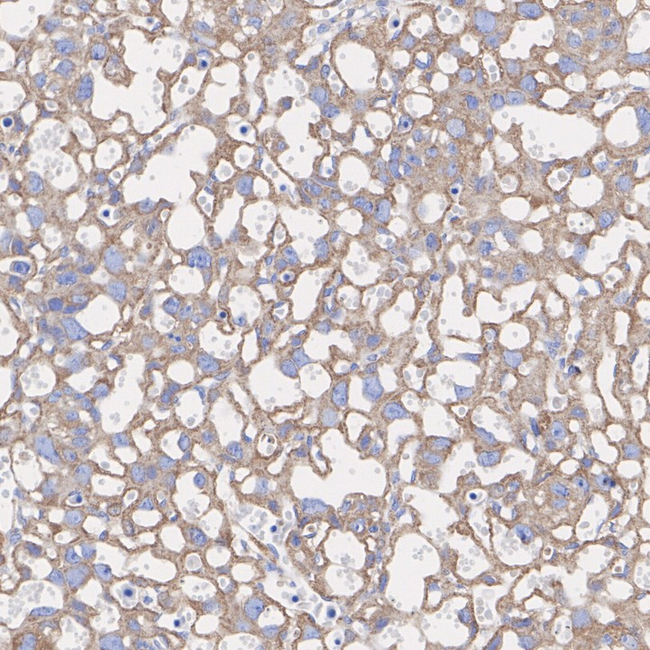
图: 1 / 9
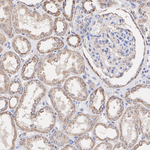
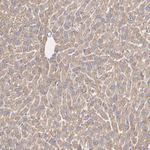
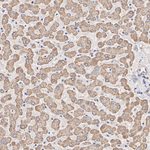
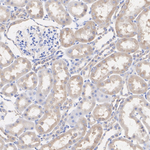
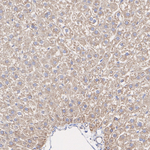
Noggin Antibody (MA570126) in IHC (P)
Immunohistochemistry analysis of Noggin in paraffin-embedded mouse placenta tissue. Samples were incubated with Noggin monoclonal antibody (Product # MA570126) using a dilution of 1:50,000 for 1 hour at room temperature. The section was pre-treated using heat mediated antigen retrieval with Tris-EDTA buffer (pH 9.0) for 20 minutes. The tissues were blocked in 1% BSA for 20 minutes at room temperature, washe... View More
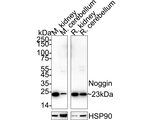
Please note: We are reviewing Western blot images included in the antibody testing data in our catalog, including those provided by third parties. Unless expressly labeled or annotated as “raw-unedited”, Western blot images included in the antibody testing data in our catalog may have been edited, optimized or otherwise adjusted for presentation.


产品信息
MA570126
产品规格
种属反应
Human,
Mouse,
Rat
宿主/亚型
Rabbit
/ IgG
Expression System
HEK293 cells
分类
Recombinant Monoclonal
类型
Antibody
克隆号
PSH10-62
抗原
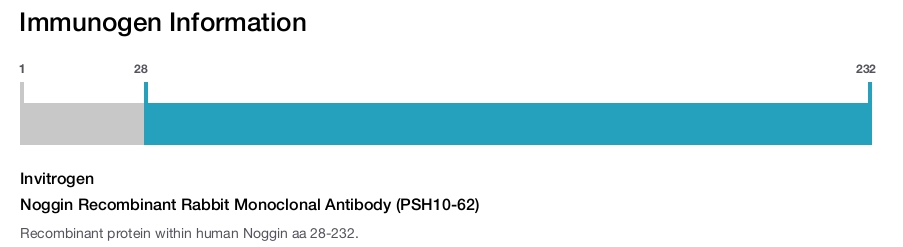
Recombinant protein within human Noggin aa 28-232.
偶联物
Unconjugated
Unconjugated
Unconjugated
形式
Liquid
浓度
1 mg/mL
规格
100 µg
纯化类型
Protein A
保存液
PBS, pH 7.4, with 0.1% BSA, 40% glycerol
内含物
0.05% sodium azide
保存条件
Store at 4°C short term. For long term storage, store at -20°C, avoiding freeze/thaw cycles.
运输条件
Ambient (domestic); Wet ice (international)
产品详细信息
Positive control: Mouse kidney tissue lysate, Mouse cerebellum tissue lysate, Rat kidney tissue lysate, Rat cerebellum tissue lysate, human kidney tissue, human liver tissue, mouse kidney tissue, mouse liver tissue, mouse placenta tissue, rat kidney tissue, rat liver tissue, rat placenta tissue.
Subcellular location: Secreted.
靶标信息
Noggin is involved in numerous developmental processes, such as neural tube fusion and joint formation. The morphogenesis of organs is initiated by a downgrowth from a layer of epithelial stem cells. This process is achieved through the receipt of signals from 1) a WNT protein (WNT3A) to stabilize beta-catenin; and 2) Noggin, which is a bone morphogenetic protein inhibitor. Noggin mutations in unrelated families with proximal symphalangism (SYM1) and multiple synostoses syndrome (SYNS1) have been identified, which have multiple joint fusion as their principal defect.
仅用于科研。不用于诊断过程。未经明确授权不得转售。
篇参考文献 (0)
您是否在文献中引用过该产品?请点击下方按钮邮件告知我们。
生物信息学
蛋白别名: Noggin precursor; symphalangism 1 (proximal); unnamed protein product
基因别名: SYM1; SYNS1; SYNS1A
UniProt ID: (Human) Q13253, (Mouse) P97466
Entrez Gene ID: (Human) 9241, (Rat) 25495, (Mouse) 18121
negative regulation of transcription from RNA polymerase II promoter
skeletal system development
ossification
osteoblast differentiation
urogenital system development
ureteric bud development
in utero embryonic development
endoderm formation
mesoderm formation
epithelial to mesenchymal transition
neural plate morphogenesis
neural tube closure
membranous septum morphogenesis
outflow tract morphogenesis
ventricular compact myocardium morphogenesis
endocardial cushion formation
smoothened signaling pathway
pattern specification process
axon guidance
central nervous system development
brain development
endoderm development
mesoderm development
memory
motor neuron axon guidance
cell proliferation
positive regulation of cell proliferation
visual learning
fibroblast growth factor receptor signaling pathway
dorsal/ventral pattern formation
positive regulation of gene expression
negative regulation of gene expression
spinal cord development
cell differentiation in hindbrain
hippocampus development
neural tube development
pituitary gland development
neural plate anterior/posterior regionalization
negative regulation of cell migration
BMP signaling pathway
regulation of BMP signaling pathway
negative regulation of BMP signaling pathway
forebrain development
somatic stem cell population maintenance
exploration behavior
nodal signaling pathway
regulation of fibroblast growth factor receptor signaling pathway
wound healing
middle ear morphogenesis
embryonic digit morphogenesis
negative regulation of cell differentiation
negative regulation of osteoblast differentiation
positive regulation of transcription from RNA polymerase II promoter
regulation of neuronal synaptic plasticity
axial mesoderm development
notochord morphogenesis
anatomical structure formation involved in morphogenesis
embryonic skeletal system development
negative regulation of astrocyte differentiation
mesenchymal cell differentiation
positive regulation of epithelial cell proliferation
atrial cardiac muscle tissue morphogenesis
negative regulation of cardiac muscle cell proliferation
limb development
embryonic skeletal joint morphogenesis
long-term synaptic potentiation
face morphogenesis
negative regulation of SMAD protein import into nucleus
ventricular septum morphogenesis
lung morphogenesis
prostatic bud formation
ureteric bud formation
negative regulation of cartilage development
somite development
heart trabecula morphogenesis
pharyngeal arch artery morphogenesis
negative regulation of cardiac epithelial to mesenchymal transition
positive regulation of oligodendrocyte progenitor proliferation
cellular response to hypoxia
cellular response to BMP stimulus
negative regulation of canonical Wnt signaling pathway
positive regulation of branching involved in ureteric bud morphogenesis
positive regulation of glomerulus development
presynaptic modulation of chemical synaptic transmission
cranial skeletal system development
short-term synaptic potentiation
negative regulation of apoptotic signaling pathway
gene expression
specification of segmental identity, mandibular segment
embryonic organ morphogenesis
nervous system development
Disclaimer

Clicking the images or links will redirect you to a website hosted by BenchSci that provides third-party scientific content. Neither the content nor the BenchSci technology and processes for selection have been evaluated by us; we are providing them as-is and without warranty of any kind, including for use or application of the Thermo Fisher Scientific products presented.

