Search


引用和文献 (201)
Invitrogen™
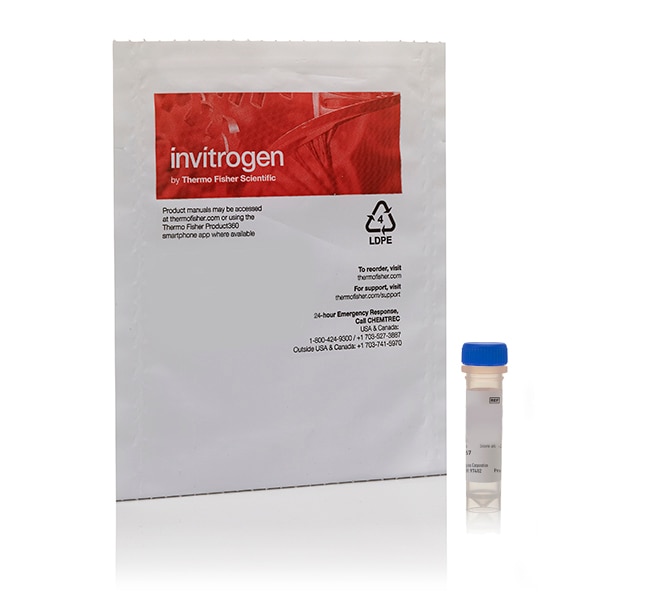
NBD C6-神经酰胺(6-((N-(7-硝基苯-2-氧-1,3-重氮-4-yl)氨基)己酰)鞘氨醇)
NBD C6-神经酰胺可用于研究鞘脂转运和代谢机制。此外,其还可用作活细胞和固定细胞中高尔基体的选择性染色剂。环境敏感的 NBD 染料在水溶液中发弱荧光,但在质子惰性溶剂和其他非极性环境中荧光增强,最大激发/发射波长 ∼466/536 nm。了解更多信息
| 货号 | 数量 |
|---|---|
| N1154 | 1 mg |
货号 N1154
价格(CNY)
5,561.00
Each
数量:
1 mg
价格(CNY)
5,561.00
Each
NBD C6-神经酰胺可用于研究鞘脂转运和代谢机制。此外,其还可用作活细胞和固定细胞中高尔基体的选择性染色剂。环境敏感的 NBD 染料在水溶液中发弱荧光,但在质子惰性溶剂和其他非极性环境中荧光增强,最大激发/发射波长 ∼466/536 nm。
仅供科研使用。不可用于诊断程序。
规格
化学名称或材料心磷脂
建议的储存条件在冷冻冰箱(-5 至 -30°C)中避光储存。
物理形态Solid
产品线Invitrogen
数量1 mg
Unit SizeEach
引用和文献 (201)
引用和文献
Abstract
Methods for studying glucosylceramide synthase.
Journal:Methods in enzymology
PubMed ID:10563310
Identification and characterization of Saccharomyces cerevisiae dihydrosphingosine-1-phosphate phosphatase.
Journal:J Biol Chem
PubMed ID:9353337
We have identified the yeast sphingosine resistance gene (YSR2) of Saccharomyces cerevisiae as encoding a protein that specifically dephosphorylates dihydrosphingosine 1-phosphate (DHS-1-P), and we refer to this protein as dihydrosphingosine-1-phosphate phosphatase. Overexpression of YSR2 conferred sphingosine resistance to the dihydrosphingosine-1-P lyase-defective mutant (JS16) of S. cerevisiae, which is hypersensitive to
Determination of the intracellular sites and topology of glucosylceramide synthesis in rat liver.
Journal:Biochem J
PubMed ID:1747103
We examined the intracellular site(s) and topology of glucosylceramide (GlcCer) synthesis in subcellular fractions from rat liver, using radioactive and fluorescent ceramide analogues as precursors, and compared these results with those obtained in our recent study of sphingomyelin (SM) synthesis in rat liver [Futerman, Stieger, Hubbard & Pagano (1990) J.
Insect NMDA receptors mediate juvenile hormone biosynthesis.
Journal:Proc Natl Acad Sci U S A
PubMed ID:11773617
'In vertebrates, the N-methyl-D-aspartate subtype of glutamate receptors (NMDAR) appears to play a role in neuronal development, synaptic plasticity, memory formation, and pituitary activity. However, functional NMDAR have not yet been characterized in insects. We have now demonstrated immunohistochemically glutamatergic nerve terminals in the corpora allata of an adult female
An endocytosed TGN38 chimeric protein is delivered to the TGN after trafficking through the endocytic recycling compartment in CHO cells.
Journal:J Cell Biol
PubMed ID:9722606
'To examine TGN38 trafficking from the cell surface to the TGN, CHO cells were stably transfected with a chimeric transmembrane protein, TacTGN38. We used fluorescent and 125I-labeled anti-Tac IgG and Fab fragments to follow TacTGN38''s postendocytic trafficking. At steady-state, anti-Tac was mainly in the TGN, but shortly after endocytosis it