Search



引用和文献 (3)
Invitrogen™
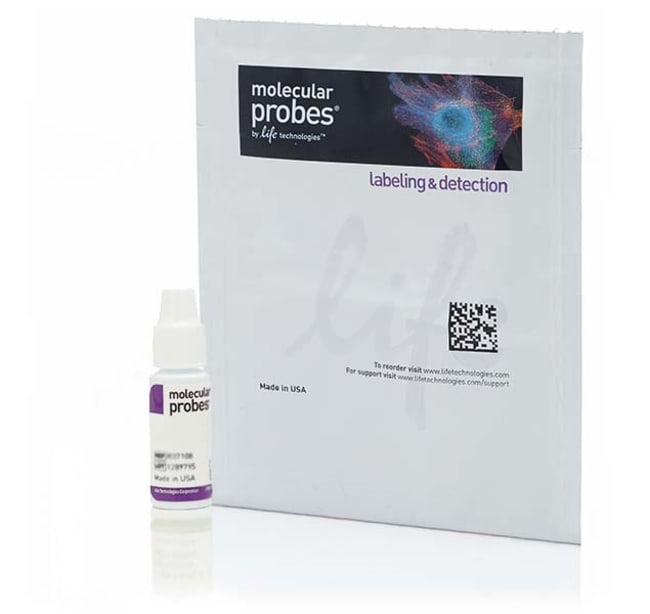
ProLong™ Gold 抗淬灭封片剂
直接用于显微玻片上荧光标记的细胞或组织样品的液态封片剂
Have Questions?
更改视图

| 货号 | 数量 |
|---|---|
| P10144 | 2 mL |
| P36934 | 5 x 2 mL |
| P36930 | 10 mL |
货号 P10144
价格(CNY)
508.00
飞享价
Ends: 31-Dec-2026
705.00共减 197.00 (28%)
Each
数量:
2 mL
价格(CNY)
508.00
飞享价
Ends: 31-Dec-2026
705.00共减 197.00 (28%)
Each
ProLong Gold 抗淬灭封片剂是一种直接用于显微玻片上荧光标记的细胞或组织样品的液态封片剂。其配方中不含 DNA 染色剂或含蓝色 DNA 染色剂 DAPI 或含深红色 DNA 染色剂 SYTOX Deep Red。ProLong Gold 封片剂所含的化学组分可避免荧光染料在荧光显微镜实验中淬灭(光漂白),在初始荧光信号未明显淬灭的情况下提供这种保护。其是一种固化封片剂,可形成近乎完美的光程 (1.47 RI),确保样品可长期储存。其为即用型(室温储存且无需混合)—只需滴入样品、盖上玻片,随即可固化和成像。
不建议采用 ProLong Gold 抗淬灭封片剂封片含荧光蛋白(如 GFP)的样品。为对荧光蛋白和荧光染料提供出色的抗淬灭保护性能,建议使用 ProLong Diamond 抗淬灭封片剂。了解更多关于 ProLong Gold 抗淬灭封片剂与 ProLong Diamond 抗淬灭封片剂之间的主要差异的信息。
主要性质:
•在成像过程中避免染料褪色
• 即用型液体,封片后可长期储存
• 封固样品可保持稳定数月
• 维持荧光信号—几乎没有淬灭
• 适用于 Alexa Fluor 染料
折射率为 1.52 的封片剂,针对油浸物镜成像进行了优化,可尝试固化封片剂 Prolong Glass 抗淬灭封片剂或非固化 SlowFade Glass 软质抗淬灭封片剂。
ProLong Gold 抗淬灭封片剂以预混形式提供,可直接在含/不含 DNA 染色剂的滴瓶或 10 mL 瓶内使用。DAPI 染色剂与 DNA 结合时由紫外光激发,激发波长为 360 nm,最大发射波长为 460 nm,使用 DAPI 传统滤光片检测。SYTOX Deep Red 染色剂与 DNA 结合时由红光激发,激发波长为 660 nm,最大发射波长为 682 nm,使用 Cy5/深红传统滤光片检测。
无需淬火即可获得光漂白保护
许多封片剂可以破坏初始荧光信号强度高达 80%。为打造 Molecular Probes Gold 系列封片剂,我们的科学家开发了一种化学添加剂配方,以最大限度避免广谱颜色和染料的初始信号淬灭。
成像及长期储存过程中信号稳定
我们的 FluoCells 系列使用基于环氧树脂的封片剂,制备的细胞可在数年内保持稳定,并提供最高水平的抗淬灭保护。但应用较不便,封固前需要在有机溶剂中操作数步。ProLong Gold 抗淬灭试剂是存档样品的绝佳替代选择。同时,这种试剂还是长时间成像过程中保持信号强度的绝佳选择,如在共聚焦激光扫描照明条件下重复扫描。其易于使用—可在空气中干燥,以除去过多的水分和封片剂。如果要立即观察样品,可选用我们的非固化封片剂SlowFade Gold 抗淬灭封片剂。
不需丙烯酸树脂即可获得极佳的折射率匹配
对于现代高分辨率成像应用,折射率匹配至关重要。ProLong Gold 抗淬灭封片剂固化后折射率为1.47。此外,这种固化特性意味着您可避免使用脏污的丙烯酸树脂(即指甲油),如果丙烯酸树脂与现代显微镜物镜接触,可能会损坏或毁坏物镜。
不建议采用 ProLong Gold 抗淬灭封片剂封片含荧光蛋白(如 GFP)的样品。为对荧光蛋白和荧光染料提供出色的抗淬灭保护性能,建议使用 ProLong Diamond 抗淬灭封片剂。了解更多关于 ProLong Gold 抗淬灭封片剂与 ProLong Diamond 抗淬灭封片剂之间的主要差异的信息。
主要性质:
•在成像过程中避免染料褪色
• 即用型液体,封片后可长期储存
• 封固样品可保持稳定数月
• 维持荧光信号—几乎没有淬灭
• 适用于 Alexa Fluor 染料
折射率为 1.52 的封片剂,针对油浸物镜成像进行了优化,可尝试固化封片剂 Prolong Glass 抗淬灭封片剂或非固化 SlowFade Glass 软质抗淬灭封片剂。
ProLong Gold 抗淬灭封片剂以预混形式提供,可直接在含/不含 DNA 染色剂的滴瓶或 10 mL 瓶内使用。DAPI 染色剂与 DNA 结合时由紫外光激发,激发波长为 360 nm,最大发射波长为 460 nm,使用 DAPI 传统滤光片检测。SYTOX Deep Red 染色剂与 DNA 结合时由红光激发,激发波长为 660 nm,最大发射波长为 682 nm,使用 Cy5/深红传统滤光片检测。
无需淬火即可获得光漂白保护
许多封片剂可以破坏初始荧光信号强度高达 80%。为打造 Molecular Probes Gold 系列封片剂,我们的科学家开发了一种化学添加剂配方,以最大限度避免广谱颜色和染料的初始信号淬灭。
成像及长期储存过程中信号稳定
我们的 FluoCells 系列使用基于环氧树脂的封片剂,制备的细胞可在数年内保持稳定,并提供最高水平的抗淬灭保护。但应用较不便,封固前需要在有机溶剂中操作数步。ProLong Gold 抗淬灭试剂是存档样品的绝佳替代选择。同时,这种试剂还是长时间成像过程中保持信号强度的绝佳选择,如在共聚焦激光扫描照明条件下重复扫描。其易于使用—可在空气中干燥,以除去过多的水分和封片剂。如果要立即观察样品,可选用我们的非固化封片剂SlowFade Gold 抗淬灭封片剂。
不需丙烯酸树脂即可获得极佳的折射率匹配
对于现代高分辨率成像应用,折射率匹配至关重要。ProLong Gold 抗淬灭封片剂固化后折射率为1.47。此外,这种固化特性意味着您可避免使用脏污的丙烯酸树脂(即指甲油),如果丙烯酸树脂与现代显微镜物镜接触,可能会损坏或毁坏物镜。
仅供科研使用。不可用于诊断程序。
规格
描述ProLong™ Gold Antifade Mountant, 1 x 2 mL
数量2 mL
运输条件室温
产品线ProLong
产品类型抗淬灭固定剂
试剂类型抗荧光淬灭溶液
容积(公制)2 mL
Unit SizeEach
内容与储存
在室温下储存。
常见问题解答 (FAQ)
What is the difference between ProLong and SlowFade antifade reagents?
If I use ProLong Gold Antifade Mountant to mount my slides, should I seal the edges?
Some antifade mounting media stay as liquid whereas others harden. What is the benefit of having one that hardens?
I mounted my cells in ProLong antifade mounting medium, but now I want to go back and re-label them. Is there a way I can unmount the coverslip after it has cured (hardened)?
I am using ProLong antifade mounting medium. Do I need to let it cure before imaging? Do I need to seal the edges of the coverslip?
引用和文献 (3)
引用和文献
Abstract
The mechanisms by which pardaxin, a natural cationic antimicrobial peptide, targets the endoplasmic reticulum and induces c-FOS.
Journal:
PubMed ID:24477193
Pardaxin is a cationic antimicrobial peptide derived from Red Sea Moses sole. Previous studies have shown that pardaxin selectively triggers the death of cancer cells, initiating the development of a pardaxin-based cancer vaccine; however, the underlying mechanism by which pardaxin kills cancer cells has not yet been elucidated. Here, we
LytA, major autolysin of Streptococcus pneumoniae, requires access to nascent peptidoglycan.
Journal:J Biol Chem
PubMed ID:22334685
The pneumococcal autolysin LytA is a virulence factor involved in autolysis as well as in fratricidal- and penicillin-induced lysis. In this study, we used biochemical and molecular biological approaches to elucidate which factors control the cytoplasmic translocation and lytic activation of LytA. We show that LytA is mainly localized intracellularly,
Live-cell superresolution imaging by pulsed STED two-photon excitation microscopy.
Journal:Biophys J
PubMed ID:23442955
Two-photon laser scanning microscopy (2PLSM) allows fluorescence imaging in thick biological samples where absorption and scattering typically degrade resolution and signal collection of one-photon imaging approaches. The spatial resolution of conventional 2PLSM is limited by diffraction, and the near-infrared wavelengths used for excitation in 2PLSM preclude the accurate imaging of