Search


引用和文献 (20)
Invitrogen™
pHrodo™ Red 和 Green 葡聚糖,10,000 MW,用于检测内吞作用
使用 pHrodo Red 和 Green 葡聚糖偶联物,可实现快速、准确的活细胞内吞作用及成像检测,这些偶联物可提供无需洗涤步骤或淬灭染料的 pH 敏感性 pHrodo 染料,可在成像、HTS、HCA、追踪和流式应用中进行多通路检测。
Have Questions?
更改视图

| 货号 | 颜色 |
|---|---|
| P10361 | 红色 |
| P35368 | 绿色 |
货号 P10361
价格(CNY)
5,316.00
飞享价
Ends: 31-Dec-2026
7,382.00共减 2,066.00 (28%)
Each
颜色:
红色
价格(CNY)
5,316.00
飞享价
Ends: 31-Dec-2026
7,382.00共减 2,066.00 (28%)
Each
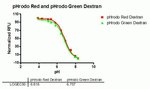
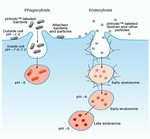
使用 pHrodo Red 和 Green 葡聚糖 10,000 MW 偶联物,可更快、更准确地进行活细胞内吞作用成像,并且无需洗涤步骤或淬灭染料。pHrodo Red 和 Green 葡聚糖偶联物在中性 pH 环境中无荧光,但在 pH 5–8 条件(如内体和溶酶体中)下呈红色或绿色强荧光。这些 pHrodo 标记的葡聚糖可与其他染料配合使用进行多通路检测,用于成像、HTS、示踪和流式应用。
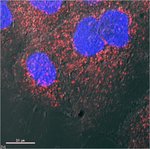
pHrodo Red 葡聚糖(货号 P10361)是其他荧光葡聚糖偶联物(如 BCECF 和四甲基罗丹明 [TRITC])的出色替代选择,可用于活细胞内吞作用成像,即胞浆膜凸起形成膜结合膜泡(内体),随后被运输至细胞内的各个目的地。pHrodo Red 葡聚糖具有 pH 敏感性荧光激发/发射,其中波长为 560/585 nm,其荧光发射强度随着酸度增加而增大。这种增大在 pH 5–8 的范围内特别显著,常见于内吞膜泡内。pHrodo Red 葡聚糖在细胞外环境中几乎呈暗色;但在内化后,葡聚糖偶联物会在内体的酸性环境中呈红色强荧光信号。pHrodo Red 葡聚糖也可与多种蓝色、绿色和远红色染料和报告基因(如 GFP、Fuo-4、钙黄绿素、NucBlue、CellEvent Caspase 3/7 green、Mitosox Green 及 Mitotracker Deep Red 等)配合使用进行多通路检测。
pHrodo Green Dextran (货号 P35368),如 pHrodo Red 葡聚糖,可为活细胞内吞和吞噬作用的测定提供快速准确的结果。pHrodo Green 偶联物在细胞外中性 pH 条件下无荧光,但在酸性 pH 条件(如内体和溶酶体中)下呈绿色强荧光。pHrodo Green 染料可与多种蓝色、红色和远红色染料报告基因(如 Mitosox Red、CellEvent Caspase 3/7 Red、NucBlue、RFP 和 Mitotracker Deep Red 等)配合使用进行多通路检测。pHrodo Green 葡聚糖 10,000 MW 偶联物可用于细胞成像、高内涵筛选、高通量筛选和流式应用。要了解更多的兼容染料选择,请参阅细胞染色工具或 SpectraViewer。
使用标记葡聚糖的关键应用:
有许多文献描述了标记葡聚糖的使用。一些较常见的用途如下:
•活细胞中的神经元示踪(顺行和逆行)
•活细胞中细胞谱系的示踪
•神经解剖示踪
•检查细胞间通讯(例如间隙连接、伤口愈合过程以及胚胎发育期间)
•研究血管通透性和血脑屏障的完整性
•追踪内吞作用
•监测酸化(一些葡聚糖-染料偶联物具有 pH 值敏感性)
•研究细胞质基质的流体动力学特性。
高生产标准
我们在多个分子量范围内提供超过 50 种荧光和生物素化葡聚糖偶联物。葡聚糖是亲水性多糖,特征为具有中等至较高分子量,水溶性良好,毒性较低。它们通常也表现出低免疫原性。由于它们较不常见的聚-(α-D-1,6-葡萄糖) 连接(使它们能够耐受大多数内源性细胞糖苷酶的切割),葡聚糖具有生物惰性。
在大多数情况下,我们的荧光葡聚糖比其他来源的葡聚糖更亮且负电荷更高。此外,我们使用严格的方法去除尽可能多的未结合染料,然后通过薄层色谱分析测定我们的葡聚糖偶联物,以确保不存在低分子量污染物
广泛的取代基和分子量选择
我们的葡聚糖偶联了生物素或多种荧光基团、包括我们的七种 Alexa Fluor 染料,其标称分子量 (MW):3,000;10,000;40,000;70,000;500,000;以及 2,000,000 道尔顿。
pHrodo Green Dextran (货号 P35368),如 pHrodo Red 葡聚糖,可为活细胞内吞和吞噬作用的测定提供快速准确的结果。pHrodo Green 偶联物在细胞外中性 pH 条件下无荧光,但在酸性 pH 条件(如内体和溶酶体中)下呈绿色强荧光。pHrodo Green 染料可与多种蓝色、红色和远红色染料报告基因(如 Mitosox Red、CellEvent Caspase 3/7 Red、NucBlue、RFP 和 Mitotracker Deep Red 等)配合使用进行多通路检测。pHrodo Green 葡聚糖 10,000 MW 偶联物可用于细胞成像、高内涵筛选、高通量筛选和流式应用。要了解更多的兼容染料选择,请参阅细胞染色工具或 SpectraViewer。
使用标记葡聚糖的关键应用:
有许多文献描述了标记葡聚糖的使用。一些较常见的用途如下:
•活细胞中的神经元示踪(顺行和逆行)
•活细胞中细胞谱系的示踪
•神经解剖示踪
•检查细胞间通讯(例如间隙连接、伤口愈合过程以及胚胎发育期间)
•研究血管通透性和血脑屏障的完整性
•追踪内吞作用
•监测酸化(一些葡聚糖-染料偶联物具有 pH 值敏感性)
•研究细胞质基质的流体动力学特性。
高生产标准
我们在多个分子量范围内提供超过 50 种荧光和生物素化葡聚糖偶联物。葡聚糖是亲水性多糖,特征为具有中等至较高分子量,水溶性良好,毒性较低。它们通常也表现出低免疫原性。由于它们较不常见的聚-(α-D-1,6-葡萄糖) 连接(使它们能够耐受大多数内源性细胞糖苷酶的切割),葡聚糖具有生物惰性。
在大多数情况下,我们的荧光葡聚糖比其他来源的葡聚糖更亮且负电荷更高。此外,我们使用严格的方法去除尽可能多的未结合染料,然后通过薄层色谱分析测定我们的葡聚糖偶联物,以确保不存在低分子量污染物
广泛的取代基和分子量选择
我们的葡聚糖偶联了生物素或多种荧光基团、包括我们的七种 Alexa Fluor 染料,其标称分子量 (MW):3,000;10,000;40,000;70,000;500,000;以及 2,000,000 道尔顿。
仅供科研使用。不可用于人或动物的治疗或诊断。
规格
细胞类型哺乳动物
描述pHrodo™ Red Dextran,10,000 MW,用于内吞作用分析
检测方法荧光
染料类型其他标记或染料、pH 敏感性染料
激发/发射565/585
形式冻干
指示器细胞内吞
数量0.5 mg
运输条件室温
溶解度pH >6
子细胞定位内体,溶酶体
颜色红色
适用于(应用)细胞分析
适用于(设备)共聚焦显微镜, 荧光显微镜, 流式细胞仪, 高内涵分析仪
产品线pHrodo
产品类型补充剂
pH5 - 8
Unit SizeEach
内容与储存
在 –20°C 干燥条件下避光储存。
常见问题解答 (FAQ)
I labeled my cells with pHrodo Red dextran dye to examine endocytosis of my adherent cells. After labeling with the recommended concentration in PBS, the cells rounded up and dissociated. Is this a problem with this reagent?
What is the optimal working concentration for pHrodo Red and Green Dextran, 10,000 MW, for Endocytosis (Cat. Nos. P10361, P35368)?
引用和文献 (20)
引用和文献
Abstract
d-Tocopherol Reduces Lipid Accumulation in Niemann-Pick Type C1 and Wolman Cholesterol Storage Disorders.
Journal:J Biol Chem
PubMed ID:23035117
'Niemann-Pick disease type C (NPC) and Wolman disease are two members of a family of storage disorders caused by mutations of genes encoding lysosomal proteins. Deficiency in function of either the NPC1 or NPC2 protein in NPC disease or lysosomal acid lipase in Wolman disease results in defective cellular cholesterol
Molecular basis for pH-dependent mucosal dehydration in cystic fibrosis airways.
Journal:
PubMed ID:24043776
'The ability to maintain proper airway surface liquid (ASL) volume homeostasis is vital for mucus hydration and clearance, which are essential aspects of the mammalian lung''s innate defense system. In cystic fibrosis (CF), one of the most common life-threatening genetic disorders, ASL dehydration leads to mucus accumulation and chronic infection.
Increased acid stability of the hemagglutinin protein enhances H5N1 influenza virus growth in the upper respiratory tract but is insufficient for transmission in ferrets.
Journal:
PubMed ID:23824818
Influenza virus entry is mediated by the acidic-pH-induced activation of hemagglutinin (HA) protein. Here, we investigated how a decrease in the HA activation pH (an increase in acid stability) influences the properties of highly pathogenic H5N1 influenza virus in mammalian hosts. We generated isogenic A/Vietnam/1203/2004 (H5N1) (VN1203) viruses containing either
Host cell autophagy modulates early stages of adenovirus infections in airway epithelial cells.
Journal:J Virol
PubMed ID:23236070
Human adenoviruses typically cause mild infections in the upper or lower respiratory tract, gastrointestinal tract, or ocular epithelium. However, adenoviruses may be life-threatening in patients with impaired immunity and some serotypes cause epidemic outbreaks. Attachment to host cell receptors activates cell signaling and virus uptake by endocytosis. At present, it
Single-stranded DNA oligonucleotides inhibit TLR3-mediated responses in human monocyte-derived dendritic cells and in vivo in cynomolgus macaques.
Journal:Blood
PubMed ID:22700721
TLR3 is a key receptor for recognition of double-stranded RNA and initiation of immune responses against viral infections. However, hyperactive responses can have adverse effects, such as virus-induced asthma. Strategies to prevent TLR3-mediated pathology are therefore desired. We investigated the effect of single-stranded DNA oligonucleotides (ssDNA-ODNs) on TLR3 activation. Human