Search



引用和文献 (35)
Invitrogen™
用于检测吞噬作用的 pHrodo™ BioParticles™ 偶联物和用于流式细胞分析的吞噬作用检测试剂盒
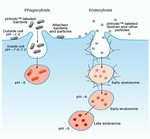
• 用 pH 敏感性荧光染料进行吞噬和内吞作用的特异性检测 — 分辨内吞颗粒与粘附的细胞外颗粒• 降低敏感实验中的信号变异性并改善时序 — 无需洗涤步骤了解更多信息
Have Questions?
更改视图

| 货号 | 产品类型 | 种属 | 颜色 |
|---|---|---|---|
| P35361 | 共轭物 | 大肠杆菌 | 红色 |
| P35360 | 共轭物 | 大肠杆菌 | 深红色 |
| A10025 | 吞噬作用试剂盒 | 大肠杆菌 | 红色 |
| P35365 | 共轭物 | 酿酒酵母 | 绿色 |
货号 P35361
价格(CNY)
4,773.00
飞享价
Ends: 31-Dec-2026
6,629.00共减 1,856.00 (28%)
Each
产品类型:
共轭物
种属:
大肠杆菌
颜色:
红色
价格(CNY)
4,773.00
飞享价
Ends: 31-Dec-2026
6,629.00共减 1,856.00 (28%)
Each
• 用 pH 敏感性荧光染料进行吞噬和内吞作用的特异性检测 — 分辨内吞颗粒与粘附的细胞外颗粒
• 降低敏感实验中的信号变异性并改善时序 — 无需洗涤步骤
• 降低敏感实验中的信号变异性并改善时序 — 无需洗涤步骤
仅供科研使用。不可用于人或动物的治疗或诊断。
规格
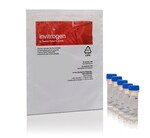
描述用于检测吞噬作用的 pHrodo™ Red E. coli BioParticles™ 偶联物
染料类型pHrodo™ Red
形式实心
数量5 x 2 mg
运输条件室温
种属大肠杆菌
颜色红色
适用于(应用)细胞分析
适用于(设备)荧光显微镜
产品线BioParticles、pHrodo
产品类型共轭物
Unit SizeEach
内容与储存
在冷冻冰箱(–5° 至 –30°C)中避光储存。
常见问题解答 (FAQ)
I am performing a phagocytosis assay of macrophages engulfing pHrodo-labeled bacteria. What do you recommend for fixation after the phagocytosis?
Can I store reconstituted pHrodo BioParticles Conjugates for Phagocytosis and Phagocytosis Kit, for Flow Cytometry?
Are the Invitrogen BioParticles products sterile?
What is the concentration of bacterial particles for pHrodo BioParticles Conjugates for Phagocytosis?
What is the type of bond that attaches the dyes to the BioParticles probes?
引用和文献 (35)
引用和文献
Abstract
Extracellular Matrix Lumican Promotes Bacterial Phagocytosis, and Lum-/- Mice Show Increased Pseudomonas aeruginosa Lung Infection Severity.
Journal:J Biol Chem
PubMed ID:22865855
'Phagocytosis is central to bacterial clearance, but the exact mechanism is incompletely understood. Here, we show a novel and critical role for lumican, the connective tissue extracellular matrix small leucine-rich repeat proteoglycan, in CD14-mediated bacterial phagocytosis. In Psuedomonas aeruginosa lung infections, lumican-deficient (Lum(-/-)) mice failed to clear the bacterium from
SLAM is a microbial sensor that regulates bacterial phagosome functions in macrophages.
Journal:Nat Immunol
PubMed ID:20818396
'Phagocytosis is a pivotal process by which macrophages eliminate microorganisms after recognition by pathogen sensors. Here we unexpectedly found that the self ligand and cell surface receptor SLAM functioned not only as a costimulatory molecule but also as a microbial sensor that controlled the killing of gram-negative bacteria by macrophages.
Innate immunity and transcription of MGAT-III and Toll-like receptors in Alzheimer's disease patients are improved by bisdemethoxycurcumin.
Journal:Proc Natl Acad Sci U S A
PubMed ID:17652175
'We have tested a hypothesis that the natural product curcuminoids, which has epidemiologic and experimental rationale for use in AD, may improve the innate immune system and increase amyloid-beta (Abeta) clearance from the brain of patients with sporadic Alzheimer''s disease (AD). Macrophages of a majority of AD patients do not
Establishment of single-cell screening system for the rapid identification of transcriptional modulators involved in direct cell reprogramming.
Journal:Nucleic Acids Res
PubMed ID:22879381
'Combinatorial interactions of transcription modulators are critical to regulate cell-specific expression and to drive direct cell reprogramming (e.g. trans-differentiation). However, the identification of key transcription modulators from myriad of candidate genes is laborious and time consuming. To rapidly identify key regulatory factors involved in direct cell reprogramming, we established a
Rooperol as an antioxidant and its role in the innate immune system: An in vitro study.
Journal:J Ethnopharmacol
PubMed ID:23085395
'Biologically active rooperol is formed when the glucose subunits of the nontoxic glycoside, hypoxoside, are cleaved by ß-glucosidase. Hypoxoside is isolated from Hypoxis, a medicinal plant genus frequently used by the indigenous people of South Africa as an immune system booster. The aim of this study was to investigate rooperol''s