Search
Invitrogen
IFITM1 Polyclonal Antibody
{{$productOrderCtrl.translations['antibody.pdp.commerceCard.promotion.promotions']}}
{{$productOrderCtrl.translations['antibody.pdp.commerceCard.promotion.promocode']}}: {{promo.promoCode}} {{promo.promoTitle}} {{promo.promoDescription}}. {{$productOrderCtrl.translations['antibody.pdp.commerceCard.promotion.learnmore']}}
{{$ctrl.translations['antibody.pdp.skuNotes.additionalInformation']}}:
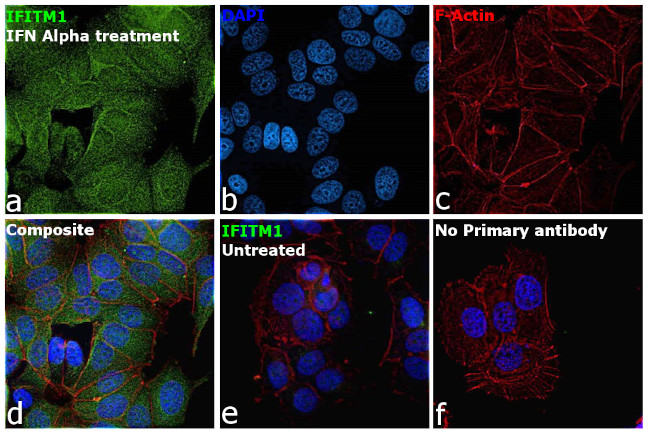
图: 1 / 11
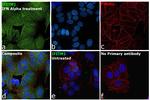
IFITM1 Antibody (PA5-27495) in ICC/IF
Immunofluorescence analysis of Interferon-induced transmembrane protein 1 was performed using 70% confluent log phase MCF7 treated with Human IFN Alpha (1000u/mL for 12hrs). The cells were fixed with 4% paraformaldehyde for 10 minutes, permeabilized with 0.1% Triton™ X-100 for 15 minutes, and blocked with 2% BSA for 45 minutes at room temperature. The cells were labeled with IFITM1 Polyclonal Antibody (Product # PA5-27495) at 1:100 dilution in 0.1% BSA, incubated at 4 degree celsius overnight and then labeled with Donkey anti-Rabbit IgG (H... View More
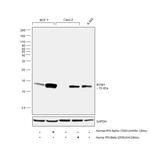
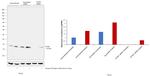
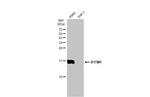
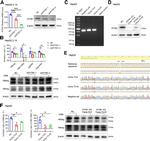
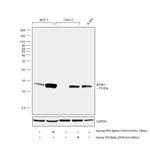
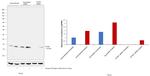
Please note: We are reviewing Western blot images included in the antibody testing data in our catalog, including those provided by third parties. Unless expressly labeled or annotated as “raw-unedited”, Western blot images included in the antibody testing data in our catalog may have been edited, optimized or otherwise adjusted for presentation.


产品信息
PA5-27495
应用
建议稀释比
已发表文章
产品规格
种属反应
Human,
Mouse
已发表种属
Human
宿主/亚型
Rabbit
/ IgG
分类
Polyclonal
类型
Antibody
抗原
Recombinant protein encompassing a sequence within the center region of human IFITM1. The exact sequence is proprietary.
偶联物
Unconjugated
Unconjugated
Unconjugated
形式
Liquid
浓度
0.14 mg/mL
规格
14 µg
纯化类型
Antigen affinity chromatography
保存液
PBS, pH 7, with 1% BSA, 20% glycerol
内含物
0.025% ProClin 300
保存条件
Store at 4°C short term. For long term storage, store at -20°C, avoiding freeze/thaw cycles.
运输条件
Ambient (domestic); Wet ice (international)
RRID
产品详细信息
Recommended positive controls: A549, HeLa.
Predicted reactivity: Chimpanzee (100%).
Store product as a concentrated solution. Centrifuge briefly prior to opening the vial.
靶标信息
IFITM1 (Interferon inducible transmembrane protein 1) is a member of the IFN-inducible transmembrane protein family. It is an essential mediator of interferon-gamma-induced antiproliferation and plays a role in the control of cell growth. IFITM1 is upregulated in several tumor types and may be useful as a tumor biomarker. Both mouse IFITM1 and IFITM3 are expressed on the cell surfaces of primordial germ cells in a developmentally-regulated manner. IFITM1 activity is required for primordial germ cell transit, and IFITM1 acts as a repulsive molecule by repelling non-IFITM1-expressing primordial germ cells from the mesoderm into the endoderm.
仅用于科研。不用于诊断过程。未经明确授权不得转售。
生物信息学
蛋白别名: dispanin subfamily A member 2a; fragilis protein 2; fragilis2; ifitm-like protein 2; interferon induced transmembrane protein 2 like; interferon-induced protein 17; interferon-inducible protein 9-27; leu-13 antigen; unnamed protein product
基因别名: 1110036C17Rik; 9-27; CD225; DSPA2a; IFI17; LEU13; Mil-2; Mil2
UniProt ID: (Human) P13164, (Mouse) Q9D103
Entrez Gene ID: (Human) 8519, (Mouse) 68713
somitogenesis
negative regulation of cell proliferation
response to virus
anterior/posterior pattern specification
negative regulation of cell migration
response to interferon-gamma
response to interferon-alpha
response to interferon-beta
negative regulation of viral genome replication
positive regulation of osteoblast differentiation
negative regulation of viral entry into host cell
defense response to virus
type I interferon signaling pathway
cell surface receptor signaling pathway
Disclaimer

Clicking the images or links will redirect you to a website hosted by BenchSci that provides third-party scientific content. Neither the content nor the BenchSci technology and processes for selection have been evaluated by us; we are providing them as-is and without warranty of any kind, including for use or application of the Thermo Fisher Scientific products presented.

