Search
Invitrogen
Annexin A2 Polyclonal Antibody
{{$productOrderCtrl.translations['antibody.pdp.commerceCard.promotion.promotions']}}
{{$productOrderCtrl.translations['antibody.pdp.commerceCard.promotion.promocode']}}: {{promo.promoCode}} {{promo.promoTitle}} {{promo.promoDescription}}. {{$productOrderCtrl.translations['antibody.pdp.commerceCard.promotion.learnmore']}}
{{$ctrl.translations['antibody.pdp.skuNotes.additionalInformation']}}:
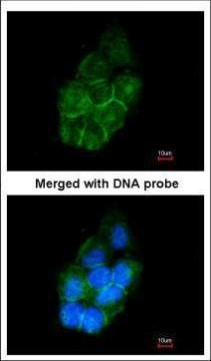
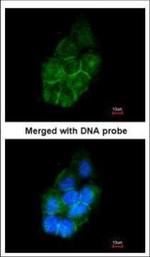

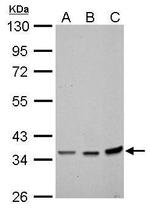
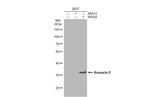
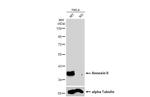
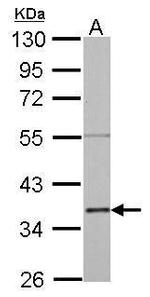
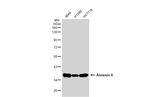
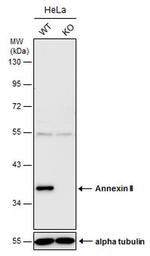
Please note: We are reviewing Western blot images included in the antibody testing data in our catalog, including those provided by third parties. Unless expressly labeled or annotated as “raw-unedited”, Western blot images included in the antibody testing data in our catalog may have been edited, optimized or otherwise adjusted for presentation.





产品信息
PA5-27566
应用
建议稀释比
已发表文章
产品规格
种属反应
Human,
Mouse,
Rat
已发表种属
Rat
宿主/亚型
Rabbit
/ IgG
分类
Polyclonal
类型
Antibody
抗原
Recombinant protein encompassing a sequence within the center region of human Annexin II. The exact sequence is proprietary.
偶联物
Unconjugated
Unconjugated
Unconjugated
形式
Liquid
浓度
0.14 mg/mL
规格
14 µg
纯化类型
Antigen affinity chromatography
保存液
PBS, pH 7, with 20% glycerol, 1% BSA
内含物
0.025% ProClin 300
保存条件
Store at 4°C short term. For long term storage, store at -20°C, avoiding freeze/thaw cycles.
运输条件
Ambient (domestic); Wet ice (international)
RRID
产品详细信息
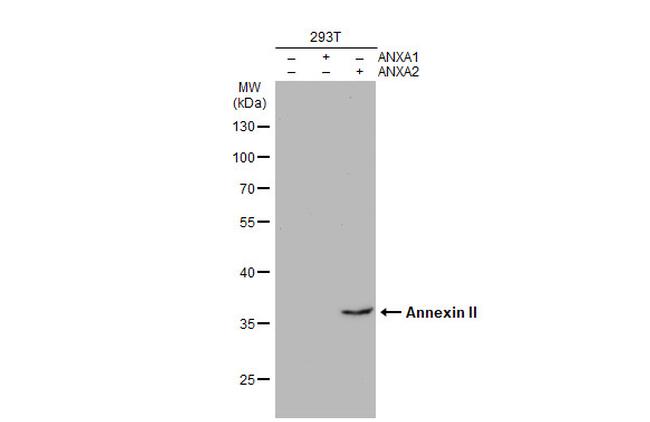
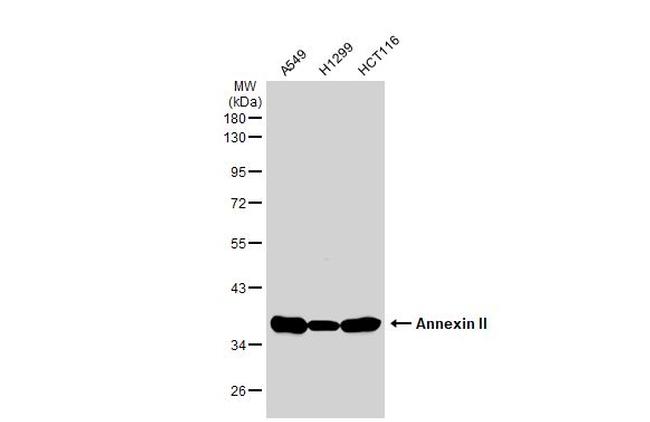
Recommended positive controls: A549, HCT116, HeLa, GL261, NIH-3T3, C2C12, Rat2, human ANXA2-transfected 293T.
Predicted reactivity: Mouse (98%), Rat (94%), Xenopus laevis (81%), Dog (100%), Pig (100%), Chicken (90%), Sheep (99%), Bovine (99%).
Store product as a concentrated solution. Centrifuge briefly prior to opening the vial.
靶标信息
This gene encodes a member of the annexin family. Members of this calcium-dependent phospholipid-binding protein family play a role in the regulation of cellular growth and in signal transduction pathways. This protein functions as an autocrine factor which heightens osteoclast formation and bone resorption. This gene has three pseudogenes located on chromosomes 4, 9 and 10, respectively. Multiple alternatively spliced transcript variants encoding different isoforms have been found for this gene.
仅用于科研。不用于诊断过程。未经明确授权不得转售。
生物信息学
蛋白别名: 33-kDa calcimedin; 33-kDa lymphocyte Ca<2+>- binding protein; 33kDa lymphocyte Ca<2+>- binding protein; 36 kDa calcium-dependent phospholipid-binding protein; 36-kDa calelectrin; annexin II; annexin-2; calpactin I heavy chain; calpactin I heavy chain (p36); calpactin I heavy polypeptide; calpactin-1 heavy chain; chromobindin 8; chromobindin-8; epididymis secretory protein Li 270; epididymis secretory sperm binding protein; lipocortin II; p36; PAP-IV; placental anticoagulant protein IV; protein I; unnamed protein product
基因别名: ANX2; ANX2L4; CAL1H; HEL-S-270; LIP2; LPC2; LPC2D; P36; PAP-IV
UniProt ID: (Human) P07355, (Rat) Q07936, (Mouse) P07356
Entrez Gene ID: (Human) 302, (Rat) 56611, (Mouse) 12306
phosphatidylserine binding
protease binding
RNA binding
phospholipase inhibitor activity
serine-type endopeptidase inhibitor activity
calcium ion binding
protein binding
calcium-dependent phospholipid binding
phosphatidylinositol-4,5-bisphosphate binding
cytoskeletal protein binding
phospholipase A2 inhibitor activity
AP-3 adaptor complex binding
identical protein binding
S100 protein binding
calcium-dependent protein binding
cadherin binding involved in cell-cell adhesion
phospholipid binding
small GTPase binding
bone sialoprotein binding
actin filament binding
angiogenesis
membrane raft assembly
positive regulation of receptor recycling
positive regulation of protein phosphorylation
negative regulation of receptor internalization
membrane budding
cell adhesion
cell-matrix adhesion
body fluid secretion
positive regulation of plasminogen activation
response to activity
collagen fibril organization
lung development
positive regulation of vesicle fusion
negative regulation of low-density lipoprotein particle receptor catabolic process
osteoclast development
fibrinolysis
mRNA transcription from RNA polymerase II promoter
positive regulation of vacuole organization
positive regulation by host of viral process
positive regulation of transcription from RNA polymerase II promoter
secretion
positive regulation of fibroblast proliferation
regulation of neurogenesis
regulation of fibrinolysis
protein localization to plasma membrane
response to thyroid hormone
positive regulation of viral life cycle
epithelial cell apoptotic process
positive regulation of low-density lipoprotein particle clearance
positive regulation of receptor-mediated endocytosis involved in cholesterol transport
positive regulation of exocytosis
positive regulation of plasma membrane repair
negative regulation of transport
positive regulation of multicellular organismal process
cell-cell adhesion
Disclaimer

Clicking the images or links will redirect you to a website hosted by BenchSci that provides third-party scientific content. Neither the content nor the BenchSci technology and processes for selection have been evaluated by us; we are providing them as-is and without warranty of any kind, including for use or application of the Thermo Fisher Scientific products presented.

