Search
Invitrogen
Phospho-AKT1/AKT3 (Tyr437, Tyr434) Polyclonal Antibody
{{$productOrderCtrl.translations['antibody.pdp.commerceCard.promotion.promotions']}}
{{$productOrderCtrl.translations['antibody.pdp.commerceCard.promotion.promocode']}}: {{promo.promoCode}} {{promo.promoTitle}} {{promo.promoDescription}}. {{$productOrderCtrl.translations['antibody.pdp.commerceCard.promotion.learnmore']}}
{{$ctrl.translations['antibody.pdp.skuNotes.additionalInformation']}}:
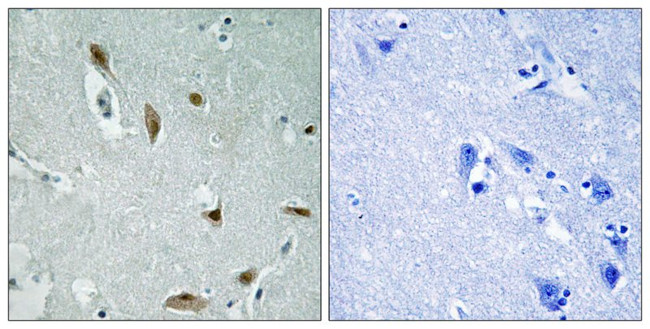
图: 1 / 2
Phospho-AKT1/AKT3 (Tyr437, Tyr434) Antibody (PA5-40162) in IHC (P)
Immunohistochemical analysis of Phospho-AKT1/AKT3 (Tyr437, Tyr434) in Human brain tissue using paraffin-embedded Phospho-AKT1/AKT3 (Tyr437, Tyr434) Polyclonal Antibody (Product # PA5-40162). The picture on the right is treated with the synthesized peptide.
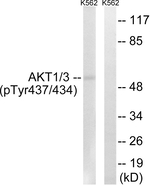
Please note: We are reviewing Western blot images included in the antibody testing data in our catalog, including those provided by third parties. Unless expressly labeled or annotated as “raw-unedited”, Western blot images included in the antibody testing data in our catalog may have been edited, optimized or otherwise adjusted for presentation.


产品信息
PA5-40162
产品规格
种属反应
Human,
Mouse,
Rat
宿主/亚型
Rabbit
/ IgG
分类
Polyclonal
类型
Antibody
抗原
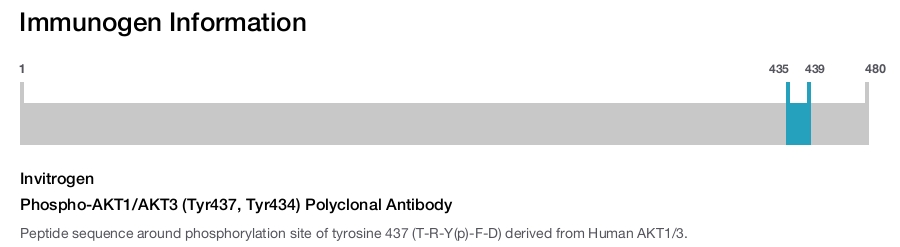
Peptide sequence around phosphorylation site of tyrosine 437 (T-R-Y(p)-F-D) derived from Human AKT1/3.
偶联物
Unconjugated
Unconjugated
Unconjugated
形式
Liquid
浓度
1 mg/mL
规格
100 µg
纯化类型
Antigen affinity chromatography
保存液
PBS, pH 7.4, with 50% glycerol
内含物
0.02% sodium azide
保存条件
-20°C, Avoid Freeze/Thaw Cycles
运输条件
Ambient (domestic); Wet ice (international)
RRID
产品详细信息
This antibody is predicted to react with mouse and rat based on sequence homology.
靶标信息
AKT1 is one of 3 closely related serine/threonine-protein kinases (AKT1, AKT2 and AKT3) called the AKT kinase, and which regulate many processes including metabolism, proliferation, cell survival, growth and angiogenesis. This is mediated through serine and/or threonine phosphorylation of a range of downstream substrates. Over 100 substrate candidates have been reported so far, but for most of them, no isoform specificity has been reported. AKT is responsible of the regulation of glucose uptake by mediating insulin-induced translocation of the SLC2A4/GLUT4 glucose transporter to the cell surface. Phosphorylation of PTPN1 at 'Ser-50' negatively modulates its phosphatase activity preventing dephosphorylation of the insulin receptor and the attenuation of insulin signaling.
仅用于科研。不用于诊断过程。未经明确授权不得转售。
篇参考文献 (0)
您是否在文献中引用过该产品?请点击下方按钮邮件告知我们。
生物信息学
蛋白别名: AKT1 kinase; AKT1m; Akt1m protein; AKT3 kinase; C-AKT; EC 2.7.11.1; murine thymoma viral (v-akt) oncogene homolog 1; PKB alpha; PKB gamma; PKBgamma/Akt3; PKBgamma1; protein kinase Akt-3; protein kinase B alpha; protein kinase B gamma; protein kinase B, gamma; protein kinase B-alpha; proto-oncogene c-AKT; proto-oncogene product; rac protein kinase alpha; RAC protein kinase alpha RAC-PK alpha; RAC-gamma serine/threonine protein kinase; RAC-PK-alpha; RAC-PK-gamma; related to A and C kinases; serine-threonine protein kinase; similar to rat serine-threonine protein kinase; thymoma viral proto-oncogene 1; thymoma viral proto-oncogene 3; tumor rejection antigen peptide pRLib; unnamed protein product; v-akt murine thymoma viral oncogene 3; v-akt murine thymoma viral oncogene homolog 1; v-akt murine thymoma viral oncogene homolog 3 (protein kinase B, gamma); v-akt murine thymoma viral oncogene-like protein 1
基因别名: AKT; D930002M15Rik; LTR-akt; MPPH; MPPH2; Nmf350; PKB; PKB-ALPHA; PKB-GAMMA; PKB/Akt; PKBalpha; PKBG; PRKBA; PRKBG; RAC; RAC-ALPHA; RAC-gamma; RAC-PK-gamma; STK-2
UniProt ID: (Human) P31749, (Human) Q9Y243, (Rat) P47196, (Mouse) P31750, (Mouse) Q9WUA6, (Rat) Q63484
Entrez Gene ID: (Human) 207, (Human) 10000, (Rat) 24185, (Mouse) 11651, (Mouse) 23797, (Rat) 29414
protein kinase activity
protein serine/threonine kinase activity
protein serine/threonine/tyrosine kinase activity
protein binding
calmodulin binding
ATP binding
phosphatidylinositol-3,4,5-trisphosphate binding
kinase activity
enzyme binding
kinase binding
protein kinase binding
nitric-oxide synthase regulator activity
protein serine/threonine kinase inhibitor activity
identical protein binding
protein homodimerization activity
phosphatidylinositol-3,4-bisphosphate binding
14-3-3 protein binding
potassium channel activator activity
protein serine kinase activity
TORC2 complex binding
protein kinase C binding
GTPase activating protein binding
protein phosphatase 2A binding
protein serine/threonine kinase binding
osteoblast differentiation
positive regulation of endothelial cell proliferation
cell migration involved in sprouting angiogenesis
complement receptor mediated signaling pathway
sphingosine-1-phosphate signaling pathway
regulation of glycogen biosynthetic process
protein phosphorylation
nitric oxide biosynthetic process
activation-induced cell death of T cells
response to oxidative stress
signal transduction
epidermal growth factor receptor signaling pathway
G-protein coupled receptor signaling pathway
cell proliferation
insulin receptor signaling pathway
response to heat
response to hormone
negative regulation of autophagy
positive regulation of endothelial cell migration
positive regulation of gene expression
negative regulation of gene expression
negative regulation of plasma membrane long-chain fatty acid transport
fibroblast migration
positive regulation of glucose metabolic process
regulation of neuron projection development
negative regulation of macroautophagy
peptidyl-serine phosphorylation
peptidyl-threonine phosphorylation
cytokine-mediated signaling pathway
cell differentiation
positive regulation of cell growth
regulation of cell migration
positive regulation of cell migration
T cell costimulation
negative regulation of protein ubiquitination
TOR signaling
negative regulation of fatty acid beta-oxidation
positive regulation of endodeoxyribonuclease activity
positive regulation of proteasomal ubiquitin-dependent protein catabolic process
cellular response to insulin stimulus
positive regulation of peptidyl-serine phosphorylation
cellular response to stress
response to fluid shear stress
intracellular signal transduction
interleukin-18-mediated signaling pathway
positive regulation of protein import into nucleus
regulation of apoptotic process
negative regulation of apoptotic process
anoikis
regulation of mRNA stability
protein kinase B signaling
positive regulation of blood vessel endothelial cell migration
positive regulation of nitric oxide biosynthetic process
positive regulation of fat cell differentiation
positive regulation of glycogen biosynthetic process
negative regulation of Notch signaling pathway
negative regulation of proteolysis
positive regulation of transcription from RNA polymerase II promoter
nitric oxide metabolic process
positive regulation of glucose import
positive regulation of lipid biosynthetic process
insulin-like growth factor receptor signaling pathway
behavioral response to pain
positive regulation of smooth muscle cell proliferation
positive regulation of protein metabolic process
positive regulation of protein kinase B signaling
excitatory postsynaptic potential
response to growth hormone
mammary gland epithelial cell differentiation
response to UV-A
protein localization to mitochondrion
response to growth factor
cellular response to epidermal growth factor stimulus
maintenance of protein location in mitochondrion
cellular response to rapamycin
negative regulation of release of cytochrome c from mitochondria
vascular endothelial cell response to laminar fluid shear stress
regulation of postsynapse organization
regulation of tRNA methylation
cellular response to oxidised low-density lipoprotein particle stimulus
negative regulation of protein localization to lysosome
negative regulation of cGAS/STING signaling pathway
beta-arrestin-dependent dopamine receptor signaling pathway
positive regulation of G1/S transition of mitotic cell cycle
positive regulation of protein localization to nucleus
regulation of signal transduction by p53 class mediator
negative regulation of cilium assembly
negative regulation of oxidative stress-induced intrinsic apoptotic signaling pathway
negative regulation of leukocyte cell-cell adhesion
positive regulation of protein localization to plasma membrane
negative regulation of protein maturation
negative regulation of hydrogen peroxide-induced neuron intrinsic apoptotic signaling pathway
negative regulation of PERK-mediated unfolded protein response
positive regulation of TORC1 signaling
positive regulation of TORC2 signaling
positive regulation of protein localization to endoplasmic reticulum
positive regulation of anaphase-promoting complex-dependent catabolic process
cellular response to nerve growth factor stimulus
response to insulin-like growth factor stimulus
positive regulation of protein localization to cell surface
regulation of type B pancreatic cell development
negative regulation of lymphocyte migration
negative regulation of extrinsic apoptotic signaling pathway in absence of ligand
negative regulation of intrinsic apoptotic signaling pathway
maternal placenta development
response to ischemia
glycogen metabolic process
glycogen biosynthetic process
glucose metabolic process
translation
inflammatory response
cellular response to DNA damage stimulus
smoothened signaling pathway
germ cell development
apoptotic mitochondrial changes
gene expression
positive regulation of fibroblast migration
positive regulation of sodium ion transport
positive regulation of mitochondrial membrane potential
response to muscle activity
protein ubiquitination
spinal cord development
lateral motor column neuron differentiation
oogenesis stage
cell projection organization
protein catabolic process
regulation of myelination
lipopolysaccharide-mediated signaling pathway
response to nutrient levels
response to food
peripheral nervous system myelin maintenance
regulation of protein localization
negative regulation of superoxide anion generation
cellular response to heat
cellular response to vascular endothelial growth factor stimulus
cellular response to platelet-derived growth factor stimulus
cellular response to decreased oxygen levels
glucose homeostasis
positive regulation of apoptotic process
negative regulation of cell size
positive regulation of vasoconstriction
negative regulation of JNK cascade
positive regulation of organ growth
protein autophosphorylation
protein stabilization
striated muscle cell differentiation
glycogen cell differentiation involved in embryonic placenta development
labyrinthine layer blood vessel development
cellular response to mechanical stimulus
cellular response to tumor necrosis factor
cellular response to growth factor stimulus
cellular response to prostaglandin E stimulus
cellular response to hypoxia
cellular hyperosmotic salinity response
cellular response to sorbitol
cellular response to granulocyte macrophage colony-stimulating factor stimulus
execution phase of apoptosis
negative regulation of calcium import into the mitochondrion
cellular response to peptide
regulation of aerobic respiration
regulation of mitochondrion organization
positive regulation of angiogenesis
positive regulation of cell migration involved in sprouting angiogenesis
positive regulation of vascular endothelial cell proliferation
positive regulation of artery morphogenesis
negative regulation of cellular senescence
cytoplasmic translation
gluconeogenesis
translational initiation
ubiquitin-dependent protein catabolic process
protein import into nucleus
NLS-bearing protein import into nucleus
ER to Golgi vesicle-mediated transport
Golgi to plasma membrane transport
cytoskeleton organization
cellular response to starvation
phosphorylation
cell migration
negative regulation of cell migration
anaphase-promoting complex-dependent catabolic process
SCF-dependent proteasomal ubiquitin-dependent protein catabolic process
cellular response to nutrient levels
negative regulation of toll-like receptor signaling pathway
positive regulation of toll-like receptor signaling pathway
toll-like receptor 4 signaling pathway
cellular response to amino acid starvation
protein K29-linked ubiquitination
SREBP-SCAP complex retention in endoplasmic reticulum
tRNA stabilization
calcium ion transmembrane import into mitochondrion
PERK-mediated unfolded protein response
TORC1 signaling
Golgi to plasma membrane protein transport
proteasome-mediated ubiquitin-dependent protein catabolic process
positive regulation of cholesterol biosynthetic process
positive regulation of cilium assembly
negative regulation of translational initiation
positive regulation of translational initiation
protein maturation
regulation of vesicle-mediated transport
protein localization to cilium
protein localization to endoplasmic reticulum
protein K11-linked ubiquitination
cellular response to calcium ion
tricarboxylic acid metabolic process
protein K6-linked ubiquitination
tRNA (guanine-N7)-methylation
cGAS/STING signaling pathway
negative regulation of TORC1 signaling
positive regulation of TOR signaling
positive regulation of cell size
brain morphogenesis
homeostasis of number of cells within a tissue
Disclaimer

Clicking the images or links will redirect you to a website hosted by BenchSci that provides third-party scientific content. Neither the content nor the BenchSci technology and processes for selection have been evaluated by us; we are providing them as-is and without warranty of any kind, including for use or application of the Thermo Fisher Scientific products presented.

