Search
Invitrogen
GSTA1/A2/A3/A4/A5 Polyclonal Antibody
{{$productOrderCtrl.translations['antibody.pdp.commerceCard.promotion.promotions']}}
{{$productOrderCtrl.translations['antibody.pdp.commerceCard.promotion.promocode']}}: {{promo.promoCode}} {{promo.promoTitle}} {{promo.promoDescription}}. {{$productOrderCtrl.translations['antibody.pdp.commerceCard.promotion.learnmore']}}
{{$ctrl.translations['antibody.pdp.skuNotes.additionalInformation']}}:
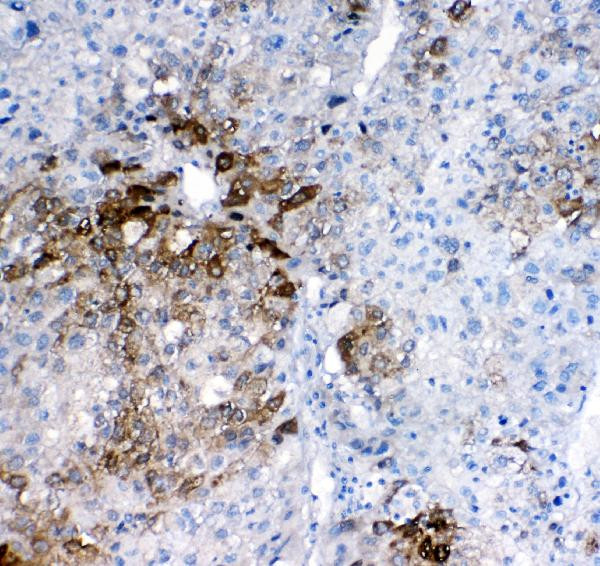
图: 1 / 4
GSTA1/A2/A3/A4/A5 Antibody (PA5-79335) in IHC (P)
Immunohistochemical analysis of GSTA1/A2/A3/A4/A5 in paraffin-embedded section of human liver cancer tissues. Heat mediated antigen retrieval was performed in citrate buffer (pH6, epitope retrieval solution) for 20 mins. The tissue section was blocked with 10% goat serum. The tissue section was then incubated with 1μg/mL rabbit anti-GSTA1/A2/A3/A4/A5 antibody (Product # PA5-79335) overnight at 4°C. Biotinyl... View More
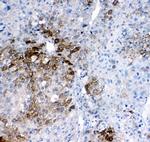
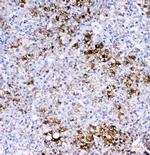
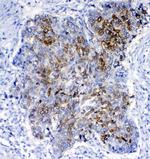
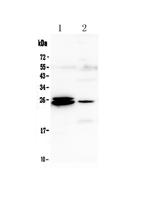
Please note: We are reviewing Western blot images included in the antibody testing data in our catalog, including those provided by third parties. Unless expressly labeled or annotated as “raw-unedited”, Western blot images included in the antibody testing data in our catalog may have been edited, optimized or otherwise adjusted for presentation.


产品信息
PA5-79335
应用
建议稀释比
已发表文章
产品规格
种属反应
Human,
Mouse,
Rat
已发表种属
Rat
宿主/亚型
Rabbit
/ IgG
分类
Polyclonal
类型
Antibody
抗原
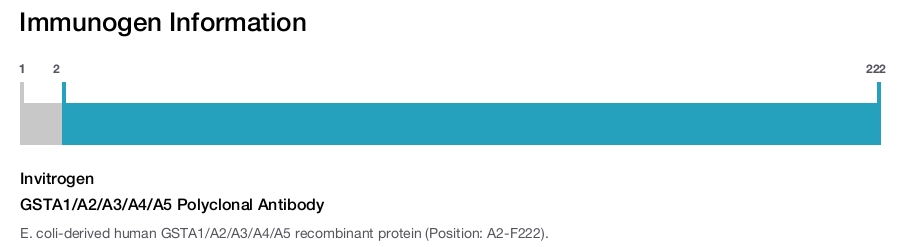
E. coli-derived human GSTA1/A2/A3/A4/A5 recombinant protein (Position: A2-F222).
偶联物
Unconjugated
Unconjugated
Unconjugated
形式
Lyophilized
浓度
500 µg/mL once reconstituted
规格
100 µg
纯化类型
Antigen affinity chromatography
保存液
PBS with 5mg BSA
内含物
0.05mg sodium azide
保存条件
-20°C
运输条件
Ambient (domestic); Wet ice (international)
RRID
产品详细信息
Reconstitute with 0.2 mL of distilled water to yield a concentration of 500 µg/mL.
Positive Control - WB: human HepG2 whole cell, human HCCT tissue, human HCCP tissue, human HUH-7 whole cell, rat liver tissue, rat RH35 whole cell, mouse liver tissue. IHC: human lung cancer tissue, human liver cancer tissue, human liver cancer tissue.
靶标信息
Cytosolic and membrane-bound forms of glutathione S-transferase are encoded by two distinct supergene families. These enzymes function in the detoxification of electrophilic compounds, including carcinogens, therapeutic drugs, environmental toxins and products of oxidative stress, by conjugation with glutathione. The genes encoding these enzymes are known to be highly polymorphic. These genetic variations can change an individual's susceptibility to carcinogens and toxins as well as affect the toxicity and efficacy of some drugs. At present, eight distinct classes of the soluble cytoplasmic mammalian glutathione S-transferases have been identified: alpha, kappa, mu, omega, pi, sigma, theta and zeta. This gene encodes a glutathione S-transferase belonging to the alpha class. The alpha class genes, located in a cluster mapped to chromosome 6, are the most abundantly expressed glutathione S-transferases in liver (hepatocytes) and kidney (proximal tubules). In addition to metabolizing bilirubin and certain anti-cancer drugs in the liver, the alpha class of these enzymes exhibit glutathione peroxidase activity, thereby protecting the cells from reactive oxygen species and the products of peroxidation.
仅用于科研。不用于诊断过程。未经明确授权不得转售。
生物信息学
蛋白别名: 13-hydroperoxyoctadecadienoate peroxidase; androst-5-ene-3,17-dione isomerase; detoxification enzyme; GHS transferase; glutathione S-alkyltransferase A1; glutathione S-alkyltransferase A2; glutathione S-alkyltransferase A3; glutathione S-alkyltransferase A4; glutathione S-aralkyltransferase A2; glutathione S-aralkyltransferase A3; glutathione S-aralkyltransferase A4; glutathione S-aryltransferase A1; glutathione S-aryltransferase A2; glutathione S-aryltransferase A3; glutathione S-aryltransferase A4; glutathione S-transferase; glutathione S-transferase (GST, EC 2.5.1.18); glutathione S-transferase 2; glutathione S-transferase 5.7; glutathione S-transferase A1; glutathione S-transferase A2; glutathione S-transferase A3; glutathione S-transferase A3 subunit; glutathione S-transferase A3-3; glutathione S-transferase A4; glutathione S-transferase A4-4; glutathione S-transferase A5; glutathione S-transferase A5-5; glutathione S-transferase GT41A; glutathione S-transferase Ha subunit 1; glutathione S-transferase Ha subunit 1 (EC 2.5.1.18); glutathione S-transferase Ha subunit 2 (EC 2.5.1.18); glutathione S-transferase Ya; glutathione S-transferase Ya subunit; glutathione S-transferase Ya-1; glutathione S-transferase Ya-2; glutathione S-transferase Ya1; glutathione S-transferase Ya3; glutathione S-transferase Yc; glutathione S-transferase Yc subunit; glutathione S-transferase Yc1 subunit; glutathione S-transferase Yc2 subunit; glutathione S-transferase Yk; glutathione transferase; glutathione transferase (EC 2.5.1.18); glutathione transferase A4-4; glutathione transferase YA subunit; Glutathione-S-transferase alpha type (Ya); glutathione-S-transferase, alpha type2; gluthione S-transferase subunit 1 (GST,EC 2.5.1.18); GST 1-1; GST 1a-1a; GST 1b-1b; GST 8-8; GST A1-1; GST A2-2; GST A4-4; GST A5-5; GST class-alpha member 1; GST class-alpha member 2; GST class-alpha member 3; GST class-alpha member 4; GST class-alpha member 5; GST HA subunit 1; GST HA subunit 2; GST K; GST Ya1; GST Ya2; GST Yc2; GST Yk; GST-gamma; GSTA1; GSTA4-4; ligandin; liver GST2; S-(hydroxyalkyl)glutathione lyase A1; S-(hydroxyalkyl)glutathione lyase A2; S-(hydroxyalkyl)glutathione lyase A3; S-(hydroxyalkyl)glutathione lyase A4; testicular tissue protein Li 80; testis tissue sperm-binding protein Li 59n; unnamed protein product
基因别名: Gm10639; GST 2-2; GST A3-3; GST AA; GST B; GST Yc1; GST-epsilon; GST2; Gst2-1; Gst2-2; Gst2-3; GST5.7; Gsta1; GSTA1-1; Gsta2; GSTA2-2; Gsta3; GSTA3-3; GSTA4-4; Gsta5; Gstc-2; Gstc2; GTA2; GTA3; GTA4; GTH1; GTH2; mGsta4; Yc1; Yc2
glutathione transferase activity
glutathione peroxidase activity
steroid delta-isomerase activity
fatty acid binding
protein binding
phospholipid-hydroperoxide glutathione peroxidase activity
molecular carrier activity
identical protein binding
protein homodimerization activity
dinitrosyl-iron complex binding
glutathione binding
toxic substance binding
glutathione metabolic process
xenobiotic metabolic process
response to bacterium
epithelial cell differentiation
response to stilbenoid
xenobiotic catabolic process
response to caloric restriction
cellular oxidant detoxification
ureteric bud development
aflatoxin catabolic process
prostaglandin metabolic process
heme catabolic process
linoleic acid metabolic process
glutathione derivative biosynthetic process
response to xenobiotic stimulus
response to nutrient levels
response to herbicide
response to zinc ion
response to nicotine
cellular response to lithium ion
Disclaimer

Clicking the images or links will redirect you to a website hosted by BenchSci that provides third-party scientific content. Neither the content nor the BenchSci technology and processes for selection have been evaluated by us; we are providing them as-is and without warranty of any kind, including for use or application of the Thermo Fisher Scientific products presented.

