Search
Invitrogen
PAX2 Polyclonal Antibody
{{$productOrderCtrl.translations['antibody.pdp.commerceCard.promotion.promotions']}}
{{$productOrderCtrl.translations['antibody.pdp.commerceCard.promotion.promocode']}}: {{promo.promoCode}} {{promo.promoTitle}} {{promo.promoDescription}}. {{$productOrderCtrl.translations['antibody.pdp.commerceCard.promotion.learnmore']}}
{{$ctrl.translations['antibody.pdp.skuNotes.additionalInformation']}}:
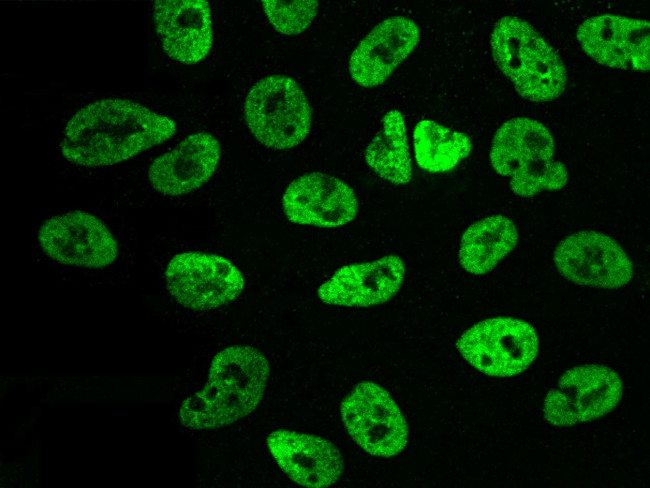
图: 1 / 9
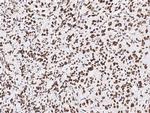
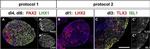
PAX2 Antibody (PA5-81235) in ICC/IF
Immunofluorescence staining of PAX2 in A549 cells. Cells were fixed with 4% PFA, permeabilzed with 0.1% Triton X-100 in PBS, blocked with 10% serum, and incubated with PAX2 Polyclonal Antibody (Product # PA5-81235, 1:1,000) at 4°C overnight. Then cells were stained with the Alexa Fluor®488-conjugated Goat Anti-rabbit IgG secondary antibody (green). Positive staining was localized to nucleus.
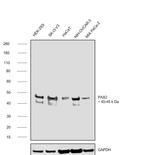
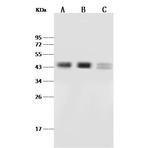
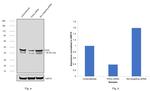
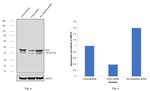
Please note: We are reviewing Western blot images included in the antibody testing data in our catalog, including those provided by third parties. Unless expressly labeled or annotated as “raw-unedited”, Western blot images included in the antibody testing data in our catalog may have been edited, optimized or otherwise adjusted for presentation.


产品信息
PA5-81235
应用
建议稀释比
已发表文章
产品规格
种属反应
Human
已发表种属
Human
宿主/亚型
Rabbit
/ IgG
分类
Polyclonal
类型
Antibody
抗原
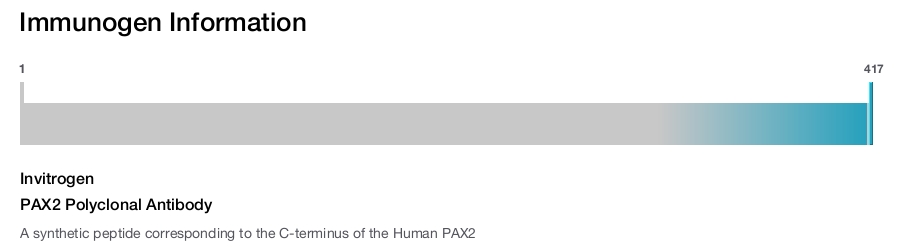
A synthetic peptide corresponding to the C-terminus of the Human PAX2
偶联物
Unconjugated
Unconjugated
Unconjugated
形式
Liquid
浓度
1 mg/mL
规格
100 µg
纯化类型
Protein A, Antigen affinity chromatography
保存液
PBS
内含物
no preservative
保存条件
Store at 4°C short term. For long term storage, store at -20°C, avoiding freeze/thaw cycles.
运输条件
Ambient (domestic); Wet ice (international)
RRID
产品详细信息
This product is preservative free. It is recommended to add sodium azide to avoid contamination (final concentration 0.05%-0.1%).
This antibody has specificity for Human PAX2.
靶标信息
The pax genes are a family of transcription factors that are active in specific tissues during early embryonic development. Pax family members possess a DNA-binding domain encoded by the paired box. Because paired domain containing genes encode transcription factors, they are capable of executing a genetic program. Several pax genes have also been associated with developmental mutations including: pax-3, which is associated with Waardenburg syndrome, pax-6, which is associated with Aniridia, and pax-2, which is associated with Wilms tumor. During embryogenesis, Pax-2 is expressed in the developing kidney. In particular, the pax-2 gene is expressed in condensing metanephric mesenchyme and in early epithelial structures derived from mesenchyme; however, pax-2 mRNA and protein levels are rapidly down regulated as the tubular epithelium matures. Although Pax-2 is down regulated during renal epithelium maturation, Pax-2 expression persists in the undifferentiated epithelium of Wilms' tumors. Persistent expression of Pax-2 in Wilms' tumors occurs frequently and correlates with the proliferation of poorly differentiated epithelial cells in these tumors. Interestingly, expression of the Wilms' tumor suppresser protein, WT1, coincides with down-regulation of the pax-2 gene; thus, suggesting that WT1 can directly repress pax-2 transcription.
仅用于科研。不用于诊断过程。未经明确授权不得转售。
生物信息学
蛋白别名: paired box homeotic gene 2
基因别名: FSGS7; PAPRS; PAX-2
UniProt ID: (Human) Q02962
Entrez Gene ID: (Human) 5076
transcription regulatory region sequence-specific DNA binding
RNA polymerase II core promoter proximal region sequence-specific DNA binding
RNA polymerase II transcription factor activity, sequence-specific DNA binding
core promoter proximal region sequence-specific DNA binding
DNA binding
transcription factor activity, sequence-specific DNA binding
protein binding
transcription factor binding
sequence-specific double-stranded DNA binding
urogenital system development
metanephros development
branching involved in ureteric bud morphogenesis
cell fate determination
mesonephros development
neural tube closure
optic cup morphogenesis involved in camera-type eye development
mesenchymal to epithelial transition involved in metanephros morphogenesis
retinal pigment epithelium development
regulation of transcription, DNA-templated
regulation of transcription from RNA polymerase II promoter
nervous system development
axonogenesis
sensory organ development
mesodermal cell fate specification
visual perception
glial cell differentiation
optic nerve development
optic nerve morphogenesis
optic nerve structural organization
vestibulocochlear nerve formation
cell differentiation
regulation of metanephros size
ureter maturation
pronephric field specification
inner ear morphogenesis
camera-type eye development
negative regulation of apoptotic process
negative regulation of programmed cell death
negative regulation of transcription, DNA-templated
positive regulation of transcription, DNA-templated
positive regulation of transcription from RNA polymerase II promoter
system development
pronephros development
brain morphogenesis
stem cell differentiation
positive regulation of epithelial cell proliferation
mesenchymal to epithelial transition
optic chiasma development
cellular response to retinoic acid
cellular response to glucose stimulus
metanephric mesenchyme development
positive regulation of mesenchymal to epithelial transition involved in metanephros morphogenesis
metanephric mesenchymal cell differentiation
nephric duct formation
ureter development
metanephric collecting duct development
metanephric epithelium development
metanephric distal convoluted tubule development
metanephric nephron tubule formation
positive regulation of metanephric glomerulus development
regulation of metanephric nephron tubule epithelial cell differentiation
cochlea development
cochlea morphogenesis
negative regulation of reactive oxygen species metabolic process
positive regulation of metanephric DCT cell differentiation
positive regulation of optic nerve formation
Disclaimer

Clicking the images or links will redirect you to a website hosted by BenchSci that provides third-party scientific content. Neither the content nor the BenchSci technology and processes for selection have been evaluated by us; we are providing them as-is and without warranty of any kind, including for use or application of the Thermo Fisher Scientific products presented.

