Search
Invitrogen
LETMD1 Polyclonal Antibody
{{$productOrderCtrl.translations['antibody.pdp.commerceCard.promotion.promotions']}}
{{$productOrderCtrl.translations['antibody.pdp.commerceCard.promotion.promocode']}}: {{promo.promoCode}} {{promo.promoTitle}} {{promo.promoDescription}}. {{$productOrderCtrl.translations['antibody.pdp.commerceCard.promotion.learnmore']}}
{{$ctrl.translations['antibody.pdp.skuNotes.additionalInformation']}}:
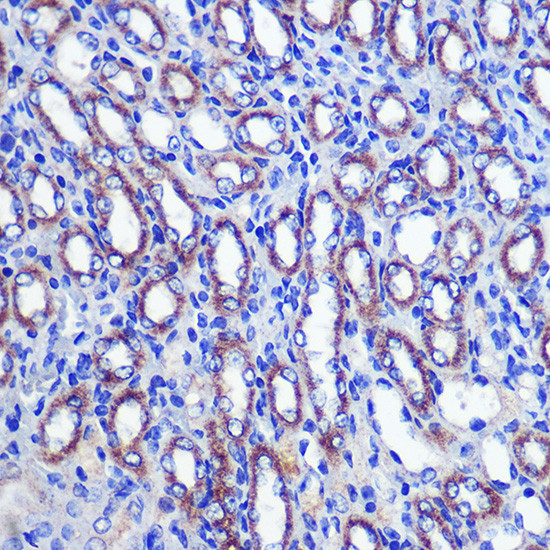
图: 1 / 4
LETMD1 Antibody (PA5-96069) in IHC (P)
Immunohistochemistry analysis of LETMD1 in paraffin-embedded mouse kidney. Samples were incubated with LETMD1 Polyclonal antibody (Product # PA5-96069) using a dilution of 1:100 (40x lens). Perform microwave antigen retrieval with 10 mM PBS buffer pH 7.2 before commencing with IHC staining protocol.
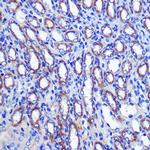
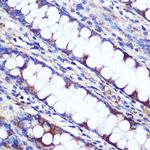
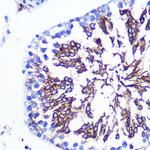
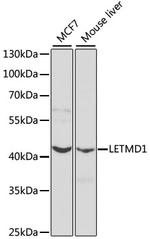
Please note: We are reviewing Western blot images included in the antibody testing data in our catalog, including those provided by third parties. Unless expressly labeled or annotated as “raw-unedited”, Western blot images included in the antibody testing data in our catalog may have been edited, optimized or otherwise adjusted for presentation.


产品信息
PA5-96069
应用
建议稀释比
已发表文章
产品规格
种属反应
Human,
Mouse,
Rat
宿主/亚型
Rabbit
/ IgG
分类
Polyclonal
类型
Antibody
抗原
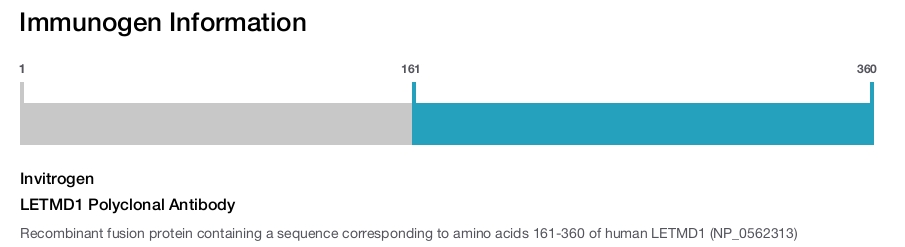
Recombinant fusion protein containing a sequence corresponding to amino acids 161-360 of human LETMD1 (NP_0562313)
偶联物
Unconjugated
Unconjugated
Unconjugated
形式
Liquid
浓度
1.29 mg/mL
规格
129 µg
纯化类型
Affinity Chromatography
保存液
PBS, pH 7.3, with 50% glycerol
内含物
0.02% sodium azide
保存条件
-20°C, Avoid Freeze/Thaw Cycles
运输条件
Ambient (domestic); Wet ice (international)
RRID
产品详细信息
Immunogen sequence: FPRQLLIRHF WTPKQQTDFL DIYHAFRKQS HPEIISYLEK VIPLISDAGL RWRLTDLCTK IQRGTHPAIH DILALRECFS NHPLGMNQLQ ALHVKALSRA MLLTSYLPPP LLRHRLKTHT TVIHQLDKAL AKLGIGQLTA QEVKSACYLR GLNSTHIGED RCRTWLGEWL QISCSLKEAE LSLLLHNVVL LSTNYLGTRR; Positive Samples: MCF7, Mouse liver; Cellular Location: Mitochondrion outer membrane, Single-pass membrane protein
靶标信息
HCCR-1 (human cervical cancer oncogene 1), also known as HCCR-2 or LETMD1, is a 360 amino acid single-pass membrane protein that is expressed in the kidney, liver, skeletal muscle, heart and brain. It is suggested that HCCR-1 may be involved in tumorigenesis and may function as a negative regulator of the p53 tumor suppressor. Overexpression of HCCR-1 may cause mitochondrial dysfunction that can lead to UVC or staurosporine-induced apoptosis resistance and progression of tumor formation. HCCR-1 is considered a candidate biomarker for breast cancer. Various human tumors including leukemia, lymphoma, and carcinomas of the breast, kidney, ovary, stomach, colon, and uterine cervix have high HCCR-1. Six isoforms exist due to alternative splicing events.
仅用于科研。不用于诊断过程。未经明确授权不得转售。
篇参考文献 (0)
您是否在文献中引用过该产品?请点击下方按钮邮件告知我们。
生物信息学
蛋白别名: cervical cancer 1 proto-oncogene protein p40; cervical cancer proto-oncogene 2 protein; cervical cancer receptor; epididymis secretory sperm binding protein; HCCR1; HCCR2; human cervical cancer oncogene; regulator of TP53; unnamed protein product
基因别名: 1110019O13Rik; HCCR; HCCR-1; HCCR-2; HCCR1; HCCR2; HCRR-2; MCC-32; Mccr; RGD1310591; SLC55A3
UniProt ID: (Human) Q6P1Q0, (Mouse) Q924L1
Entrez Gene ID: (Human) 25875, (Mouse) 68614, (Rat) 681352
ATP biosynthetic process
phagocytosis
inflammatory response
mitochondrion organization
gene expression
response to lipopolysaccharide
toll-like receptor 4 signaling pathway
NIK/NF-kappaB signaling
regulation of inflammatory response
regulation of phagocytosis
calcium ion homeostasis
positive regulation of cold-induced thermogenesis
reactive oxygen species biosynthetic process
biological_process
Disclaimer

Clicking the images or links will redirect you to a website hosted by BenchSci that provides third-party scientific content. Neither the content nor the BenchSci technology and processes for selection have been evaluated by us; we are providing them as-is and without warranty of any kind, including for use or application of the Thermo Fisher Scientific products presented.

