Search
Invitrogen
GPR125 Polyclonal Antibody
{{$productOrderCtrl.translations['antibody.pdp.commerceCard.promotion.promotions']}}
{{$productOrderCtrl.translations['antibody.pdp.commerceCard.promotion.promocode']}}: {{promo.promoCode}} {{promo.promoTitle}} {{promo.promoDescription}}. {{$productOrderCtrl.translations['antibody.pdp.commerceCard.promotion.learnmore']}}
{{$ctrl.translations['antibody.pdp.skuNotes.additionalInformation']}}:
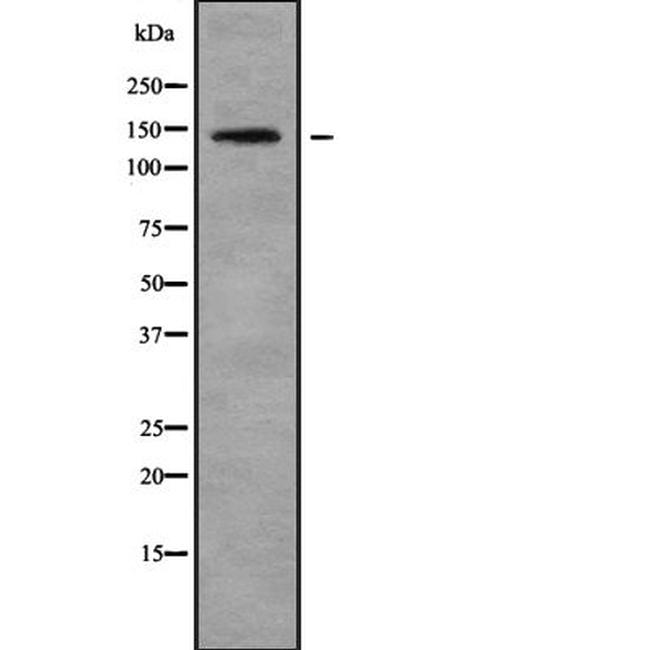
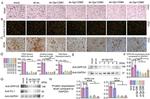
Please note: We are reviewing Western blot images included in the antibody testing data in our catalog, including those provided by third parties. Unless expressly labeled or annotated as “raw-unedited”, Western blot images included in the antibody testing data in our catalog may have been edited, optimized or otherwise adjusted for presentation.


产品信息
PA5-99891
产品规格
种属反应
Human
已发表种属
Mouse
宿主/亚型
Rabbit
/ IgG
分类
Polyclonal
类型
Antibody
抗原
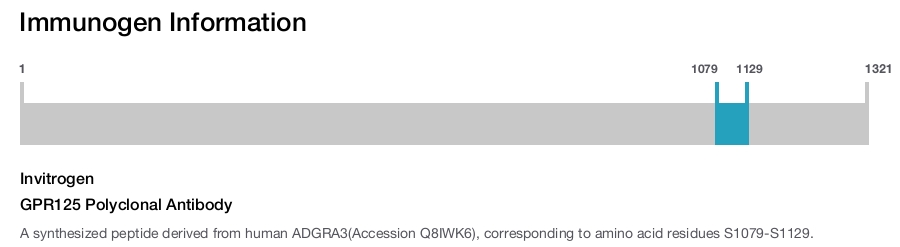
A synthesized peptide derived from human ADGRA3(Accession Q8IWK6), corresponding to amino acid residues S1079-S1129.
偶联物
Unconjugated
Unconjugated
Unconjugated
形式
Liquid
浓度
1 mg/mL
规格
100 µg
纯化类型
Affinity chromatography
保存液
PBS, pH 7.4, with 50% glycerol
内含物
0.02% sodium azide
保存条件
-20°C
运输条件
Ambient (domestic); Wet ice (international)
RRID
产品详细信息
Antibody detects endogenous levels of total GPR125.
靶标信息
G protein-coupled receptors (GPRs), also known as seven transmembrane receptors, heptahelical receptors or 7TM receptors, comprise a superfamily of proteins that play a role in many different stimulus-response pathways. G protein coupled receptors translate extracellular signals into intracellular signals (G protein activation) and they respond to a variety of signaling molecules, such as hormones and neurotransmitters. GPR125 (G protein-coupled receptor 125), also known as PGR21 or TEM5L, is a 1,321 amino acid multi-pass membrane protein belonging to the G-protein coupled receptor 2 family and the LN-TM7 subfamily. Considered a novel orphan adhesion-type G-protein-coupled receptor, GPR125 has five leucine rich repeats (LRR), an immunoglobulin (Ig) domain and a GPS domain. GPR125 may play a functional role in choroidal and hippocampal response to brain injury. It is also suggested that GPR125 may be a marker for spermatogonial stem cells. Four isoforms of GPR125 exists due to alternative splicing events.
仅用于科研。不用于诊断过程。未经明确授权不得转售。
生物信息学
蛋白别名: G-protein coupled receptor 125; probable G-protein coupled receptor 125; tumor endothelial marker 5-like protein; unnamed protein product
基因别名: GPR125; PGR21; TEM5L
UniProt ID: (Human) Q8IWK6
Entrez Gene ID: (Human) 166647
Disclaimer

Clicking the images or links will redirect you to a website hosted by BenchSci that provides third-party scientific content. Neither the content nor the BenchSci technology and processes for selection have been evaluated by us; we are providing them as-is and without warranty of any kind, including for use or application of the Thermo Fisher Scientific products presented.

