Search


引用和文献 (715)
Invitrogen™
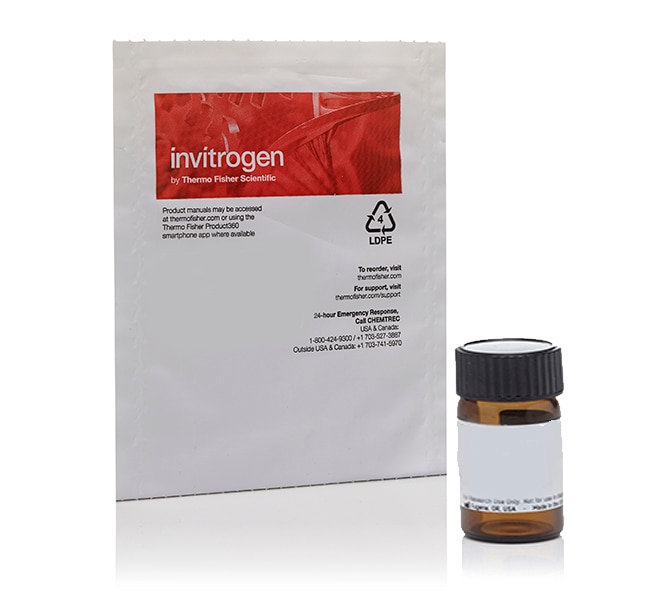
罗丹明123,25 mg
罗丹明123是一种细胞膜通透性阳离子绿荧光染料可被活性线粒体轻松吸收,且无细胞毒性。该产品已用于检测凋亡细胞群中的线粒体膜电位。了解更多信息
| 货号 | 数量 |
|---|---|
| R302 | 25 mg |
货号 R302
价格(CNY)
1,232.00
飞享价
Ends: 31-Dec-2026
1,710.00共减 478.00 (28%)
Each
数量:
25 mg
价格(CNY)
1,232.00
飞享价
Ends: 31-Dec-2026
1,710.00共减 478.00 (28%)
Each
罗丹明123是一种细胞膜通透性阳离子绿荧光染料可被活性线粒体轻松吸收,且无细胞毒性。该产品已用于检测凋亡细胞群中的线粒体膜电位。
仅供科研使用。不可用于诊断程序。
规格
检测方法荧光
数量25 mg
运输条件室温
子细胞定位线粒体
颜色绿色
适用于(设备)荧光显微镜
产品类型罗丹明 123
Unit SizeEach
内容与储存
在冷冻冰箱(-5°C 至 -30°C)中避光储存。
常见问题解答 (FAQ)
当我使用膜电位指示剂时,看到神经元周围出现了较高的背景,如何降低背景干扰?
快反应膜电位探针和慢反应膜电位探针有什么区别?
你们提供哪些类型的膜电位指示剂?我该如何根据自己的试验选择?
What is the excitation and emission wavelength for rhodamine?
I am seeing high background outside of my neuronal cells when using membrane potential indicators. What can I do to reduce background?
引用和文献 (715)
引用和文献
Abstract
The mitochondrial death/life regulator in apoptosis and necrosis.
Journal:Annual review of physiology
PubMed ID:9558479
Both physiological cell death (apoptosis) and, in some cases, accidental cell death (necrosis) involve a two-step process. At a first level, numerous physiological and some pathological stimuli trigger an increase in mitochondrial membrane permeability. The mitochondria release apoptogenic factors through the outer membrane and dissipate the electrochemical gradient of the
2,4 Dinitrophenol-uncoupling effect on delta psi in living hepatocytes depends on reducing-equivalent supply.
Journal:Cytometry
PubMed ID:9627223
Mitochondrial uncouplers, such as 2,4 dinitrophenol (DNP), increase the cellular respiration by decreasing mitochondrial membrane potential (delta psi). We show that this respiratory effect can be transient or even prevented in isolated liver cells depending on the exogenous substrate used (dihydroxyacetone vs. octanoate or proline). Moreover the decrease in ATP/ADP
Is rhodamine 123 an appropriate fluorescent probe to assess P-glycoprotein mediated multidrug resistance in vinblastine-resistant CHO cells?
Journal:Anal Cell Pathol
PubMed ID:9354229
Cellular drug resistance, which involves several mechanisms such as P-glycoprotein (P-gp) overexpression, kinetic and metabolic quiescence, or the increase in the intracellular levels of glutathione, limits the effectiveness of cancer treatment. It has been reported that functional assessment of the cationic dye rhodamin 123 (Rho123) efflux reveals accurately the drug-resistant
Flow cytometric functional analysis of multidrug resistance by Fluo-3: a comparison with rhodamine-123.
Journal:Eur J Cancer
PubMed ID:7488425
Using four cell lines including drug-sensitive K562/Parent cells, P-glycoprotein (Pgp)-mediated multidrug resistant (MDR) K562/VCR, K562/ADR and revertant K562/ADR-R cells, two fluorescent agents, Fluo-3 and rhodamine-123 (Rh-123), were compared as indicators in a functional assay of MDR. Cells were incubated with 4 microM Fluo-3 or 1 microM Rh-123 for 45 min
Human epidermal cells progressively lose their cardiolipins during ageing without change in mitochondrial transmembrane potential.
Journal:Mech Ageing Dev
PubMed ID:7745994
Mitochondria dysfunction is considered to be a major cause of the modifications that occur during cell ageing. For this reason, cardiolipin, a suitable marker of the chondriome, as well as the mitochondrial transmembrane potential were examined in keratinocytes obtained from 9- to 75-year-old women. The study was carried out by