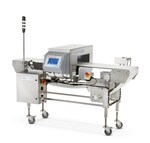
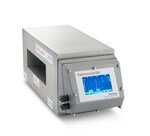
Sentinel 多频扫描和选频扫描金属探测器
Actual product may vary
Sentinel 多频扫描和选频扫描金属探测器
Thermo Scientific™

Sentinel 多频扫描和选频扫描金属探测器

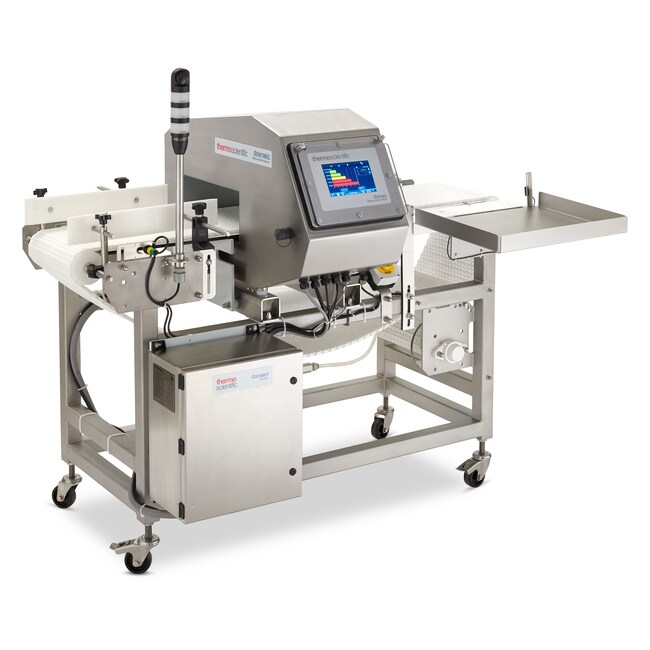
Sentinel 多频扫描和选频扫描金属探测器是食品行业的第一款金属探测器,可扫描多达五种用户可选的频率,从而确保发现所有类型的金属异物。
Have Questions?
更改视图buttonViewtableView
货号型号
SENTINEL100050 至 1000 千赫,选频扫描单个可选频率
SENTINEL3000Sentinel 3000 Multiscan
SENTINEL5000Sentinel 5000 Multiscan
货号 SENTINEL1000
价格(CNY)
-
申请报价
型号:
50 至 1000 千赫,选频扫描单个可选频率
Thermo Scientific™ Sentinel™ 系列金属探测器具备高灵敏度探测性能,提高了在食品、饮料和其他产品中检测出铁、非铁和不锈钢金属污染物的概率。Sentinel 金属探测器利用 Multiscan™ 和 Selectscan™ 等创新技术,帮助生产者增加消费者安全性、提高产品质量、提高生产效率。 了解 Sentinel 产品系列如何满足您的应用需求。

Sentinel 5000 Multiscan 金属探测器 

Sentinel 5000 型是首款多频扫描金属检测平台,可扫描多达五种用户可选的频率,从而能够发现所有随机尺寸、形状和类型的金属异物。与 Thermo Scientific™ APEX 500 金属探测器相比,Sentinel 5000 能识别体积小 50% 的污染物,这两款金属探测器的尺寸相同,输送机安装相同,便于升级。 Sentinel 5000 可用于金属检测检重组合系统,但由于其尺寸,必须安装在独立的进料输送机上。

Sentinel 3000 Multiscan 金属探测器 

为金属探测和检重秤量组合系统选择更紧凑的 Sentinel 3000 型仪器。Sentinel 3000 可集成到 Thermo Scientific™ VersaWeigh™ 和 Versa GP 检重秤上,减少总占用空间,同时结合了程序更改、报警和剔除统计等重要功能。与 Thermo Scientific™ APEX 300 相比,Sentinel 3000 可检测体积小 35% 的污染物。

Sentinel 1000 型选频扫描金属探测器

选频扫描技术使食品加工商有一种简单的方法来快速确定应用的单一最佳频率。它会调整产品效应,并根据气温变化和电磁干扰调整结果。同时,它提供了每次生产运行结果的文档。这是一种全新、全面的方法。

所有型号都提供以下功能,以达到最高水平的食品安全:

  • Multiscan最多可以运行范围在50∼1000 kHz内的五个频率
  • 易于使用的触摸屏,具有新的自动学习功能,可快速优化设置
  • 相位、剔除、质量测试和检测阈值可以使用图像详细显示出来,能够更方便的进行微调和故障排除
  • IP69K用于彻底冲洗和清除灰尘,降低维修成本
  • 所有的电子元件都是集成的,安装简单灵活
  • 所有的平衡功能都是用软件实现的,所以在现场不需要手动对硬件重新平衡
  • 宽广的使用环境温度范围确保可靠性
  • 铁、非铁和316不锈钢测试件能够适应特定应用
  • 在组合系统中,在金属探测器和检重秤的屏幕上有用户界面
规格
孔径大小宽度:75∼2000 mm,高度:75 - 600 mm。200 mm 以下增量为 25 mm,200 mm 以上增量为 50 mm;占地面积和孔位置与 APEX 500 型金属探测器相同,便于升级(并非所有组合均有货;有关详细信息,请联系赛默飞世尔科技。)
认证/合规经 cCSAus、CE、ISO9001 认证
通信
  • 人机界面(HMI) 7 英寸(178 毫米)对角线、高强度彩色触摸屏
  • 防水 USB 2.0
    • 用于团队查看器连接的防水以太网端口。当 Sentinel 与检重秤(组合系统)结合使用时,此端口不可用。
结构不锈钢 304 直线精整外壳。食品接触安全的防抱死制动系统前面板
电气要求100/240 V 交流单相,接地;50/60 Hz,0.6 - 1.2 A
法兰选项1.5-2x 最小孔径尺寸,可选配凸缘减小孔径
适用于(应用)金属检测:食品、饮料、其他产品。
IP 防护等级IP69K
输入应用(软件可选)速度传感器、进料光电眼、剔除确认和料仓已满、外部警报、外部重置
输入类型8 个输入端 - 有源 24V 直流开关,可选择 NPN 或 PNP
型号50 至 1000 千赫,选频扫描单个可选频率
工作温度金属检测器环境温度 -10° 至 +40°C(+14° 至 +104°F)
产品孔径温度 -10° 至 +55°C(+14° 至 +131°F)
最大冲洗温度 55°C (131°F)
输出应用(软件可选)剔除 1、剔除 2、关机、报警、警告
输出类型8路继电器输出;250 V 交流 2A(最大值),50 V 直流 1A(最大值),8路数字源 (PNP) 输出,24V 直流,任意两个容量为 500 mA,其余均为 30 mA
相对湿度20%∼80% 非冷凝单向呼吸阀标准
灵敏度检测体积缩小 25% 的污染物
速度0.5米/分钟(1.7英尺/分钟)至80米/分钟(262英尺/分钟)。强烈推荐编码器输入
语言英语、西班牙语、法语、德语、意大利语、荷兰语、中文、捷克语、俄语、波兰语、泰国语、葡萄牙语, Spanish, French, German, Italian, Dutch, Chinese, Czech, Russian, Polish, Thai, Portuguese
产品类型Metal Detector
Unit SizeEach

常见问题解答 (FAQ)

What is the best inspection technology for dry/kibble pet food?

Metal detection works very well with dry/kibble pet food and treats that do not have a product effect that wet or moist pet foods do. Metal detection equipment provides reliable, cost-effective protection from even the smallest metal contaminants found in pet food production anywhere in a process. If the packaging material contains metal, X-ray inspection would be the right choice. In addition, if there are other contaminant concerns such as stone, high density plastic or glass, X-ray inspection systems will detect these contaminants as well.

Where are the best places along the production line to inspect baked goods and snack products?

There are several points in the baked goods/snack foods production process that benefit from food safety inspection using metal detectors (https://www.thermofisher.com/us/en/home/industrial/food-beverage/food-weighing-inspection/metal-detectors.html), X-ray inspection (https://www.thermofisher.com/us/en/home/industrial/food-beverage/food-weighing-inspection/x-ray-detection-inspection-systems.html), or checkweighing (https://www.thermofisher.com/us/en/home/industrial/food-beverage/food-weighing-inspection/checkweighers.html)technology. They are listed below:

1. Incoming ingredients. Most of the larger bakers demand that their vendors meet specific HACCP objectives. They may require that metal detectors be used, provide proof of inspection, etc. Even with those methodologies in place, some will also inspect incoming ingredients. Typical incoming inspection consists of drop through and bulk flow metal detectors.

2. Dough stage. Before the product is baked or otherwise processed, this is an ideal location to conduct upstream inspection. Metal detectors are the equipment of choice because metal-based packaging is not part of the process at this stage. Bar products are another example. They can be examined right after sheeting, or after the individual bars are cut, or before the product goes into the wrapper. Alternatively, they can also be inspected after packaging.

3. After baking/before packaging. The inspection equipment type will depend on the product type and whether or not its formulation creates a “product effect”. Warm, moist, high salt content products such as breads are more suited toward X-ray equipment, while metal detectors perform well with typically-inert snack foods. Checkweighers can also be located at this stage to make sure that the product weight falls within the min/max specifications and will not create problems (such as line stoppages due to oversize) at the packaging stage. Checkweighers can also be used to confirm that all of the late-stage filling components, such as icing and other toppings, have been properly dispensed.

4. After packaging. The recommended inspection equipment type is dependent on the packaging material or combination of materials that have been selected for this product. Metal components such as aluminum foil trays or metalized firm structures are much more suited to X-ray inspection. Flexible materials without a metal component, paperboard folding cartons and/or a combination of the two, work very well with metal detectors. Checkweighers are frequently located at this stage of the operation.

5. After case packing. Some bakers or processors prefer to inspect after the final packaging stage: case packing. This is typically done via X-ray inspection, provided that the unit is large enough to accompany a case. In addition to inspection, the X-ray system's ability to detect missing pieces will help ensure that the specified count has been loaded into the case. In certain situations, especially when X-ray inspection is not included at the end of the line, checkweighers are placed here to ensure that the proper number of packages are contained inside the case.

What is the best inspection technology for frozen baked goods?

Food metal detectors (https://www.thermofisher.com/us/en/home/industrial/food-beverage/food-weighing-inspection/metal-detectors.html) work extremely well with frozen baked goods which no longer have a product effect that “just out of the oven” versions do. The challenge is to make sure that the freezer is efficient and is holding the product at the correct temperature. If a product isn't completely frozen, its unfrozen center will have a tendency to look like a piece of metal to the detector.

In addition, many cake and pie products are frozen immediately after production, so some bakers choose to inspect after the items are case packed using food X-ray inspection (https://www.thermofisher.com/us/en/home/industrial/food-beverage/food-weighing-inspection/x-ray-detection-inspection-systems.html) equipment that can accommodate the case size.

What is the best inspection technology for cakes and pies?

The recommended food safety inspection machinery type for cakes and pies is dependent on the packaging materials used. Since most pies are in aluminum foil pans, food metal detectors (https://www.thermofisher.com/us/en/home/industrial/food-beverage/food-weighing-inspection/metal-detectors.html) can be useful to examine ingredients and dough. However, after the pie has been placed into the pan and/or folding carton, X-ray inspection (https://www.thermofisher.com/us/en/home/industrial/food-beverage/food-weighing-inspection/x-ray-detection-inspection-systems.html) should be used. Cakes also sometimes rely on aluminum foil pans, folding cartons, and metalized film, so the inspection solution recommended is also X-ray.

What is "product effect" for food products?

“Product effect” occurs when a product has a conductive property which affects the magnetic field generated by the food metal detector (https://www.thermofisher.com/us/en/home/industrial/food-beverage/food-weighing-inspection/metal-detectors.html). This is typically found in high salt, high moisture product environments. For example, warm bread coming out of the oven, coupled with its salt content, tends to have a high product effect. This negatively impacts the metal detector's ability to distinguish between actual non-ferrous metal contaminants and the false signal given by the combination of typical product attributes. This is further complicated by the varying densities, air bubbles, and other physical characteristics of each loaf, since no two loaves are exactly the same (there also are variations between bread types). In these situations, food X-ray inspection equipment will produce significantly better results since product effect is not a factor.