Search


引用和文献 (2)
Invitrogen™
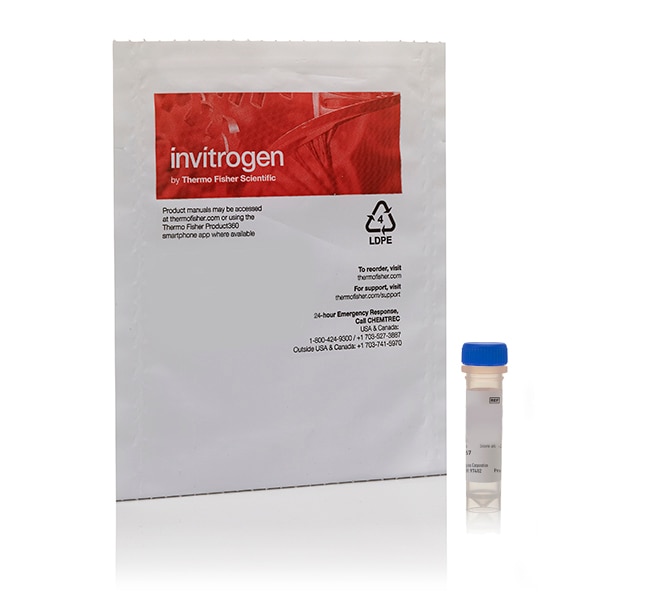
ThiolTracker™ Violet(谷胱甘肽检测试剂)
ThiolTracker™ Violet 是一种更明亮和更稳定的细胞内硫醇探针,适用于可重现的 GSH 检测。由于还原型谷胱甘肽代表细胞中的大多数细胞内游离硫醇,因此可利用 ThiolTracker™ Violet 来评估还原型谷胱甘肽的细胞水平。ThiolTracker™了解更多信息
| 货号 | 数量 |
|---|---|
| T10095 | 180 rxn |
货号 T10095
价格(CNY)
7,232.00
180 assays
数量:
180 rxn
价格(CNY)
7,232.00
180 assays
ThiolTracker™ Violet 是一种更明亮和更稳定的细胞内硫醇探针,适用于可重现的 GSH 检测。由于还原型谷胱甘肽代表细胞中的大多数细胞内游离硫醇,因此可利用 ThiolTracker™ Violet 来评估还原型谷胱甘肽的细胞水平。
ThiolTracker™ Violet 具有以下优势;
• 比 mBCL 亮 10X
• UV 或 405 nm 波长激发,525 nm 波长发射
•易于使用
•可重现的结果
•可使用醛类固定,通过 Triton® X-100 (0.5%) 渗透
•可使用甲醛固定并支持去污剂提取
•可用于多通路分析,包括细胞毒性研究
GSH 的亚细胞检测和定位对于了解氧化还原状态的调节、药物的作用以及脱毒的机制非常重要。此外,已经报道过不同细胞亚群在应对氧化应激时的 GSH 水平存在差异,从而强调了适用于流式细胞分析和自动荧光检测的检测方法的重要性。ThiolTracker™ Violet 可供流式细胞分析、HCS 成像和落射荧光显微镜使用。
ThiolTracker™ Violet 具有以下优势;
• 比 mBCL 亮 10X
• UV 或 405 nm 波长激发,525 nm 波长发射
•易于使用
•可重现的结果
•可使用醛类固定,通过 Triton® X-100 (0.5%) 渗透
•可使用甲醛固定并支持去污剂提取
•可用于多通路分析,包括细胞毒性研究
GSH 的亚细胞检测和定位对于了解氧化还原状态的调节、药物的作用以及脱毒的机制非常重要。此外,已经报道过不同细胞亚群在应对氧化应激时的 GSH 水平存在差异,从而强调了适用于流式细胞分析和自动荧光检测的检测方法的重要性。ThiolTracker™ Violet 可供流式细胞分析、HCS 成像和落射荧光显微镜使用。
仅供科研使用。不可用于诊断程序。
规格
颜色Violet
检测方法荧光
染料类型ThiolTracker™ Violet
发射可见光
激发波长范围405⁄526
适用于(设备)荧光显微镜、流式细胞仪
形式冻干
产品规格管、玻片
产品线Molecular Probes、ThiolTracker
数量180 rxn
运输条件室温
标签类型其他标签或染料
产品类型肌动蛋白Actin
Unit Size180 assays
内容与储存
在 ≤–20°C 下储存,L 保护材料避免长时间暴露于光下;可在短时间内暴露于光下,需要 DMSO
常见问题解答 (FAQ)
Is ThiolTracker Violet a fluorogenic reagent?
Will ThiolTracker Violet bind to proteins as well as glutathione?
引用和文献 (2)
引用和文献
Abstract
Detection of intracellular glutathione using ThiolTracker violet stain and fluorescence microscopy.
Journal:Curr Protoc Cytom
PubMed ID:20578109
Glutathione plays an important role in protecting mammalian cells from oxidative stress and cell death. Because reduced glutathione (GSH) represents the large majority of intracellular free thiols, cell-permeant, thiol-reactive fluorescent probes represent potentially useful indicators of intracellular GSH. The ThiolTracker Violet stain (a registered trademark of Invitrogen) is a bright
Using acetaminophen's toxicity mechanism to enhance cisplatin efficacy in hepatocarcinoma and hepatoblastoma cell lines.
Journal:Neoplasia
PubMed ID:19794959
BACKGROUND/AIMS: Acetaminophen overdose causes hepatotoxicity mediated by toxic metabolites generated through the cytochrome P450 enzyme. The objective of this study was to investigate whether acetaminophen (AAP) can enhance cisplatin (CDDP) cytotoxicity against human hepatocarcinoma and hepatoblastoma cells in vitro and whether this effect can be prevented by N-acetylcysteine (NAC). METHODS: