Search


引用和文献 (4)
Invitrogen™
NuPAGE™ 10%,Bis-Tris,1.0 mm,中型蛋白凝胶
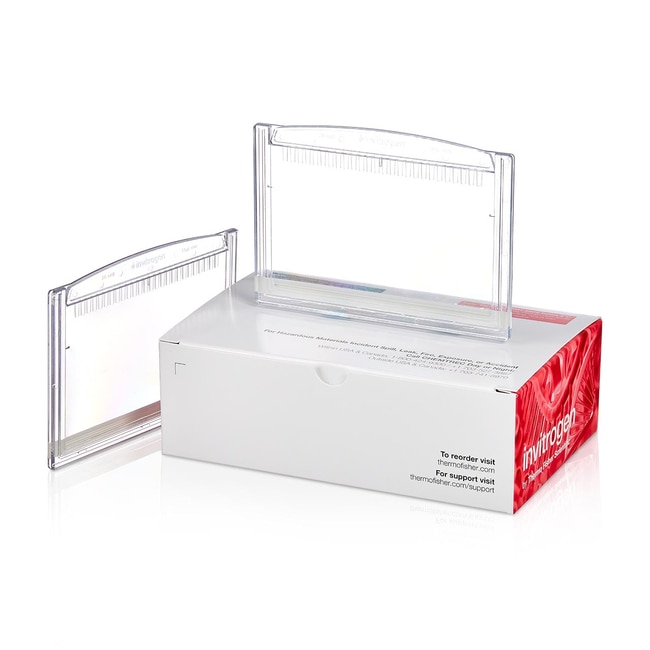
Invitrogen NuPAGE Bis-Tris 蛋白凝胶是预制聚丙烯酰胺凝胶,可提供宽范围分子量蛋白分离,具有高分离度并保持样品完整性。在蛋白完整性至关重要的应用中,这些预制凝胶是理想之选。
Have Questions?
更改视图

| 货号 | 孔 |
|---|---|
| WG1203BOX | 26孔 |
| WG1201BOX | 12 + 2 孔 |
| WG1201A | 12+2 孔,带适配器 |
| WG1202BOX | 20孔 |
| WG1202A | 20 孔,带适配器 |
| WG1203A | 26孔、带适配器 |
货号 WG1203BOX
价格(CNY)
1,369.00
10 gels (1 box)
孔:
26孔
价格(CNY)
1,369.00
10 gels (1 box)
Invitrogen NuPAGE Bis-Tris 蛋白凝胶是预制聚丙烯酰胺凝胶,可提供宽范围分子量蛋白分离,具有高分离度并保持样品完整性。在蛋白完整性至关重要的应用中,这些预制凝胶是理想之选。与传统 Tris- 甘氨酸预制胶不同,NuPAGE Bis-Tris 预制胶具有中性 pH 环境,可尽量减少蛋白质修饰。NuPAGE Bis-Tris 凝胶适用于制备蛋白用于测序、质谱以及其他任何蛋白完整性至关重要的技术。
NuPAGE Bis-Tris 预制胶的特点包括:
•更出色的蛋白完整性—优化的样品前处理过程,完整保护您的蛋白质
• 更宽的分子量分离范围—选择正确的凝胶和电泳缓冲液可帮助获得更佳的蛋白分离效果
• 更快的运行时间—蛋白分离时间缩短至 35 分钟
• 保质期更长—NuPAGE Bis-Tris 凝胶可以在室温下储存至少 12 个月
选择合适的 NuPAGE Bis-Tris 凝胶进行蛋白分离
选择合适的凝胶和缓冲液组合以便获得更佳的蛋白分离效果。NuPAGE Bis-Tris 蛋白预制胶有 4 种聚丙烯酰胺浓度:8%、10%、12% 和 4–12% 梯度。凝胶有两种规格:小型凝胶 (8 cm x 8 cm) 或中型凝胶 (8.7 cm x 13.3 cm),厚度为 1.0 mm(小型和中型凝胶)或 1.5 mm(仅限小型凝胶)。NuPAGE Bis-Tris 预制胶还具有多种孔规格。
NuPAGE Bis-Tris 预制胶适用于变性凝胶电泳应用。要实现最佳样品制备,请使用 NuPAGE LDS 上样缓冲液 (NP0007) 和 NuPAGE 样品还原剂 (NP0004)。在电泳缓冲液中使用 NuPAGE 抗氧化剂 (NP0005) 可在电泳期间保持蛋白质的还原状态,并达到最大的条带清晰度。本凝胶可以使用 NuPAGE MES SDS 电泳缓冲液 (NP0002) 进行电泳,以更好地分离小蛋白,或使用 NuPAGE MOPS SDS 电泳缓冲液 (NP000102) 进行电泳,以分离中到大分子量蛋白。
NuPAGE Bis-Tris 中型凝胶可以搭配 XCell SureLock 中型电泳槽凝胶仪 (WR0100) 使用,也可借助我们的适配器 (WA0999) 方便地与 Bio-Rad Criterion 电泳槽搭配使用。
如要将蛋白转印到膜上,可以使用 Invitrogen Power Blotter 进行快速半干转印或使用 iBlot 2 凝胶转印仪 (IB21001) 进行快速干式转印。或者,也可使用 Bio-Rad Criterion 电泳槽,采用 NuPAGE 转印缓冲液 (NP00061) 进行传统湿式转印。
For Research Use Only. Not for use in diagnostic procedures.
规格
适配器无适配器
适用于(设备)SureLock Tandem Midi Gel Tank
凝胶厚度1.0 mm
高度(公制)8 cm
分离模式分子量
数量10 块凝胶/盒
推荐应用变性
上样容量最多 15 µL
有效期12个月
运输条件室温
储存要求储存于 4–25°C。切勿冷冻。
宽度(公制)13 cm
凝胶百分比10%
凝胶尺寸中型胶
凝胶类型Bis-Tris 体系
产品线NuPAGE
分离范围3.5至260 kDa
分离类型变性
孔26孔
Unit Size10 gels (1 box)
内容与储存
一盒中包含 10 支凝胶。于4–25°C 下储存。切勿冷冻。有效期为 12 个月。
常见问题解答 (FAQ)
我将蛋白质置于Tris-甘氨酸凝胶上在非变性条件下进行电泳。蛋白质的pI高于Tris-甘氨酸转膜缓冲液的pH。你们建议如何对蛋白质进行转印?
我的凝胶电泳速度比正常速度快,且分辨率较差。可能原因是什么?
我的凝胶无法电泳。你们能否帮我排除故障?
XCell4 SureLock Midi-Cell可用于哪些蛋白质凝胶电泳?
我应该使用哪种电泳槽进行Invitrogen小型和中型蛋白质凝胶电泳?
引用和文献 (4)
引用和文献
Abstract
Oligomerization of the fifth transmembrane domain from the adenosine A2A receptor.
Journal:Protein Sci
PubMed ID:15987888
The human adenosine A2A receptor (A(2A)R) belongs to one of the largest family of membrane proteins, the G-protein coupled receptors (GPCRs), characterized by seven transmembrane (TM) helices. Little is known about the determinants of their structures, folding, assembly, activation mechanisms, and oligomeric states. Previous studies in our group showed that
Identification and expression of immunogenic proteins of a disease-associated marine turtle herpesvirus.
Journal:J Virol
PubMed ID:12239336
Herpesviruses are associated with several diseases of marine turtles, including lung-eye-trachea disease (LETD) and fibropapillomatosis. Two approaches were used to identify immunodominant antigens of LETV, the LETD-associated herpesvirus. The first approach targeted glycoprotein B, which is known to be immunogenic and neutralizing in other species. The second strategy identified LETV
Rapid exchange of actin-bound nucleotide in perfused rat heart.
Journal:Am J Physiol Heart Circ Physiol
PubMed ID:15020303
In the rat heart the actin-bound nucleotide contained both ATP and ADP. The ratio of bound ATP to bound ADP depended on the functional state of the heart; it was higher in hearts stopped reversibly in diastole (low Ca(2+), high Mg(2+), or high K(+)), than in stimulated (inotropic agents or
A regulatory light chain of ciliary outer arm dynein in Tetrahymena thermophila.
Journal:J Biol Chem
PubMed ID:11274140
Ciliary beat frequency is primarily regulated by outer arm dyneins (22 S dynein). Chilcote and Johnson (Chilcote, T. J., and Johnson, K. A. (1990) J. Biol. Chem. 256, 17257-17266) previously studied isolated Tetrahymena 22 S dynein, identifying a protein p34, which showed cAMP-dependent phosphorylation. Here, we characterize the molecular biochemistry