Search

Thermo Scientific™
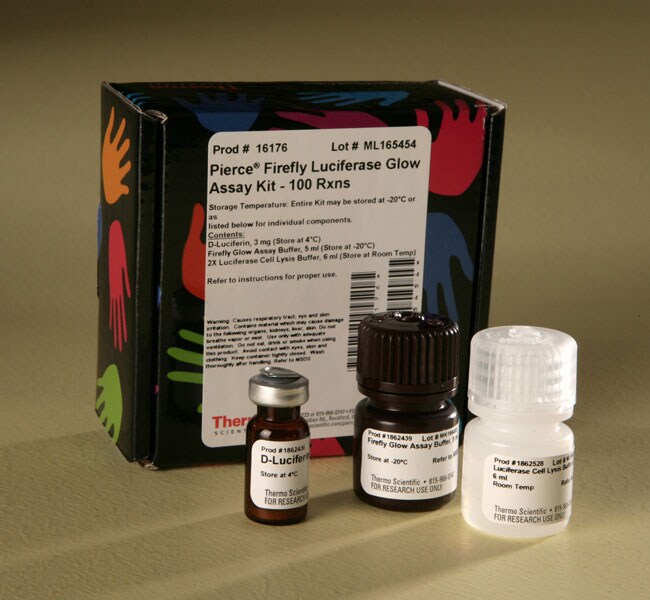
Pierce™ 萤火虫荧光素酶辉光检测试剂盒
Thermo Scientific Pierce 萤火虫荧光素酶辉光检测试剂盒在萤火虫荧光素酶报告基因存在的情况下提供明亮且稳定的生物发光信号(半衰期大于 2 小时)用于蛋白表达测定。萤火虫荧光素酶辉光检测试剂盒的特点:•灵敏—对萤火虫荧光素酶活性进行高度灵敏的检测;为了获得较好结果(较大信号了解更多信息
Have Questions?
更改视图

| 货号 | 数量 |
|---|---|
| 16176 | 100 次反应试剂盒 |
| 16177 | 1000 次反应试剂盒 |
货号 16176
价格(CNY)
1,354.00
Each
数量:
100 次反应试剂盒
价格(CNY)
1,354.00
Each
Thermo Scientific Pierce 萤火虫荧光素酶辉光检测试剂盒在萤火虫荧光素酶报告基因存在的情况下提供明亮且稳定的生物发光信号(半衰期大于 2 小时)用于蛋白表达测定。
萤火虫荧光素酶辉光检测试剂盒的特点:
•灵敏—对萤火虫荧光素酶活性进行高度灵敏的检测;为了获得较好结果(较大信号),请与 Pierce 萤火虫荧光素酶信号增强剂配合使用
• 稳定—与闪光测定相比,信号稳定性更高
• 简单—不需要使用配备进样器的光度计
• 兼容—与其他萤火虫甲虫荧光素酶兼容的测定试剂
• 适合自动化—适合用于高通量测定
• 便利—包含一种通用的细胞裂解缓冲液和经过优化的辉光测定试剂
• 安全—允许用户执行非放射性测定
该 Pierce 荧光素酶辉光检测试剂盒包含的试剂用于测定细胞裂解物中萤火虫荧光素酶的活性。在萤火虫荧光素酶存在的情况下,辉光试剂提供稳定的生物发光信号,非常适合不带进样器的光度计或用于样品批量处理。荧光素酶反应产生的光输出可与生成的荧光素酶蛋白的量相关,后者又与驱动荧光素酶表达的启动子的活性成正比。这些辉光测定试剂经过了优化,可以为 Thermo Scientific 萤火虫 Luc 质粒提供较好结果;但是,闪光分析试剂盒可用于检测采用 D-荧光素作为底物的其他萤火虫或 ATP 依赖性荧光素酶的活性。
包括:
细胞裂解缓冲液、反应缓冲液和底物;需单独购买荧光素酶信号增强剂。
需要:
• 萤火虫荧光素酶和光度计或其他能够监测发光的仪器(如 Thermo Scientific Luminoskan Ascent 和 Varioskan 闪光微孔板读数仪)。
•为了获得较好结果(较大信号),请与 Pierce 萤火虫荧光素酶信号增强剂配合使用
应用:
• 用于分析顺式调节元素和反式作用因子的启动子研究
• 药物筛选
• siRNA 和 miRNA 筛选
• 研究脱靶效应的多通路测定
• 蛋白定位报告基因测定
• 信号转导通路分析
• RNA 剪接研究
萤火虫荧光素酶是由甲虫萤科家族的多个种属(包括 Photinus 属和萤属)天然产生的一种 60kDa 蛋白。萤火虫荧光素酶的生物发光信号源自 D-荧光素的氧化。荧光素酶反应产生的光输出将使用光度计进行捕获,可与生成的萤火虫荧光素酶蛋白的量相关,并可用于确定驱动萤火虫表达的启动子的活性。天然萤火虫荧光素酶产生了快速衰变的强烈的闪光信号。使用 Pierce 萤火虫辉光检测试剂盒产生的信号更稳定,并且衰变得非常慢,因此无需使用配备进样器的光度计。
萤火虫荧光素酶辉光检测试剂盒的特点:
•灵敏—对萤火虫荧光素酶活性进行高度灵敏的检测;为了获得较好结果(较大信号),请与 Pierce 萤火虫荧光素酶信号增强剂配合使用
• 稳定—与闪光测定相比,信号稳定性更高
• 简单—不需要使用配备进样器的光度计
• 兼容—与其他萤火虫甲虫荧光素酶兼容的测定试剂
• 适合自动化—适合用于高通量测定
• 便利—包含一种通用的细胞裂解缓冲液和经过优化的辉光测定试剂
• 安全—允许用户执行非放射性测定
该 Pierce 荧光素酶辉光检测试剂盒包含的试剂用于测定细胞裂解物中萤火虫荧光素酶的活性。在萤火虫荧光素酶存在的情况下,辉光试剂提供稳定的生物发光信号,非常适合不带进样器的光度计或用于样品批量处理。荧光素酶反应产生的光输出可与生成的荧光素酶蛋白的量相关,后者又与驱动荧光素酶表达的启动子的活性成正比。这些辉光测定试剂经过了优化,可以为 Thermo Scientific 萤火虫 Luc 质粒提供较好结果;但是,闪光分析试剂盒可用于检测采用 D-荧光素作为底物的其他萤火虫或 ATP 依赖性荧光素酶的活性。
包括:
细胞裂解缓冲液、反应缓冲液和底物;需单独购买荧光素酶信号增强剂。
需要:
• 萤火虫荧光素酶和光度计或其他能够监测发光的仪器(如 Thermo Scientific Luminoskan Ascent 和 Varioskan 闪光微孔板读数仪)。
•为了获得较好结果(较大信号),请与 Pierce 萤火虫荧光素酶信号增强剂配合使用
应用:
• 用于分析顺式调节元素和反式作用因子的启动子研究
• 药物筛选
• siRNA 和 miRNA 筛选
• 研究脱靶效应的多通路测定
• 蛋白定位报告基因测定
• 信号转导通路分析
• RNA 剪接研究
萤火虫荧光素酶是由甲虫萤科家族的多个种属(包括 Photinus 属和萤属)天然产生的一种 60kDa 蛋白。萤火虫荧光素酶的生物发光信号源自 D-荧光素的氧化。荧光素酶反应产生的光输出将使用光度计进行捕获,可与生成的萤火虫荧光素酶蛋白的量相关,并可用于确定驱动萤火虫表达的启动子的活性。天然萤火虫荧光素酶产生了快速衰变的强烈的闪光信号。使用 Pierce 萤火虫辉光检测试剂盒产生的信号更稳定,并且衰变得非常慢,因此无需使用配备进样器的光度计。
仅供科研使用。不可用于诊断程序。
规格
检测报告基因酶、荧光素酶报告基因检测
适用细胞哺乳动物细胞
检测方法生物发光
适用于(设备)化学发光酶标仪(微孔板)
产品规格384 孔板、96 孔板
标签类型酶标记
产品线Pierce
数量100 次反应试剂盒
底物D-荧光素
底物属性化学底物
底物类型荧光素酶底物
靶标荧光素酶、萤火虫荧光素酶
技术增强的化学发光法
类型检测试剂盒
Unit SizeEach
内容与储存
• 萤火虫辉光测定缓冲液,5 mL,在 -20°C 下储存
• D-荧光素,冻干,3 mg,在 -4°C 下储存
• 2X 细胞裂解缓冲液,6 mL,在室温下储存
接收后,在 -20°C 下储存试剂盒或按上文所述储存单一组分。
• D-荧光素,冻干,3 mg,在 -4°C 下储存
• 2X 细胞裂解缓冲液,6 mL,在室温下储存
接收后,在 -20°C 下储存试剂盒或按上文所述储存单一组分。