Search

Thermo Scientific™
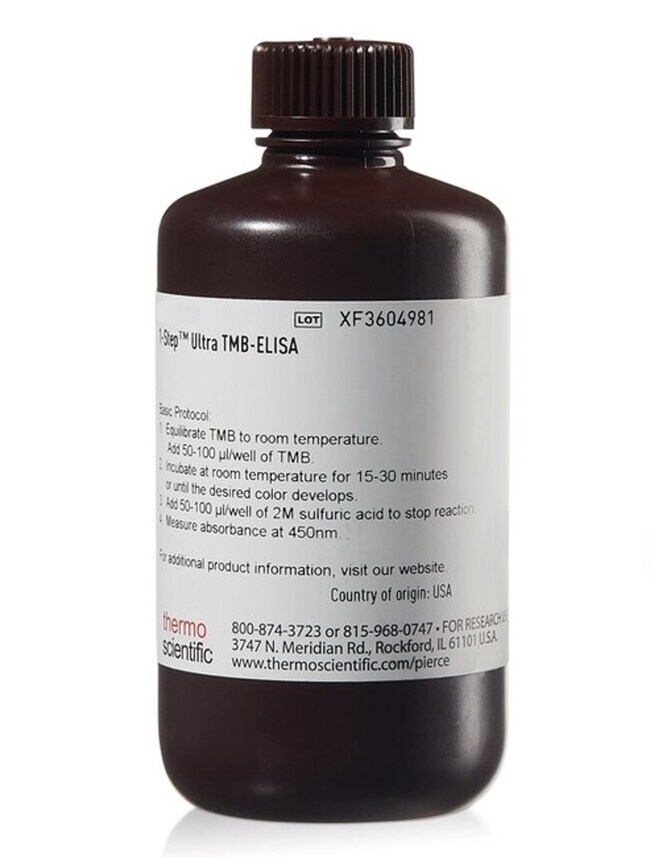
1-Step™ Ultra TMB-ELISA 底物溶液
Thermo Scientific Pierce 1-Step Ultra TMB ELISA 底物 (1 L)了解更多信息
Have Questions?
更改视图

| 货号 | 数量 | 底物 |
|---|---|---|
| 34029 | 1 L | Ultra TMB-ELISA Substrate |
| 34024 | 250 mL | Slow TMB-ELISA Substrate |
| 34028 | 250 mL | Ultra TMB-ELISA Substrate |
| 34021 | 400 mL 试剂盒 | TMB Substrate |
货号 34029
价格(CNY)
5,462.00
飞享价
Ends: 31-Dec-2026
7,164.00共减 1,702.00 (24%)
Each
数量:
1 L
底物:
Ultra TMB-ELISA Substrate
价格(CNY)
5,462.00
飞享价
Ends: 31-Dec-2026
7,164.00共减 1,702.00 (24%)
Each
Thermo Scientific Pierce 1-Step Ultra TMB ELISA 底物 (1 L) 可检测辣根过氧化物酶 (HRP) 活性,产生蓝色(Amax = 370 nm 和 652nm),加入硫酸或磷酸终止液后变为黄色 (Amax = 450 nm)。1-Step Ultra TMB 是极灵敏的发色底物。
1-Step Ultra TMB ELISA 底物的特点:
• 提供传统或即用型配方
• 无需额外的试剂或过滤
• 无致癌性
• 具有多种灵敏度水平和开发速度,可满足任何检测要求
• 试剂中不存在 DMF 或 DMSO
TMB 是 ELISA 中 HRP 检测的较常用显色底物,且可提供多种规格。Pierce 1-Step TMB 底物为单组分底物,使用前无需制备。与其他市售底物不同,这些产品不含 DMF 或 DMSO。
TMB 底物中 Thermo Scientific Pierce 1-Step Ultra TMB 的灵敏度较高,其次是 1-Step Turbo TMB 和 1-Step Slow TMB。1-Step Turbo TMB 的灵敏度与以约 1 mg/mL 配制的基于 OPD 的底物相似。1-Step Slow TMB 具有中等灵敏度— 灵敏度高于 ABTS,但低于邻苯二胺二盐酸盐 (OPD) 或 1-Step Turbo TMB。1-Step Slow TMB 是动力学研究的理想底物。
TMB(3,3',5,5'-四甲基联苯胺)是一种发色剂,在被氧化时产生蓝色,通常是由 HRP 水解过氧化氢产生的氧自由基所致。对于动态或未停止的 ELISA 试验,TMB 发色剂的上限吸收波长位于 370 nm 和 652 nm 处。然后在加入硫酸或磷酸时,颜色变为黄色,上限吸收波长位于 450 nm 处。绿色反应产物可能由蓝色中间产物部分转化为黄色产物而生成。TMB 是非常灵敏的 ELISA 底物,且与其他 HRP 底物相比会被更快氧化,因此可更快显色。
相关产品
Pierce™ TMB 底物试剂盒
1-Step™ Turbo TMB-ELISA 底物溶液
1-Step™ Slow TMB-ELISA 底物溶液
1-Step Ultra TMB ELISA 底物的特点:
• 提供传统或即用型配方
• 无需额外的试剂或过滤
• 无致癌性
• 具有多种灵敏度水平和开发速度,可满足任何检测要求
• 试剂中不存在 DMF 或 DMSO
TMB 是 ELISA 中 HRP 检测的较常用显色底物,且可提供多种规格。Pierce 1-Step TMB 底物为单组分底物,使用前无需制备。与其他市售底物不同,这些产品不含 DMF 或 DMSO。
TMB 底物中 Thermo Scientific Pierce 1-Step Ultra TMB 的灵敏度较高,其次是 1-Step Turbo TMB 和 1-Step Slow TMB。1-Step Turbo TMB 的灵敏度与以约 1 mg/mL 配制的基于 OPD 的底物相似。1-Step Slow TMB 具有中等灵敏度— 灵敏度高于 ABTS,但低于邻苯二胺二盐酸盐 (OPD) 或 1-Step Turbo TMB。1-Step Slow TMB 是动力学研究的理想底物。
TMB(3,3',5,5'-四甲基联苯胺)是一种发色剂,在被氧化时产生蓝色,通常是由 HRP 水解过氧化氢产生的氧自由基所致。对于动态或未停止的 ELISA 试验,TMB 发色剂的上限吸收波长位于 370 nm 和 652 nm 处。然后在加入硫酸或磷酸时,颜色变为黄色,上限吸收波长位于 450 nm 处。绿色反应产物可能由蓝色中间产物部分转化为黄色产物而生成。TMB 是非常灵敏的 ELISA 底物,且与其他 HRP 底物相比会被更快氧化,因此可更快显色。
相关产品
Pierce™ TMB 底物试剂盒
1-Step™ Turbo TMB-ELISA 底物溶液
1-Step™ Slow TMB-ELISA 底物溶液
For Research Use Only. Not for use in diagnostic procedures.
1-Step 底物具有灵敏度不同的三种配方:
- 1-Step Slow TMB 具有中等灵敏度 – 灵敏度高于 ABTS,但低于 OPD 或 1-Step Turbo TMB。
- 1-Step Turbo TMB 的灵敏度与约 1 mg/mL OPD 的灵敏度相当
- 1-Step Ultra TMB-ELISA 在皮克级范围内具有极高的信噪比和灵敏度
参考文献:
- Josephy, P.D., et al.(1982).J. Biol.Chem.257(7), 3669-3675.
- Josephy, P.D., et al.(1983).J. Biol.Chem.258(9), 5561-5569.
- Liem, H.H., et al.(1979).Anal.Biochem.98, 388-393.
规格
检测方法比色法
产品线1-Step
运输条件室温
底物Ultra TMB-ELISA Substrate
底物属性化学底物
底物类型HRP(辣根过氧化物酶)
产品类型ELISA 底物
数量1 L
Unit SizeEach
内容与储存
储存:接收后在 4°C 下防潮储存。产品在环境温度下运输。