Search


引用和文献 (1)
Invitrogen™
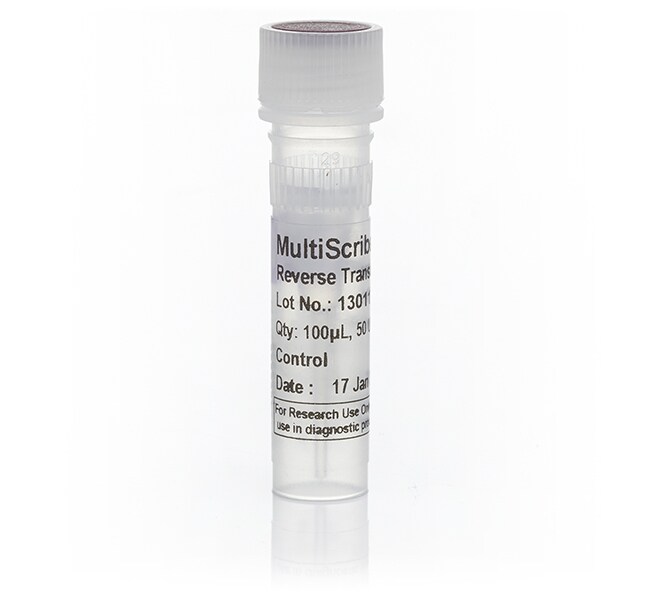
MultiScribe™ 反转录酶
MultiScribe™ 反转录酶是一种重组型莫洛尼鼠白血病病毒 (rMoMuLV) 反转录酶,经优化可用于 TaqMan 分析。MultiScribe™ 反转录酶与 MuLV 反转录酶相似,但推荐用途不同了解更多信息
| 货号 | 数量 |
|---|---|
| 4311235 | 100 μL |
货号 4311235
价格(CNY)
1,239.00
飞享价
Ends: 31-Dec-2026
1,652.00共减 413.00 (25%)
Each
数量:
100 μL
价格(CNY)
1,239.00
飞享价
Ends: 31-Dec-2026
1,652.00共减 413.00 (25%)
Each
MultiScribe™ 反转录酶是一种重组型莫洛尼鼠白血病病毒 (rMoMuLV) 反转录酶,经优化可用于 TaqMan 分析。MultiScribe™ 反转录酶与 MuLV 反转录酶相似,但推荐用途不同。MultiScribe™ 反转录酶是一种重组型 RNA–依赖性 DNA 聚合酶,可在存在引物的情况下使用单链 RNA 为模板合成互补 DNA (cDNA) 链。以每瓶5,000 U 的100μL 瓶装形式提供 (50U/μL)。MultiScribe™ 反转录酶的优势:
•兼容一步法和两步法 RT-PCR 反应,为反应构建带来了灵活选择
•单独的组分设计为反应构建带来了多样选择
•兼容一步法和两步法 RT-PCR 反应,为反应构建带来了灵活选择
•单独的组分设计为反应构建带来了多样选择
仅供科研使用。不可用于诊断程序。
规格
最终产品类型第一链 cDNA
产品规格管装
最佳反应温度37°C
数量100 μL
反应形式单独组分
试剂类型反转录
逆转录酶MultiScribe™
核糖核酸酶 H 活性减少
运输条件干冰
尺寸(最终产品)长达 7 kb
原始材料RNA
技术反转录
最大浓度50 U/μL
适用于(应用)RT-PCR
Unit SizeEach
内容与储存
• MultiScribe™ 逆转录酶,100 μL (50 U/μL)
储存在 –20°C 下。
常见问题解答 (FAQ)
PCR反应要加入多少第一链cDNA反应产物?
How much of the first-strand cDNA reaction should I load for PCR?
Can I purchase the MultiScribe Reverse Transcriptase from the TaqMan® MicroRNA Reverse Transcription Kit (Cat. No 4366596) separately?
Does Applied Biosystems MultiScribe Reverse Transcriptase have RNase H activity?
What is the difference between MultiScribe Reverse Transcriptase and MuLV Reverse Transcriptase?
引用和文献 (1)
引用和文献
Abstract
PAMP induced expression of immune relevant genes in head kidney leukocytes of rainbow trout (Oncorhynchus mykiss).
Journal:Dev Comp Immunol
PubMed ID:21147161
'Host immune responses elicited by invading pathogens depend on recognition of the pathogen by specific receptors present on phagocytic cells. However, the reactions to viral, bacterial, parasitic and fungal pathogens vary according to the pathogen-associated molecular patterns (PAMPs) on the surface of the invader. Phagocytic cells are known to initiate